


What if better heart health didn’t require a new diet or medication?
A new study from Northwestern Medicine suggests something surprisingly simple:
Finish your last meal at least three hours before bedtime—and dim the lights in the evening.
That’s it.
And the health benefits were clear.
What the Study Found
The findings, published in Arteriosclerosis, Thrombosis, and Vascular Biology (February 2026), showed that participants who ate earlier and reduced evening light exposure experienced:
- Lower blood pressure
- Reduced heart rate
- Better blood sugar control
What makes this powerful is what they didn’t do.
- They didn’t follow a strict diet.
- They didn’t take medication.
- They simply changed timing and lighting.
Why Eating Late May Affect Your Health
Your body runs on an internal clock.
At night, it shifts into repair mode.
This is when:
- Tissues recover
- Hormones rebalance
- Cells repair damage
But if your body is still digesting a heavy meal, it may not fully focus on recovery.
Think of it like renovating a house while construction is still happening inside.
The system stays busy.
The 3-Hour Rule Explained
The idea is simple:
- Finish dinner at least three hours before bed.
- Avoid late-night snacks.
- Create a darker, calmer environment in the evening.
This gives your body time to:
- Process glucose
- Lower insulin levels
- Slow heart rate naturally
Small change. Big impact.
Why Evening Light Matters Too
Bright artificial light at night can confuse your body clock.
It may:
- Suppress melatonin
- Delay sleep
- Disrupt metabolic processes
Dimming lights in the evening supports your natural sleep rhythm.
And better sleep supports heart and metabolic health.
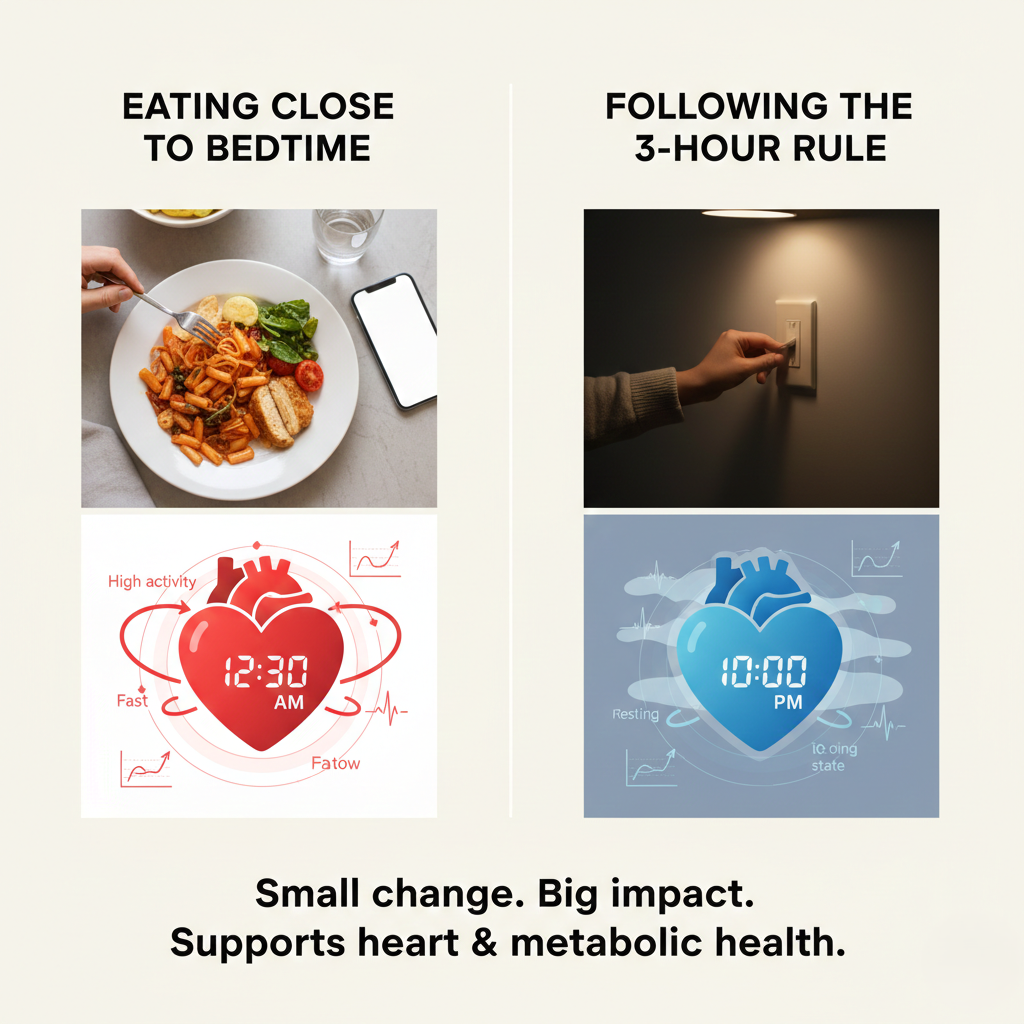
Real-World Comparison: Late Eating vs Early Eating
Let’s simplify it.
Eating Close to Bedtime
- Digestion continues during sleep
- Blood sugar may stay elevated
- Heart rate may remain higher
Following the 3-Hour Rule
- Digestion mostly complete
- Blood sugar stabilizes
- The body focuses on repair
Your body prefers calm, not chaos, before sleep.
How This Supports Blood Sugar Control
When you eat late:
- Glucose levels rise
- Insulin is released
- The body stays metabolically active
When you stop eating earlier:
- Blood sugar has time to normalize
- Insulin levels fall
- Metabolic stress decreases
Over time, this pattern may support healthier glucose balance.
Easy Ways to Apply This Habit
You don’t need a complicated plan.
Try this:
- Eat dinner a little earlier
- Avoid heavy nighttime snacks
- Dim lights one hour before bed
- Reduce screen brightness at night
Consistency matters more than perfection.
FAQs
What is the 3-hour rule before bed?
It means finishing your last meal at least three hours before sleeping to support heart and metabolic health.
Does this require a special diet?
No. The study participants did not change what they ate—only when they ate.
Why does eating late affect blood pressure?
Late meals may keep the body active during a time it should be resting and repairing.
Does light exposure really matter?
Yes. Bright light at night can disrupt sleep hormones and metabolic balance.
How soon can benefits appear?
Some improvements in heart rate and blood sugar were observed during the study period, but long-term consistency likely matters most.
Final Thoughts
Sometimes health improvements don’t require new supplements or extreme diets.
They require timing.
The 3-hour rule before bed is simple, practical, and easy to try.
By eating earlier and dimming the lights at night, you give your body space to rest, repair, and rebalance.
If you’re looking for a small change with meaningful impact, this might be one of the easiest habits to start tonight.
Small shifts in routine can lead to stronger long-term health.
