


Introduction: A Simple Nutrient, A Big Difference?
Polycystic ovary syndrome can feel overwhelming.
Irregular cycles. Hormone shifts. Fertility struggles.
But new research suggests something surprisingly simple may help.
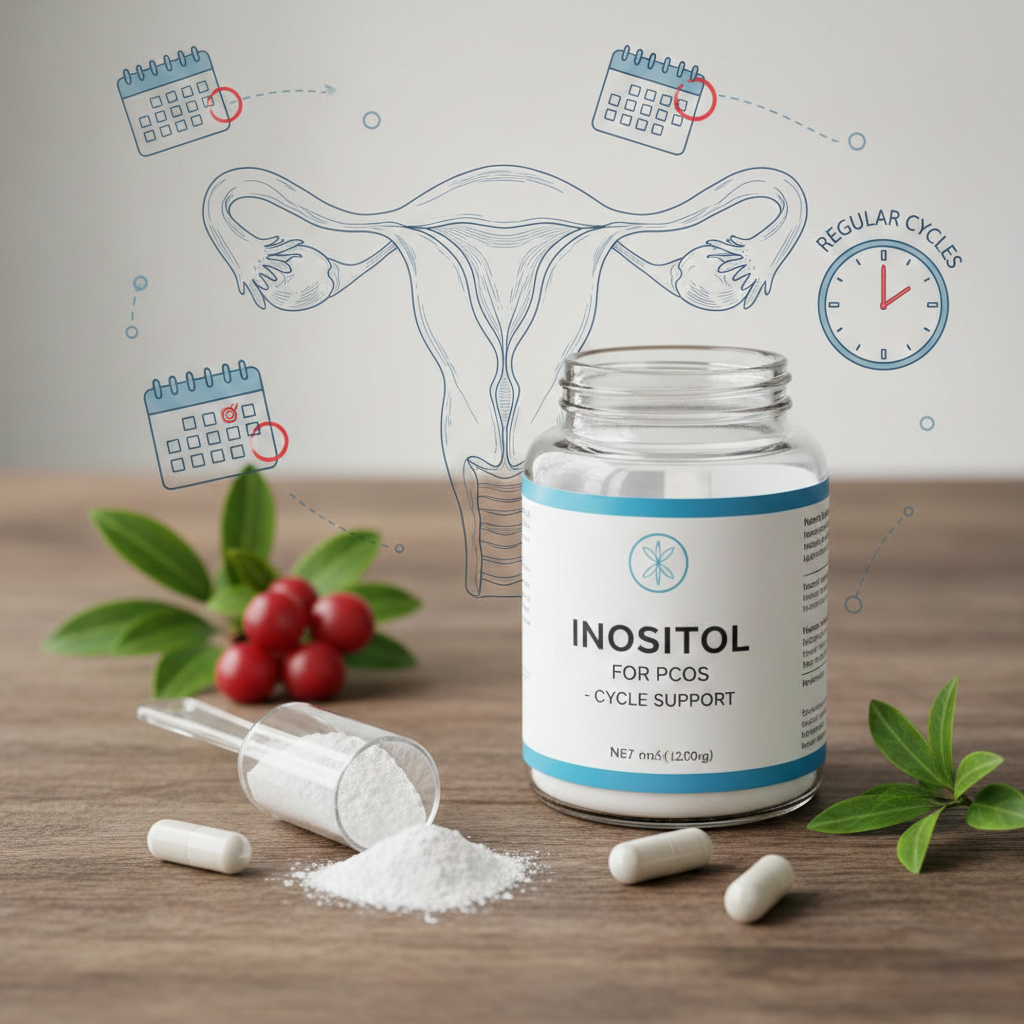
Women with Polycystic ovary syndrome who take inositol are 1.79 times more likely to achieve regular menstrual cycles compared to those who don’t.
That’s a meaningful difference.
Let’s break down why.
What Is PCOS?
PCOS is one of the most common hormonal conditions in women of reproductive age.
It often disrupts ovulation.
Common symptoms include:
- Irregular or missed periods
- Elevated androgen levels
- Acne or excess hair growth
- Difficulty getting pregnant
- Insulin resistance
- Weight fluctuations
At its core, PCOS is deeply connected to hormone imbalance and insulin response.
What Is Inositol?
Inositol is a naturally occurring compound.
It’s sometimes grouped with B vitamins, though it’s technically not a vitamin.
It plays a key role in:
- Insulin signaling
- Ovarian function
- Hormone communication inside cells
The two most studied forms for PCOS are:
- Myo-inositol
- D-chiro-inositol
Both are involved in metabolic and reproductive pathways.
How Inositol Supports Cycle Regularity
Many women with PCOS experience insulin resistance.
That means the body doesn’t respond properly to insulin.
When insulin levels rise, androgen levels often rise too.
This disrupts ovulation.
Inositol helps improve insulin sensitivity.
Better insulin response can lower excess androgens.
When hormones rebalance, ovulation may become more predictable.
That’s why cycle regularity improves in many cases.
What the Research Shows
Clinical studies suggest women using inositol are significantly more likely to experience regular menstrual cycles.
One key finding shows they are 1.79 times more likely to achieve cycle regularity compared to non-users.
Research also reports potential benefits such as:
- Reduced androgen levels
- Improved ovulation frequency
- Better metabolic markers
- Support for fertility outcomes
It’s not a cure.
But it’s considered a strong supportive option.
Real-World Example: Why Insulin Matters
Imagine insulin as a key.
If the lock doesn’t respond properly, the key keeps turning.
The body produces more insulin to compensate.
In PCOS, that extra insulin can stimulate ovaries to produce more androgens.
That disrupts the menstrual cycle.
Inositol helps the “lock” respond better.
Less insulin overproduction means more balanced hormones.
Balanced hormones mean more regular cycles.
Is Inositol Safe?
Inositol has a favorable safety profile.
Most studies show it is well tolerated.
Side effects, if present, are usually mild and may include:
- Nausea
- Mild digestive discomfort
- Headache
Still, dosing matters.
Women considering supplementation should consult a healthcare professional.
Personalized guidance is always best.
Inositol vs Traditional PCOS Treatments
Traditional PCOS management may include:
- Hormonal contraceptives
- Metformin
- Lifestyle modification
- Fertility medications
Inositol is often viewed as a first-line supportive option, especially for women focused on metabolic and fertility support.
It works alongside lifestyle strategies like:
- Balanced nutrition
- Regular exercise
- Stress management
- Quality sleep
Nutritional therapy works best as part of a bigger plan.
FAQs About Inositol for PCOS
How long does it take for inositol to regulate cycles?
Many studies observe improvements within three to six months of consistent use.
Can inositol improve fertility?
It may support ovulation and egg quality, which can improve fertility outcomes in women with PCOS.
Is inositol better than metformin?
They work differently. Some women respond well to inositol, while others benefit more from prescription treatment. A healthcare provider can guide this decision.
Can you take inositol long term?
Research suggests it is generally safe for extended use, but medical supervision is recommended.
The Bigger Picture: Nutritional Therapy in Hormone Health
PCOS management is evolving.
Researchers are looking beyond symptom control.
They’re exploring root causes like insulin signaling and cellular communication.
Inositol fits into this shift.
It supports the body’s internal systems instead of overriding them.
That’s why it’s gaining attention.
Final Thoughts: Small Molecule, Meaningful Impact
Managing PCOS can feel complicated.
But sometimes, targeted nutritional support can make a measurable difference.
Inositol shows promising evidence for improving cycle regularity and hormonal balance.
It’s not magic.
It’s science-backed support.
And when combined with healthy lifestyle habits, it may help women regain predictability and confidence in their cycles.
