


For decades, pollution was considered an external threat.
Now, scientists say it may be reaching us far earlier than anyone imagined even before birth.
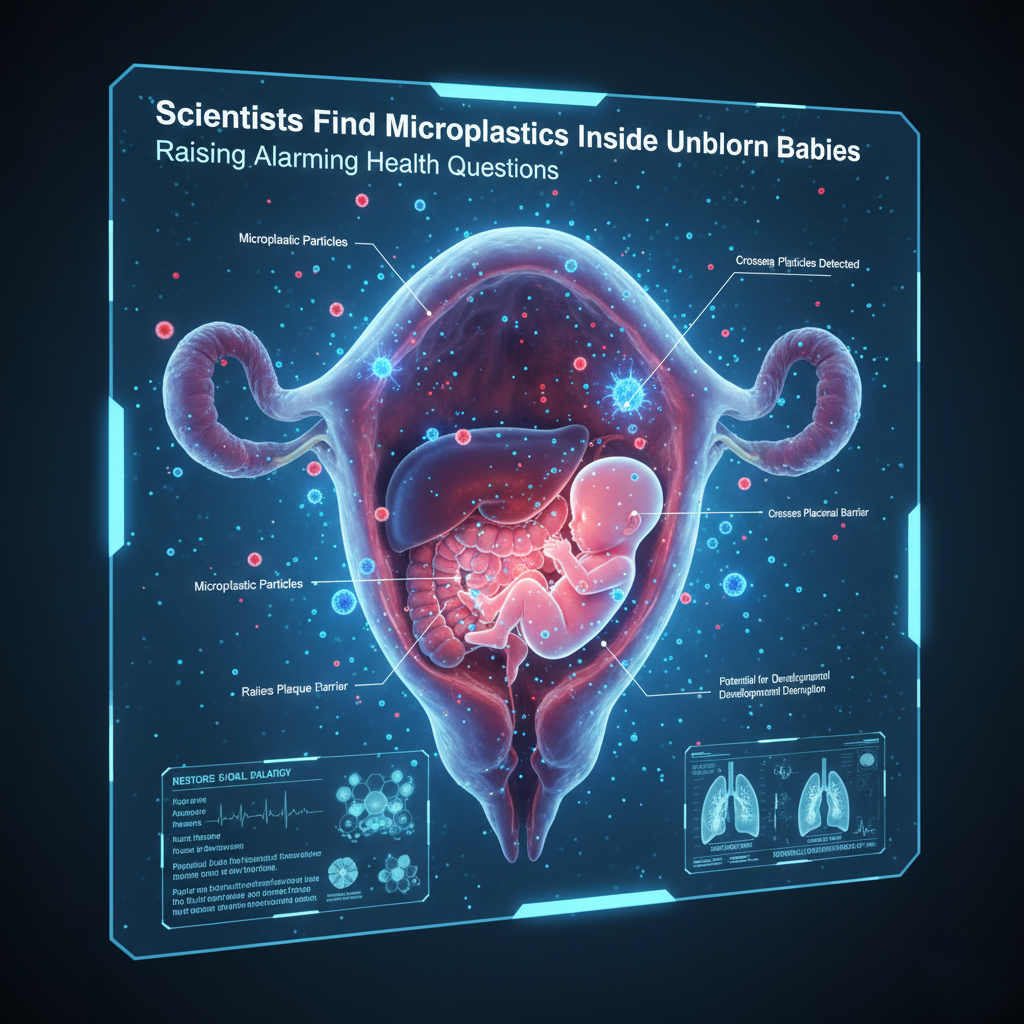
New evidence shows that microplastic particles have been detected inside the organs of unborn babies, suggesting modern pollution is crossing one of the body’s most critical protective barriers: the placenta.
What Are Microplastics and Why Do They Matter?
Microplastics are tiny plastic fragments, often invisible to the naked eye.
They come from:
- Degraded plastic packaging
- Synthetic clothing fibers
- Personal care products
- Industrial waste
Once released, they spread through air, water, food, and soil.
The Placenta: Nature’s Protective Shield Under Threat
The placenta plays a vital role during pregnancy.
It is designed to:
- Deliver nutrients and oxygen
- Filter harmful substances
- Protect the developing fetus
But recent findings suggest this barrier may no longer be fully effective against modern pollution.
What the New Study Discovered
A recent analysis published in Environment International examined fetal tissues for contamination.
Researchers detected microplastic particles inside multiple organs of unborn babies, confirming that plastic pollution can pass from mother to fetus.
This means exposure may begin before a child takes their first breath.
What Does “Pre-Polluted” Really Mean?
Some researchers describe this phenomenon as being “pre-polluted.”
In simple terms, it suggests:
- Environmental damage is inherited, not just experienced
- Exposure begins during early development
- The next generation carries today’s pollution load
This represents a major shift in how scientists view environmental health risks.
Why This Is a Serious Public Health Concern
Early development is a highly sensitive stage.
Exposure to foreign particles during pregnancy may:
- Disrupt organ development
- Affect immune system formation
- Increase long-term health risks
While research is still ongoing, scientists agree the findings are concerning.
How Microplastics Enter the Human Body
Microplastics can reach pregnant individuals through:
- Drinking water
- Seafood and packaged foods
- Airborne particles
- Household dust
Once inside the body, they can circulate through the bloodstream.
A Shift in Maternal and Prenatal Health Priorities
These findings are changing how experts think about prenatal care.
Reducing plastic exposure is no longer just about protecting the planet it may be essential for protecting unborn children.
Public health discussions are now expanding to include:
- Environmental exposure during pregnancy
- Safer food and packaging choices
- Cleaner air and water standards
What Expecting Parents Can Do Right Now
While complete avoidance is impossible, small steps may help reduce exposure.
Practical actions include:
- Using glass or stainless-steel containers
- Avoiding heating food in plastic
- Reducing consumption of heavily packaged foods
- Ventilating living spaces regularly
These steps may lower overall microplastic intake.
What Scientists Say About the Future
Researchers stress that more long-term studies are needed.
However, one message is already clear:
Environmental pollution is no longer just an ecological issue it is a generational one.
Protecting future health may require addressing pollution at its source.
Frequently Asked Questions (FAQs)
What are microplastics?
They are tiny plastic particles that result from the breakdown of larger plastic products.
Can microplastics cross the placenta?
Recent evidence suggests they can, reaching unborn babies during pregnancy.
Are microplastics dangerous to fetal health?
Research is ongoing, but early exposure raises serious developmental concerns.
Can plastic exposure be fully avoided?
No, but reducing everyday plastic use may help lower overall exposure.
Final Thoughts: Pollution Is No Longer Just an Adult Problem
This research delivers a powerful message.
The environment we create today shapes the health of tomorrow’s children starting before birth.
As scientists uncover more evidence, protecting maternal and fetal health may depend on how seriously we take plastic pollution now.
