


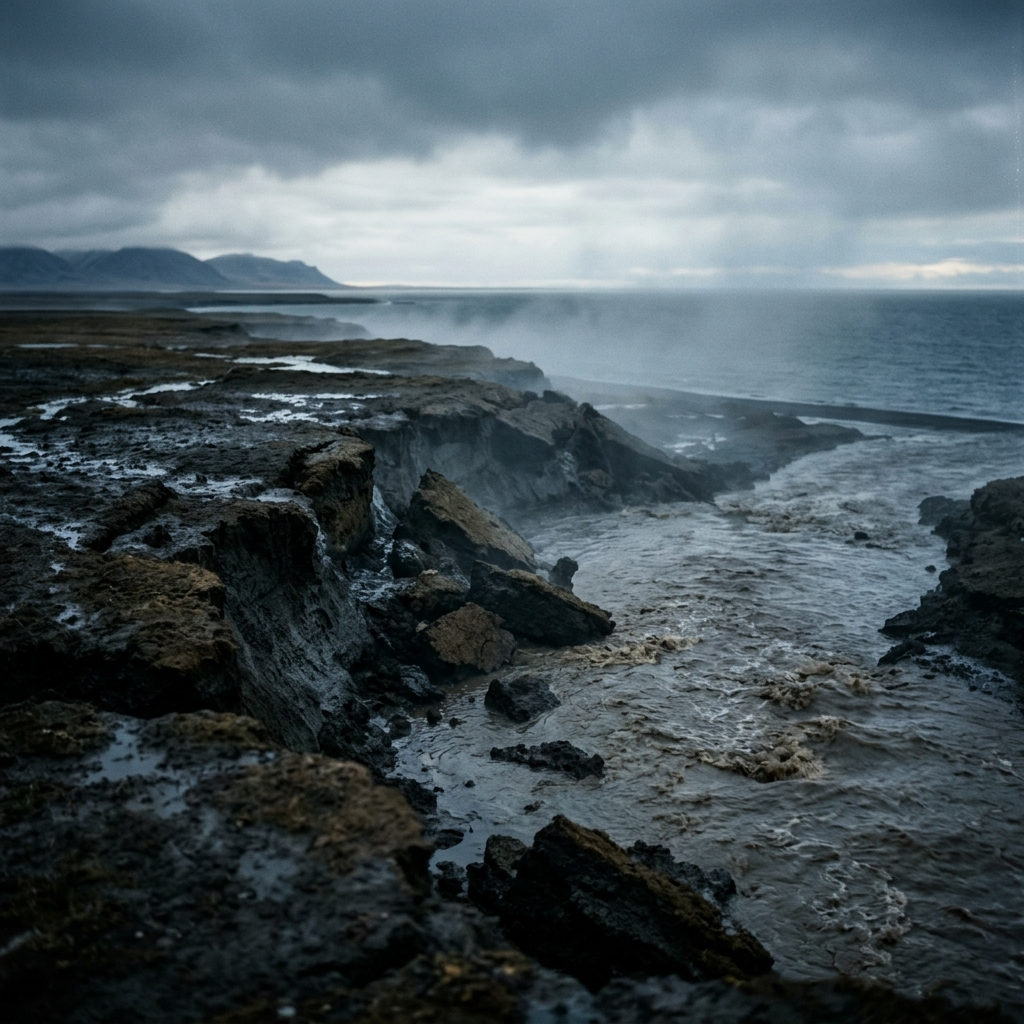
Introduction: A Silent Flood Changing the Arctic
Something massive is happening in Alaska, and most people don’t even see it.
As the ground thaws, billions of tons of frozen water are quietly rushing into the ocean.
Over time, this hidden process has turned into a serious global concern.
Now, scientists warn it could reshape ocean systems, climate patterns, and ecosystems faster than expected.
What Is Happening in Alaska’s North Slope?
For decades, Alaska’s frozen ground, called permafrost, stayed solid.
However, rising temperatures have started to break it apart.
A 43-year study shows a sharp increase in freshwater flowing into the Arctic Ocean.
Since 1980, runoff has surged to about 12 cubic kilometers every year.
To put it simply:
- That equals around 3 trillion gallons annually
- Or 4.5 million Olympic swimming pools
Clearly, this is not a small environmental change; it’s a massive shift.
Why Permafrost Melting Is Accelerating
The Arctic is warming much faster than the rest of the planet.
In fact, temperatures here rise three times quicker than the global average.
Because of this:
- Frozen soil begins to thaw
- Ice trapped underground melts into water
- Rivers carry that water into the ocean
As a result, the process speeds up itself.
This creates a feedback loop, where warming leads to more melting and more melting leads to even more warming.
How Freshwater Is Disrupting the Arctic Ocean
1. Changes in Ocean Salinity
Ocean water depends on a balance of salt and freshwater.
When too much freshwater enters, that balance shifts quickly.
Consequently:
- Salt levels drop near coastal regions
- Marine ecosystems struggle to adapt
- Fish and plankton populations change
2. Sea Ice Formation Gets Weaker
Sea ice forms more easily in salty water than in freshwater.
So when freshwater increases, ice formation slows down.
Because of this:
- Ice becomes thinner and less stable
- Seasonal ice melts faster
- Arctic habitats face growing risks
3. Global Ocean Circulation at Risk
Ocean currents rely on temperature and salinity differences.
Freshwater dilution can weaken these natural flows.
This matters because the following:
- Ocean currents regulate global climate
- Disruptions may affect weather worldwide
- Long-term climate stability could be threatened
The Hidden Danger: Ancient Carbon Release
The problem doesn’t stop with water.
As permafrost melts, it releases carbon trapped for thousands of years.
Previously, this carbon stayed locked underground.
Now, it enters rivers and eventually the atmosphere.
Research shows:
- Carbon export increased from 120 to 170 gigagrams annually
- This acts similar to burning fossil fuels
So, instead of staying frozen, this carbon now fuels global warming.
A Dangerous Feedback Loop Explained
This situation creates a cycle that feeds itself:
- Rising temperatures melt permafrost
- Melt releases water and carbon
- Carbon increases greenhouse gases
- Temperatures rise even more
Because this loop continues, the effects become harder to control over time.
Real-World Example: Why This Matters Globally
You might wonder, how does Alaska affect the rest of the world?
Here’s a simple way to understand it:
- Arctic changes influence global weather systems
- Ocean circulation impacts rainfall and temperatures worldwide
- Carbon release accelerates global climate change
So even if you live far away, these changes still affect your environment.
What Scientists Are Saying
Researchers now believe river-based carbon emissions need urgent attention.
Previously, most climate models focused on air and land emissions.
However, this study shows rivers play a bigger role than expected.
Because of that, scientists are updating models to better predict future climate shifts.
What Can Be Done Moving Forward
While this problem is large, solutions still exist.
Key steps include:
- Reducing global greenhouse gas emissions
- Improving Arctic monitoring systems
- Investing in climate research
- Supporting sustainable policies
Although these steps take time, they remain essential for slowing the process.
FAQs
1. Why is Alaska releasing so much freshwater?
Because permafrost is thawing due to rising temperatures, frozen water turns into runoff and flows into the ocean.
2. Is 3 trillion gallons a big amount?
Yes, it equals millions of swimming pools, making it a massive environmental shift.
3. How does this affect climate change?
It releases stored carbon and disrupts ocean systems, both of which accelerate global warming.
4. Can this process be stopped?
It cannot be fully stopped immediately, but reducing emissions can slow it down.
5. Why is Arctic warming faster than other regions?
Ice reflects sunlight, but as it melts, darker surfaces absorb heat, speeding up warming.
Final Thoughts: A Warning We Shouldn’t Ignore
Alaska’s melting permafrost is not just a local issue; it’s a global warning sign.
What seems like simple water flow is actually a complex chain reaction.
As freshwater floods the Arctic and carbon escapes into the air, the planet moves closer to critical climate tipping points.
👉 The sooner we understand and act, the better chance we have to reduce long-term damage.
