


Introduction
Imagine seeing your face in a video you never made. Or hearing your voice say things you never said.
That’s the reality of deepfakes today. However, one country is taking a bold step to stop it.
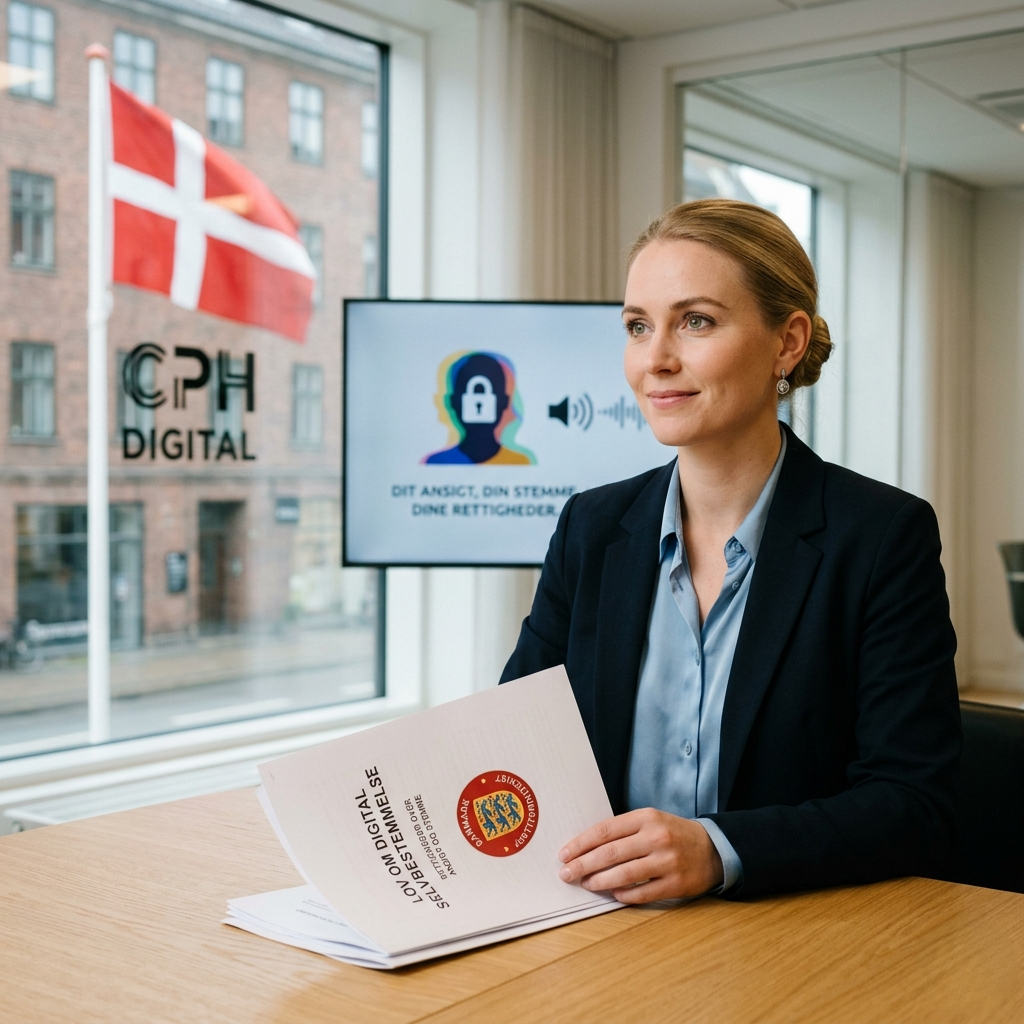
Denmark has proposed a groundbreaking law that gives people full legal rights over their face, voice, and physical likeness.
This move could change how the world handles digital identity forever.
What Does the New Law Actually Say?
The proposal aims to update Denmark’s Copyright Act in a powerful way.
According to Jakob Engel-Schmidt, citizens will legally own:
- Their facial features
- Their voice
- Their body likeness
In simple terms, your identity becomes your property.
Because of this, no one can use it without your permission.
How This Law Fights Deepfakes
Deepfakes have become a serious global problem. They use AI to create fake videos, images, or audio that look real.
Under this new law:
- You can demand removal of deepfake content
- You don’t need to prove harmful intent
- You can claim compensation for damages
As a result, victims finally get real protection.
Why This Matters Now More Than Ever
Deepfake attacks are rising rapidly.
Recent reports show:
- A 41% increase in deepfake incidents in early 2025
- Around $350 million in financial losses from scams
Therefore, the risk is no longer theoretical; it’s already happening.
This law directly addresses that growing threat.
Protection Even After Death
One of the most unique aspects of this proposal is long-term protection.
The law would:
- Protect your identity for 50 years after death
- Prevent unauthorized AI recreations
- Safeguard public figures and private individuals alike
Because of this, your digital identity remains protected even in the future.
A Step Toward Global Change
Denmark is not stopping at national borders.
As it prepares to lead the EU Council, the country plans to:
- Push for similar laws across Europe
- Encourage stronger AI regulations
- Promote digital human rights globally
If adopted widely, this could set a new global standard.
Real-World Example
Let’s say someone creates a fake video using your face.
Before this law:
- You might struggle to prove harm
- Removal could take time
- Legal options were limited
After this law:
- You can demand immediate removal
- You can seek compensation
- Your rights are clearly defined
That’s a major shift in power.
Challenges and Questions
While the law is promising, it raises some important questions.
Possible challenges:
- How will enforcement work globally?
- Can platforms remove content fast enough?
- What about satire or parody?
Even so, it’s a strong step forward.
The Future of Digital Human Rights
This proposal signals a bigger change.
We are entering a time where:
- Identity is treated as personal property
- AI use must respect human rights
- Privacy becomes more enforceable
Because of this, technology may become safer and more accountable.
FAQs
1. What is Denmark’s new digital identity law?
It is a proposal to give people legal ownership of their face, voice, and likeness.
2. Does it protect against deepfakes?
Yes, it allows users to remove deepfakes and claim compensation.
3. Do you need to prove harm?
No, the law allows action even without proving malicious intent.
4. Does protection continue after death?
Yes, it extends up to 50 years after a person’s death.
5. Will other countries adopt similar laws?
Denmark plans to push for similar protections across Europe.
Final Thoughts
Denmark’s proposal is more than just a legal update. It’s a powerful statement about ownership in the digital age.
As AI continues to evolve, protecting human identity becomes essential.
This move could shape the future of privacy, security, and digital rights worldwide.
