


Introduction
History was made inside one of America’s most respected hospitals.
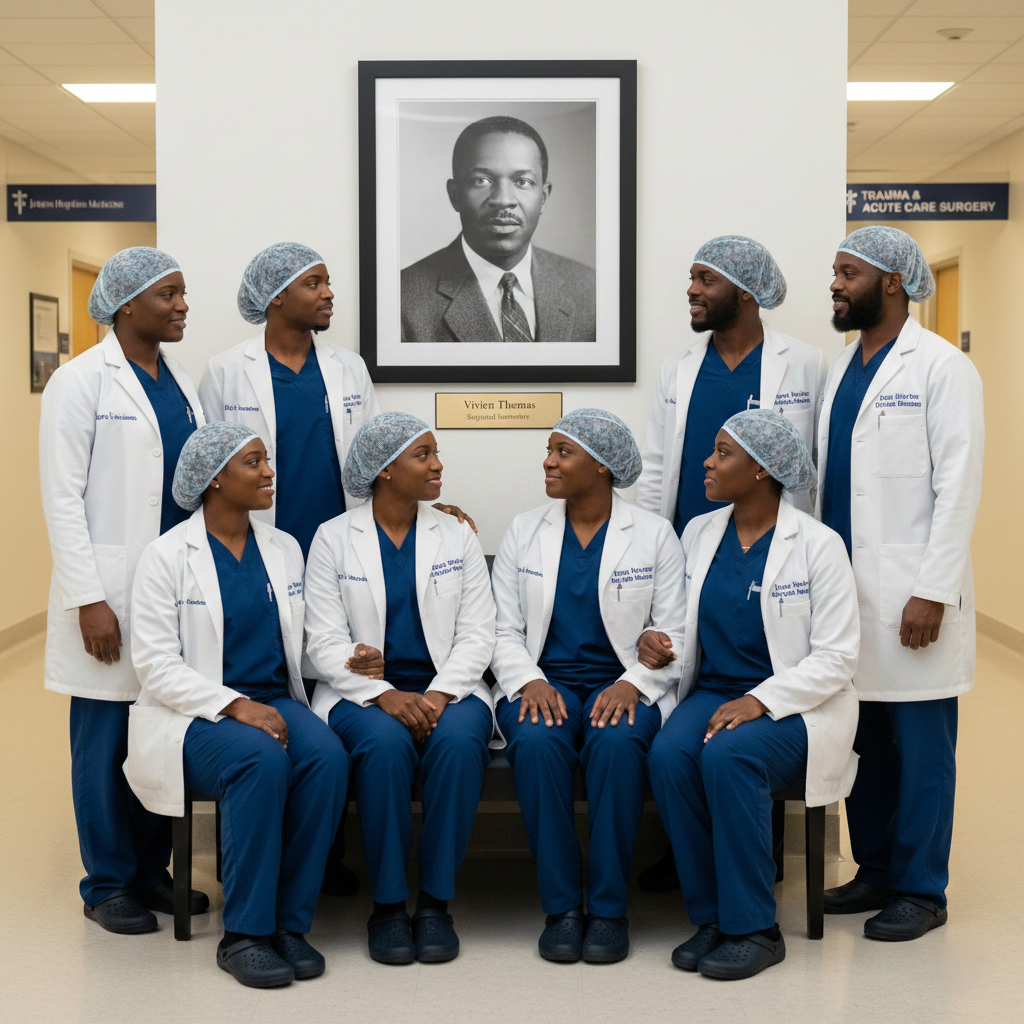
For the first time, an all-Black group of surgical residents is leading the trauma and acute care surgery service at Johns Hopkins Hospital.
This isn’t just a milestone for the institution. It’s a powerful moment for modern medicine, representation, and the future of surgery.
In a field where diversity has long been limited, this leadership shift sends a clear message: change is happening.
A Landmark Achievement in Academic Medicine
The trauma and acute care surgery service at Johns Hopkins Medicine handles some of the hospital’s most critical emergency cases.
These include:
- Severe accident injuries
- Emergency abdominal surgeries
- Life-threatening internal bleeding
- Complex trauma interventions
Leading this service is no small responsibility. It demands skill, precision, quick decision-making, and strong teamwork.
Now, an all-Black team is at the forefront of that responsibility—a first in the hospital’s long and prestigious history.
Why Representation in Surgery Matters
Representation in surgery has historically lagged behind population demographics.
Although Black Americans make up around 13% of the U.S. population, only about 6% of practicing general surgeons are Black.
That gap did not happen by accident.
For decades, barriers slowed progress, including:
- Limited access to mentorship
- Fewer networking opportunities
- Structural inequalities in medical education
- Financial challenges during long training years
When leadership spaces lack diversity, it affects more than statistics. It influences who feels welcomed, who feels seen, and who believes they belong in an operating room.
This moment challenges that pattern.
The Powerful Symbolism Behind the Photo
A widely shared photo shows the residents standing beside a portrait of Vivien Thomas.
That detail matters deeply.
In the 1940s, Thomas played a critical role in developing groundbreaking heart surgery techniques. His work helped create procedures that saved thousands of lives.
Yet because of segregation, he was denied proper recognition for years.
To see a new generation of Black surgeons standing beside his portrait at Johns Hopkins Hospital is more than symbolic.
It reflects progress—and honors resilience.
It connects past struggle to present leadership.
Breaking Barriers in High-Pressure Medical Roles
Trauma surgery is one of the most demanding specialties in medicine.
Surgeons in this field must:
- Make rapid life-or-death decisions
- Operate under intense pressure
- Coordinate multidisciplinary teams
- Work unpredictable hours
Leadership in such an environment requires trust and proven excellence.
This milestone shows that diversity and high performance are not separate conversations.
They belong together.
Real-World Impact: Inspiring the Next Generation
Representation changes perception.
Imagine being a medical student who rarely sees someone who looks like you in surgical leadership.
Now imagine seeing this team leading one of the most respected trauma services in the country.
That visibility can:
- Encourage more Black students to pursue surgery
- Increase mentorship pipelines
- Build stronger professional networks
- Create a more inclusive medical culture
Research consistently shows that diverse medical teams improve communication, patient trust, and overall care outcomes.
This moment is not just symbolic. It has ripple effects.
How This Reflects Broader Changes in Medicine
Medical institutions across the United States are working to address long-standing diversity gaps.
Efforts include:
- Structured mentorship programs
- Holistic residency admissions
- Diversity-focused scholarships
- Leadership development initiatives
The leadership shift at Johns Hopkins Medicine reflects how these efforts are beginning to show results.
Progress may be gradual, but it is visible.
FAQs
Why is this considered historic?
Because it marks the first time an all-Black team of surgical residents has led the trauma and acute care surgery service at Johns Hopkins Hospital.
Why is diversity important in surgery?
Diverse teams improve innovation, cultural understanding, patient trust, and mentorship opportunities for future doctors.
Who was Vivien Thomas?
Vivien Thomas was a surgical innovator who helped develop life-saving heart procedures in the 1940s but was denied recognition for years due to segregation.
Does representation affect patient care?
Yes. Studies show that patients often feel more comfortable and better understood when treated in diverse healthcare environments.
A Defining Moment for Modern Medicine
This milestone is about more than one team.
It represents:
- Progress in academic medicine
- Recognition of historical inequities
- A shift in leadership representation
- Inspiration for future surgeons
The operating room has always been a place of life-saving decisions.
Now, it is also becoming a space of visible change.
As medicine continues to evolve, moments like this help reshape expectations—not just at Johns Hopkins, but across the country.
The next generation of surgeons is watching.
And now, they can see a clearer path forward.
