


Introduction
What if robots could outrun humans in a real race?
That idea just became reality. In a surprising turn of events, humanoid robots took center stage at a major race in Beijing, and the results were incredible.
This wasn’t science fiction. It was a real-world test of how far AI and robotics have come.
A Historic Event in Beijing
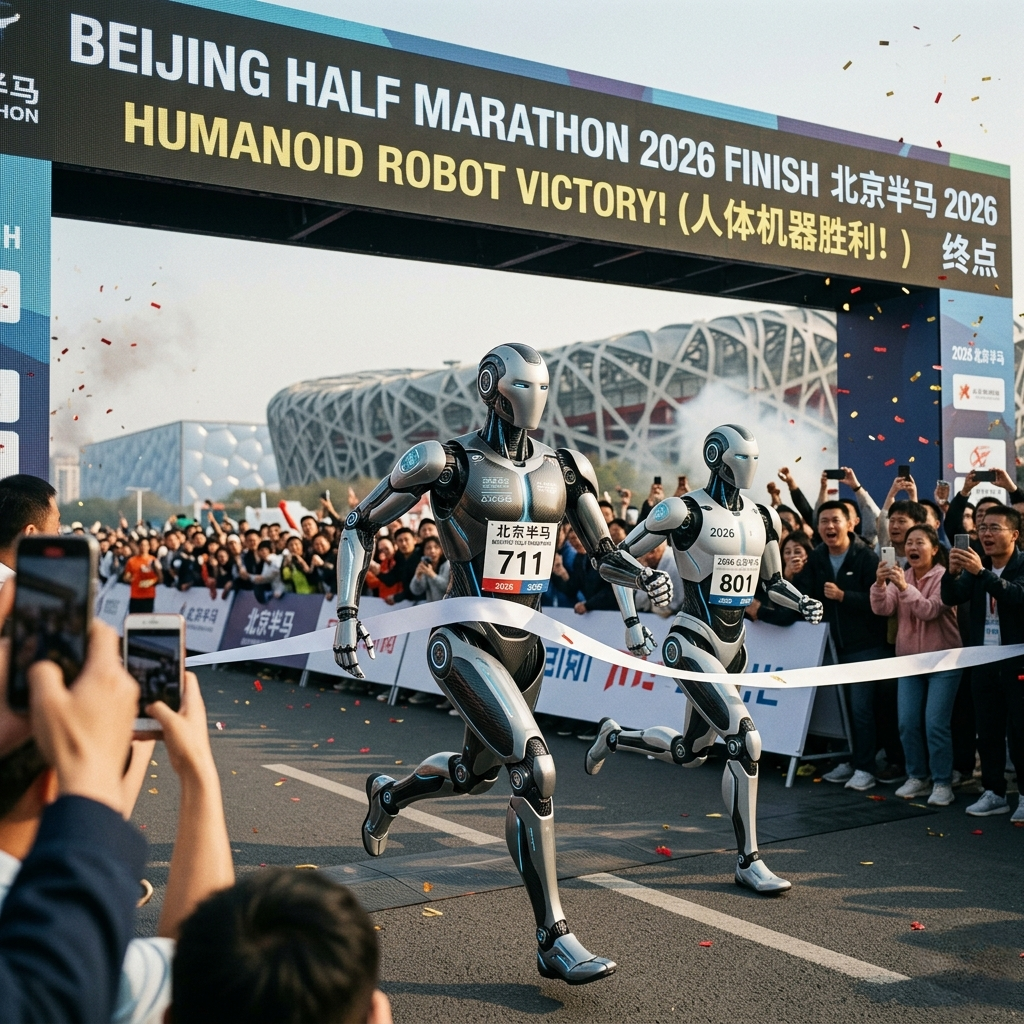
On April 19, 2026, Beijing hosted its second humanoid robot half marathon.
Unlike traditional races, this event featured robots running on dedicated tracks, separate from human participants. Meanwhile, over 100 humanoid robots from 26 different brands joined the competition.
As a result, it became one of the largest robot racing events ever organized.
Meet the Winner: “Lightning” by Team Honor
The spotlight quickly shifted to one robot, “Lightning.”
This advanced humanoid, developed by Team Honor, completed the full 21.1 km race in just 50 minutes and 26 seconds.
What makes this even more impressive?
- The robot ran fully autonomously
- It used AI and sensors to navigate
- No human control was involved
In short, it wasn’t just fast; it was independent.
Even Faster… But Not Eligible
Interestingly, a faster version of the same robot finished the race in 48 minutes and 19 seconds.
However, there was a catch. It was remotely controlled, so it didn’t qualify for the top prize.
This detail highlights an important focus of the event:
👉 True innovation lies in autonomy, not just speed.
Did Robots Really Beat Humans?
Here’s where things get even more exciting.
“Lightning” actually beat the human half-marathon world record of 57 minutes and 20 seconds, set by Jacob Kiplimo in March 2026.
That means the robot finished around 7 minutes faster than the best human performance ever recorded.
As a result, this achievement sparked global attention and debate.
How Did These Robots Perform?
While the race was impressive, it wasn’t perfect.
Some robots:
- Stumbled during the run
- Lost balance briefly
- Needed minor adjustments
However, despite these challenges, many robots successfully completed the race.
This shows just how much progress robotics has made in a short time.
What Makes These Robots So Advanced?
These humanoid robots rely on a combination of cutting-edge technologies:
- Artificial Intelligence (AI): For decision-making
- Sensors: To detect obstacles and maintain balance
- Motion control systems: For smooth running
- Real-time data processing: For quick adjustments
Because of this, they can operate in dynamic environments without human input.
Why This Event Matters
This race wasn’t just about speed; it was about progress.
Here’s why it’s important:
- It proves AI can handle complex physical tasks
- It shows real-world applications of robotics
- It pushes innovation in automation and mobility
- It opens doors for future human-robot collaboration
In other words, this is just the beginning.
The Future of AI and Robotics
Looking ahead, events like this could shape multiple industries.
For example:
- Delivery robots could become faster and smarter
- Rescue robots could operate in dangerous environments
- Healthcare robots could assist patients more effectively
As technology improves, robots may become part of everyday life.
FAQs
1. What is the humanoid robot half-marathon?
It’s a race where human-like robots compete over a 21.1 km distance using AI and advanced robotics.
2. Did a robot really beat human runners?
Yes, “Lightning” completed the race faster than the human world record set by Jacob Kiplimo.
3. Was the winning robot controlled by humans?
No, the winning robot ran fully autonomously using AI and sensors.
4. Why was the faster robot disqualified?
Because it was remotely controlled, which goes against the competition’s rules for autonomy.
5. What does this mean for the future?
It shows that AI and robotics are advancing rapidly and could soon play a bigger role in daily life.
Final Thoughts
The Beijing humanoid robot marathon delivered a clear message: technology is evolving faster than ever.
Seeing robots not only compete but outperform human records is both exciting and thought-provoking.
However, this isn’t about replacing humans. Instead, it’s about pushing the limits of what machines can achieve.
