


Every year, millions of people suffer from infections caused by E. coli.
From severe diarrhea to urinary tract infections, this common bacterium creates serious health problems worldwide.
Now, scientists may be closer than ever to stopping it.
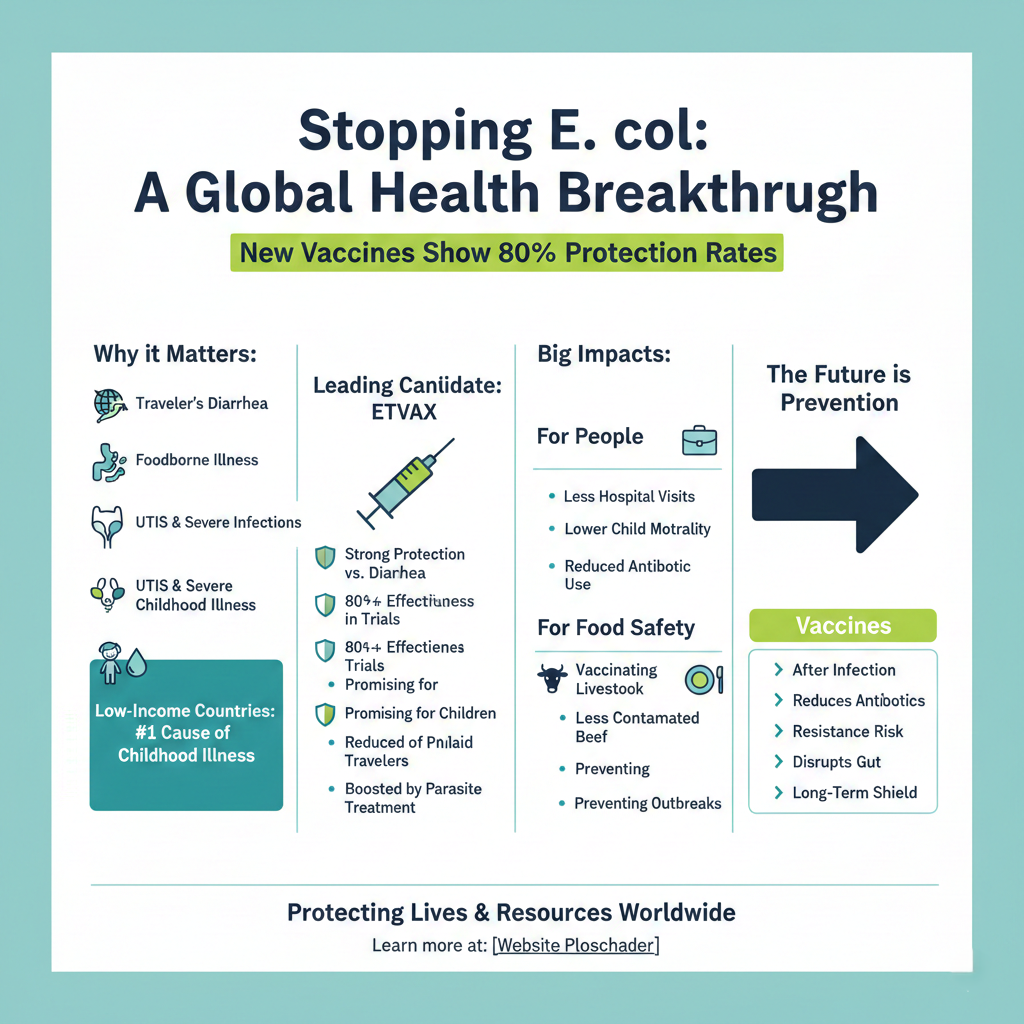
Recent E. coli vaccine clinical trials are reporting protection rates of 80% or higher—a major breakthrough in disease prevention.
Why E. coli Is a Global Health Concern
Escherichia coli infection is responsible for:
- Traveler’s diarrhea
- Foodborne illness
- Urinary tract infections (UTIs)
- Severe infections in children
In low-income countries, diarrheal disease remains one of the leading causes of illness in young children.
For travelers, contaminated food or water can quickly turn a trip into a medical emergency.
That’s why an effective vaccine could make a huge difference.
ETVAX: A Leading Vaccine Candidate
One of the most promising vaccines is called ETVAX.
In recent clinical trials, it showed:
- Strong protection against moderate-to-severe traveler’s diarrhea
- Effectiveness rates of 80% or higher in key groups
- Particularly encouraging results in children
Researchers found that when related parasitic infections were properly treated, the vaccine performed even better.
This is important for regions where multiple infections often happen at the same time.
How This Could Help Low-Income Regions
In many developing countries:
- Clean water access is limited
- Food contamination is common
- Medical care may not be easily available
An effective E. coli vaccine could:
- Reduce hospital visits
- Lower child mortality
- Ease pressure on healthcare systems
Instead of treating illness after it happens, prevention becomes the focus.
That shift can save both lives and resources.
A Boost for International Travelers
Traveler’s diarrhea affects millions each year.
Even with precautions, exposure can still happen.
A vaccine like ETVAX could:
- Offer peace of mind
- Reduce emergency medical visits abroad
- Lower the risk of severe dehydration
For frequent travelers, this could be a game changer.
Improving Food Safety Through Livestock Vaccination
The benefits don’t stop with humans.
Researchers are also studying vaccines for cattle.
Why does this matter?
Some dangerous E. coli strains spread through contaminated beef.
If livestock are vaccinated:
- Harmful bacteria levels could drop
- Contamination during meat processing could decrease
- Large outbreaks might be prevented
This could protect consumers while also reducing financial losses for producers.
It’s a win for public health and the food industry.
Targeting Urinary Tract Infections (UTIs)
Scientists are also exploring vaccines against uropathogenic E. coli, the strain responsible for most UTIs.
Today, UTIs are usually treated with antibiotics.
But repeated antibiotic use creates problems:
- Antibiotic resistance
- Recurring infections
- Long-term health risks
A preventive vaccine could reduce the need for constant antibiotic treatment.
That would be a major shift in how UTIs are managed worldwide.
Real-World Comparison: Antibiotics vs Vaccines
Let’s look at the difference.
Antibiotic Treatment
- Used after infection occurs
- May need repeated courses
- Risk of resistance
- Can disrupt gut health
Preventive Vaccination
- Stops infection before it starts
- Reduces need for antibiotics
- Helps control resistant strains
- Supports long-term protection
Prevention is almost always safer and more cost-effective.
What Still Needs to Happen?
Even with strong clinical trial results, vaccines must:
- Complete larger trials
- Meet strict regulatory standards
- Prove long-term safety and effectiveness
Widespread use will take time.
But the early data is very promising.
FAQs
How effective are the new E. coli vaccines?
Recent clinical trials show protection rates of 80% or higher in key applications, especially against traveler’s diarrhea.
What is ETVAX?
ETVAX is a leading vaccine candidate designed to protect against certain strains of E. coli that cause diarrhea.
Can these vaccines reduce antibiotic use?
Yes. Preventing infections could lower the need for repeated antibiotic treatment, especially for UTIs.
How could this improve food safety?
Vaccinating cattle may reduce harmful E. coli strains in beef production, lowering the risk of foodborne illness.
When could these vaccines become available?
They still need further testing and regulatory approval before becoming widely available.
Final Thoughts
The progress in E. coli vaccine development marks a major step toward smarter disease prevention.
With strong clinical trial results, candidates like ETVAX could protect children and travelers and even improve global food safety.
Instead of fighting infections after they happen, we may soon prevent them entirely.
That shift could reduce antibiotic resistance, save healthcare costs, and protect millions of lives.
For anyone watching the future of medicine, this is a development worth following closely.
