


Glioblastoma is one of the most aggressive cancers known to medicine. For decades, survival rates have barely improved, leaving patients with limited options and grim outcomes.
Now, a groundbreaking CAR-T cell therapy trial is offering something rare in glioblastoma research: real hope backed by measurable results.
Why Glioblastoma Is So Difficult to Treat
Glioblastoma grows rapidly and infiltrates healthy brain tissue. This makes complete surgical removal nearly impossible.
Standard treatments include:
- Brain surgery
- Radiation therapy
- Chemotherapy
Even with aggressive care, tumors almost always return within months.
What Is CAR-T Cell Therapy?
CAR-T cell therapy is a form of immunotherapy that turns the patient’s own immune system into a targeted cancer weapon.
How the process works:
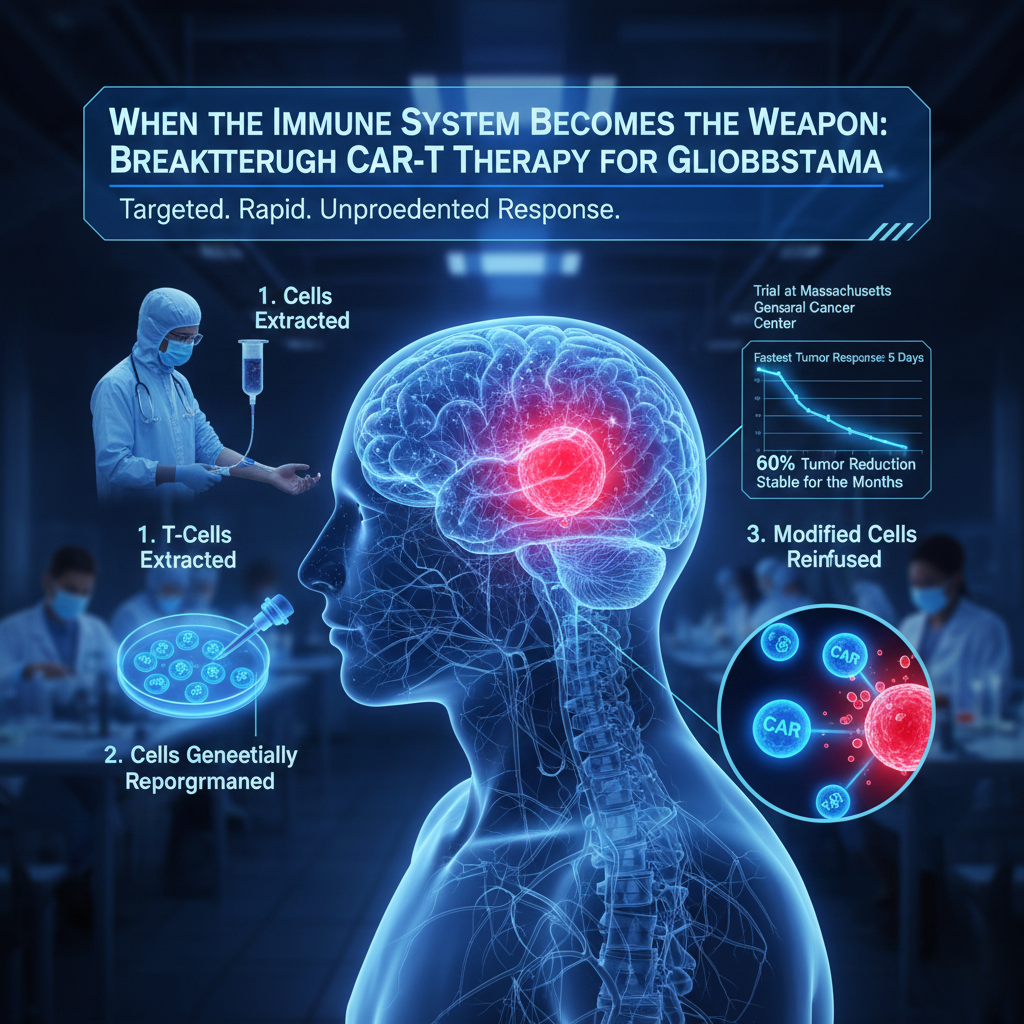
- Doctors extract T cells from the patient’s blood
- The cells are genetically reprogrammed to recognize cancer markers
- Modified cells are reinfused into the body
- CAR-T cells hunt and destroy tumor cells
This approach has already transformed some blood cancer treatments.
A Historic Trial at Massachusetts General Cancer Center
Scientists at Massachusetts General Cancer Center applied CAR-T cell therapy to glioblastoma patients for the first time with striking outcomes.
In one extraordinary case, the tumor shrank to nearly undetectable levels within just five days.
Another patient experienced a 60% tumor reduction, which remained stable for six months—an outcome rarely seen in glioblastoma.
Why These Results Are So Important
Glioblastoma rarely responds quickly to any treatment. Seeing rapid tumor collapse stunned researchers.
Key reasons this trial matters:
- Fastest tumor response ever observed in glioblastoma
- Strongest immune reaction recorded against this cancer
- Proof that solid brain tumors can respond to CAR-T therapy
Although tumors eventually returned in some patients, the immune response itself was unprecedented.
Not a Cure But a Major Step Forward
Researchers are clear: this is not yet a cure. Glioblastoma remains extremely complex.
However, each success helps scientists:
- Improve CAR-T cell targeting
- Combine therapies for stronger effects
- Extend tumor control timelines
- Move closer to long-term remission
Progress in cancer treatment often comes in steps, not leaps.
How This Compares to Traditional Cancer Treatments
| Treatment Type | Goal | Effectiveness in Glioblastoma |
|---|---|---|
| Surgery | Tumor removal | Limited due to infiltration |
| Radiation | Slow growth | Temporary benefit |
| Chemotherapy | Kill cancer cells | Minimal impact |
| CAR-T Therapy | Immune-based destruction | Unprecedented response |
CAR-T therapy introduces an entirely new strategy.
The Future of Immunotherapy in Brain Cancer
This breakthrough signals a shift in how doctors may approach solid tumors in the future.
Possible next steps include:
- Personalized CAR-T designs
- Multi-target immune therapies
- Earlier-stage treatment trials
- Combination with gene therapy
The immune system may become cancer’s greatest enemy.
Frequently Asked Questions (FAQs)
What makes CAR-T therapy different?
It uses the patient’s own immune cells, reprogrammed to attack cancer with precision.
Is CAR-T therapy approved for brain cancer?
Not yet. It is still in early clinical trial stages for glioblastoma.
Why is this trial so groundbreaking?
Because glioblastoma has almost never shown such rapid or strong immune responses before.
When could this treatment become widely available?
If trials continue successfully, broader availability could take years but progress is accelerating.
A New Era in the Fight Against Cancer
Glioblastoma has long been a symbol of medical limitation. This CAR-T cell therapy trial challenges that narrative.
While not a cure, it proves that the immune system can fight back even against the deadliest cancers.
Each breakthrough brings science closer to treatments that don’t just extend life, but restore hope.
