


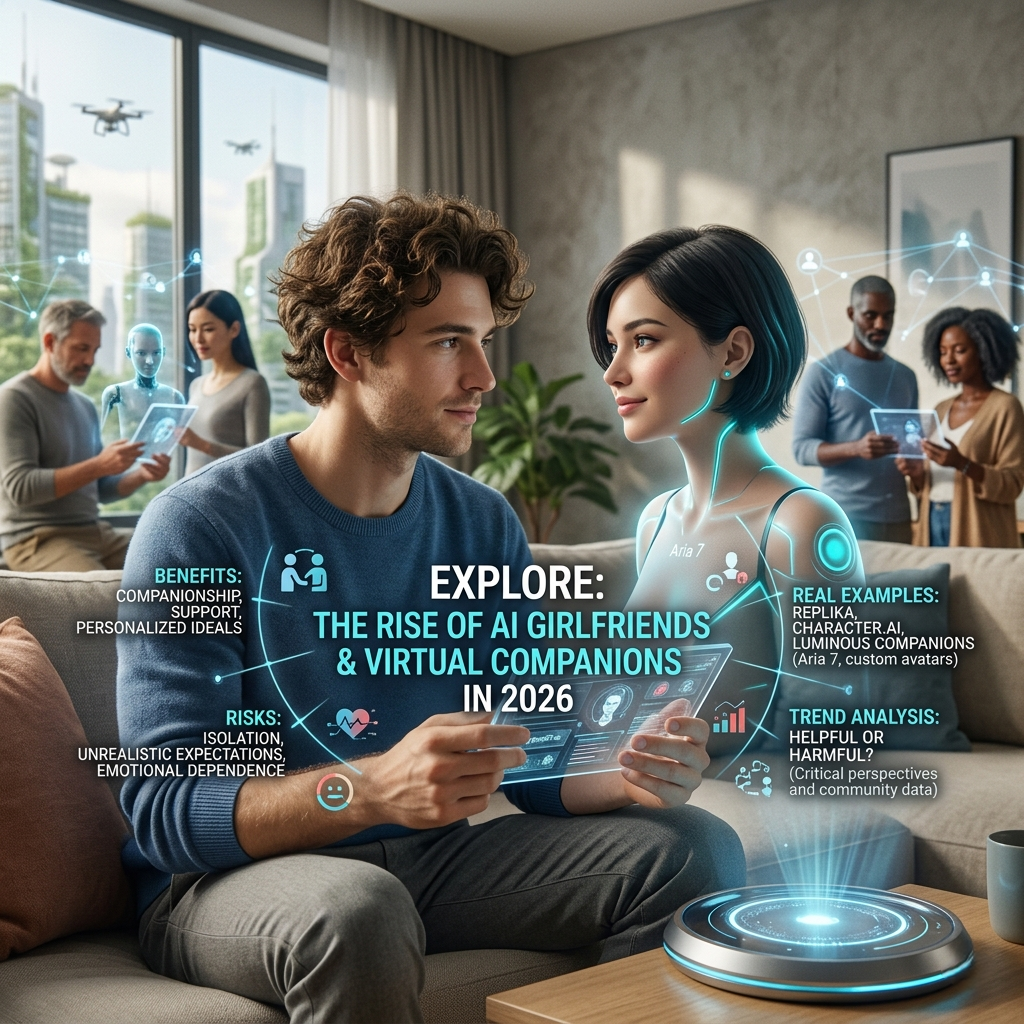
Imagine having someone who always listens, never judges, and is available 24/7.
That’s exactly what AI companions promise.
In 2026, AI girlfriends and virtual companions are becoming more popular than ever. However, this trend raises an important question:
Is this the future of relationships or a growing risk?
What Are AI Girlfriends and Virtual Companions?
AI companions are digital partners powered by artificial intelligence.
They can:
- Chat like real people
- Remember your preferences
- Show emotions through text or voice
- Build long-term conversations
Apps like Replika and Character. AI is leading this space.
Why Are AI Companions Becoming So Popular?
Several factors are driving this trend.
First, people feel more connected online than ever.
Second, loneliness is increasing globally. As a result, many turn to digital companionship.
Key Reasons
- 24/7 availability
- No fear of rejection
- Personalized conversations
- Emotional comfort
Because of these benefits, users quickly form strong attachments.
The Positive Side: How AI Companions Help
While concerns exist, there are real advantages too.
1. Emotional Support
AI companions can provide comfort during tough times.
For some users, they feel like a safe space to talk.
2. Mental Health Benefits
Some people use AI chats to:
- Reduce anxiety
- Practice communication
- Express feelings freely
Although not a replacement for therapy, it can still help.
3. Learning and Confidence Building
Shy individuals can practice conversations.
Over time, this can improve real-life social skills.
The Dark Side: Risks You Should Know
Despite benefits, serious concerns are growing.
1. Emotional Dependency
Users may become too attached.
As a result, real-world relationships can suffer.
2. Unrealistic Expectations
AI companions are designed to be “perfect.”
However, real people are not. This can create unhealthy expectations.
3. Privacy Concerns
These apps collect personal data.
Possible Risks
- Data misuse
- Sensitive conversations stored
- Lack of transparency
Users often share very personal information without thinking twice.
4. Social Isolation
Instead of connecting with others, users may withdraw.
Over time, this can increase loneliness, the exact opposite of what they want.
5. Ethical and Psychological Questions
Experts are asking deeper questions:
- Is it healthy to simulate relationships?
- Can AI replace human connection?
- What happens long-term?
The answers are still unclear.
Real-World Example
A user spends hours daily chatting with an AI companion.
At first, it feels helpful.
However, over time:
- They avoid real conversations
- Lose interest in social life
- Prefer AI over real people
This shows how easily dependency can grow.
AI Companions vs Real Relationships
| Feature | AI Companion | Real Relationship |
|---|---|---|
| Availability | 24/7 | Limited |
| Emotions | Simulated | Real |
| Conflict | Rare | Natural |
| Growth | Limited | Deep and meaningful |
Both are different and not interchangeable.
Future Trends: What’s Coming Next?
This technology is evolving quickly.
What to Expect
- More realistic voices and avatars
- AI with memory and personality growth
- Virtual reality relationships
Companies like Meta and Google are investing in this space.
How to Use AI Companions Safely
You don’t have to avoid them completely. Instead, use them wisely.
Smart Tips
- Set time limits
- Avoid sharing sensitive data
- Balance real and virtual interactions
- Stay aware of emotional attachment
Control is key.
FAQs
Are AI girlfriends real relationships?
No, they simulate emotions but don’t have real feelings.
Are AI companion apps safe?
They can be safe, but users should be careful about privacy and emotional use.
Can AI replace human relationships?
No. It can support, but not replace, real human connection.
Why do people use AI companions?
For comfort, conversation, and emotional support.
Is this trend growing?
Yes, it’s rapidly increasing in 2026.
Final Thoughts: A Tool or a Trap?
AI companions sit in a gray area.
They can help, but they can also harm if used too much.
The future depends on how we use them.
