


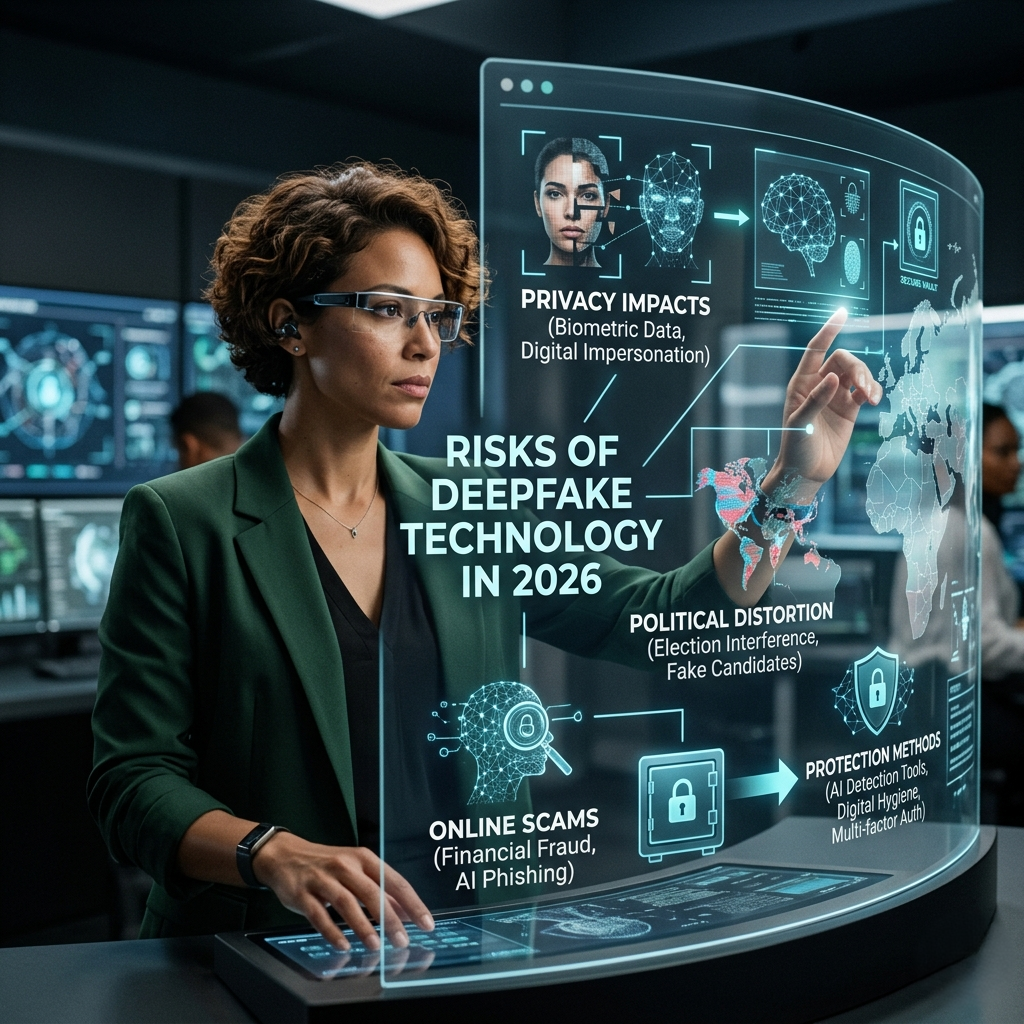
Imagine seeing a video of someone you trust saying something shocking…
But it never actually happened.
That’s the reality of deepfakes in 2026.
While this technology can be creative and useful, it also has a dangerous side. As it improves, the risks grow bigger and harder to detect.
What Are Deepfakes?
Deepfakes are fake videos, images, or audio created using AI.
They use deep learning to copy a person’s face, voice, or actions.
Tools powered by companies like OpenAI and Google have pushed AI forward. However, not all uses are safe.
Why Deepfakes Are Becoming a Serious Problem
Deepfake technology is improving quickly.
Because of that, fake content now looks almost real. As a result, it becomes harder for people to tell the difference.
1. Misinformation and Fake News
Deepfakes can spread false information at a massive scale.
What Can Happen
- Fake speeches from politicians
- Altered news clips
- Viral misinformation campaigns
This can influence public opinion and even elections.
2. Identity Theft and Scams
Scammers now use deepfake voices and videos to trick people.
Real Risks
- Fake video calls pretending to be family
- Voice cloning for financial fraud
- Business email scams with fake audio
For example, a scammer could mimic a CEO’s voice and request money transfers.
3. Privacy Violations
Deepfakes can use someone’s face without permission.
Common Issues
- Fake videos of individuals
- Misuse of personal photos
- Loss of digital identity control
This becomes especially harmful when used to damage someone’s reputation.
4. Deepfake Abuse and Harassment
One of the darkest uses is harassment.
Serious Concerns
- Non-consensual fake content
- Online bullying
- Emotional and psychological harm
Victims often struggle to prove that the content is fake.
5. Damage to Trust in Media
As deepfakes grow, trust in online content decreases.
People start questioning everything:
- Is this video real?
- Is this audio edited?
This creates confusion and weakens trust in real information.
Real-World Example
Imagine a viral video showing a public figure making a controversial statement.
Within hours:
- Millions watch it
- News spreads quickly
- Damage is already done
Even if it’s proven fake later, the impact remains.
How Governments and Companies Are Responding
Efforts are increasing to control misuse.
Current Actions
- AI detection tools
- Digital watermarking
- Stronger regulations
Platforms like YouTube and Facebook are working to detect and remove harmful content faster.
How to Protect Yourself from Deepfakes
You don’t need to be an expert to stay safe.
Simple Tips
- Don’t trust viral videos instantly
- Verify from trusted sources
- Look for unusual facial or voice patterns
- Avoid sharing unverified content
Awareness is your best defense.
The Balance: Technology vs Responsibility
Deepfake technology isn’t completely bad.
It is also used for:
- Movies and entertainment
- Education and training
- Content creation
However, without proper control, it can cause serious harm.
FAQs
What is a deepfake in simple terms?
It’s a fake video or audio made using AI to look real.
Are deepfakes illegal?
Some uses are illegal, especially when used for fraud or harassment.
Can deepfakes be detected?
Yes, but detection is becoming harder as technology improves.
Who is most at risk?
Public figures, businesses, and everyday users can all be targeted.
How can I stay safe online?
Always verify content and avoid trusting unknown sources quickly.
Final Thoughts: Stay Aware in the AI Era
Deepfakes are powerful and dangerous.
As technology grows, so do the risks.
However, awareness can make a big difference.
