


Most emotions can be masked. People learn to control their voice, manage expressions, and choose words carefully.
Blushing is different. It ignores intention and happens whether we want it to or not.
That makes it one of the most honest reactions the human body produces.
What Causes Blushing in Humans?
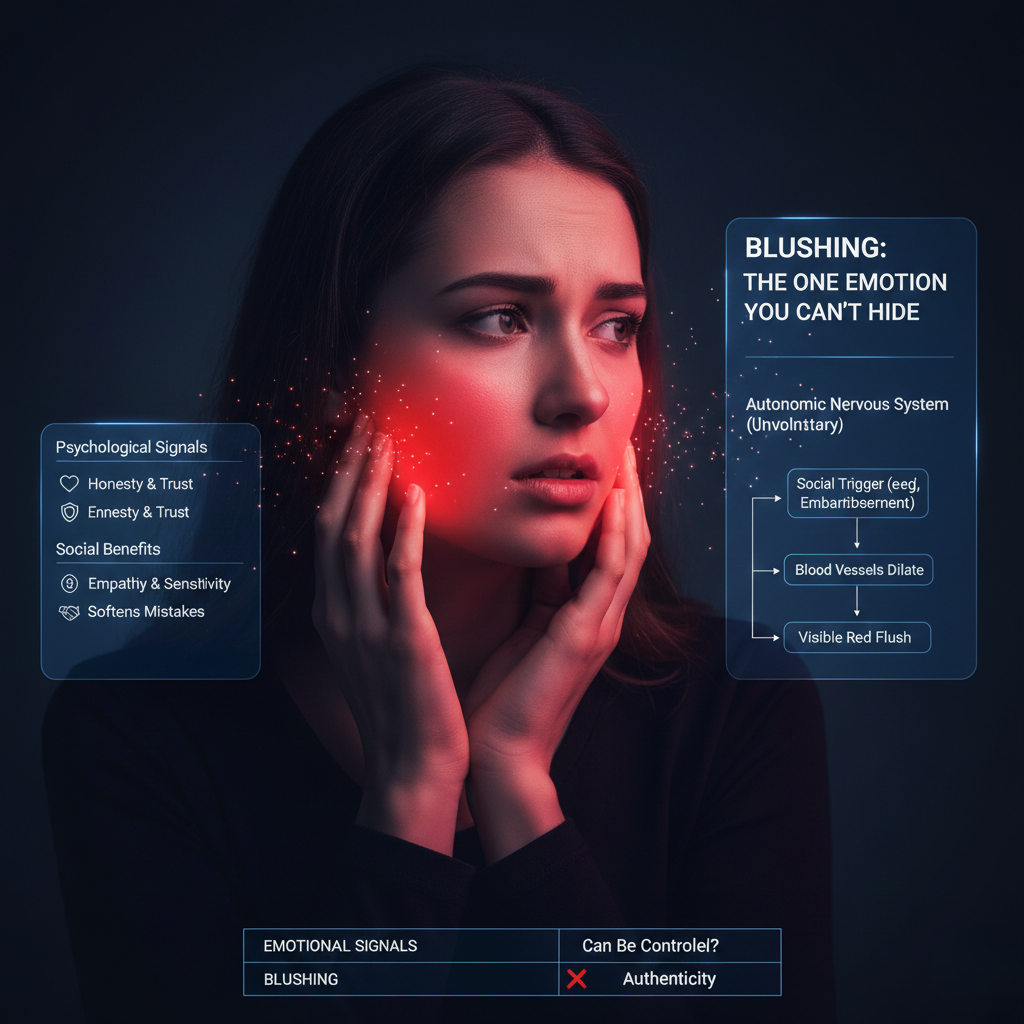
Blushing is controlled by the autonomic nervous system, which governs involuntary actions like heartbeat and digestion.
- When the brain detects a socially significant moment, blood vessels in the face widen instantly.
- This sudden rush of blood creates the familiar red flush without conscious input.
- You can’t stop it, fake it, or delay it.
Why Humans Blush During Emotional Moments
Blushing usually appears during moments of heightened self-awareness.
Common triggers include:
- Embarrassment or awkward attention
- Feeling judged or observed
- Shame or vulnerability
- Unexpected praise or pride
These situations activate deep social emotions tied to how we’re seen by others.
The Psychology Behind Blushing
Psychologists see blushing as a signal of genuine social emotion.
It often occurs when a person recognizes they’ve violated, met, or suddenly become aware of social expectations.
Unlike rehearsed behavior, blushing reflects internal emotion before the mind can filter it.
That’s why it’s considered uniquely authentic.
Why Blushing Builds Trust Instead of Weakness
Although many people find blushing uncomfortable, it actually carries social benefits.
Research suggests blushing can signal:
- Honesty and sincerity
- Sensitivity to social norms
- Respect for others’ opinions
- Emotional awareness
People often perceive blushers as more trustworthy and likable.
In social settings, blushing can soften mistakes and reduce conflict.
Why Blushing Can’t Be Controlled
The autonomic nervous system operates outside conscious control.
Just as you can’t command your heart to slow instantly, you can’t tell your face not to blush.
This lack of control is what makes blushing so revealing.
It shows emotion before logic steps in.
Is Blushing Unique to Humans?
Blushing appears to be uniquely human.
While animals show stress or submission signals, the visible facial flush linked to social awareness seems exclusive to people.
That suggests blushing evolved alongside complex human social structures.
It’s a biological response shaped by community living.
How Blushing Differs From Other Emotional Signals
| Emotional Signal | Can Be Controlled? | Authenticity |
|---|---|---|
| Smile | Yes | Can be faked |
| Tone of voice | Yes | Can be trained |
| Body posture | Partially | Often managed |
| Blushing | No | Always genuine |
Blushing stands apart as an involuntary truth teller.
Frequently Asked Questions (FAQs)
Why do some people blush more than others?
Sensitivity of blood vessels and social awareness levels vary between individuals.
Can anxiety increase blushing?
Yes. Social anxiety can heighten awareness, making blushing more frequent.
Is blushing a sign of weakness?
No. Psychologists associate blushing with honesty and emotional intelligence.
Can blushing be reduced?
Some techniques help manage anxiety, but blushing itself cannot be fully controlled.
The Quiet Power of an Unfiltered Emotion
Blushing may feel inconvenient, but it serves an important purpose.
It reminds us that not everything about being human can be polished or hidden.
In a world of controlled expressions and practiced confidence, blushing stands as a moment of raw truth.
