


Introduction
It sounds unbelievable at first. However, it’s true.
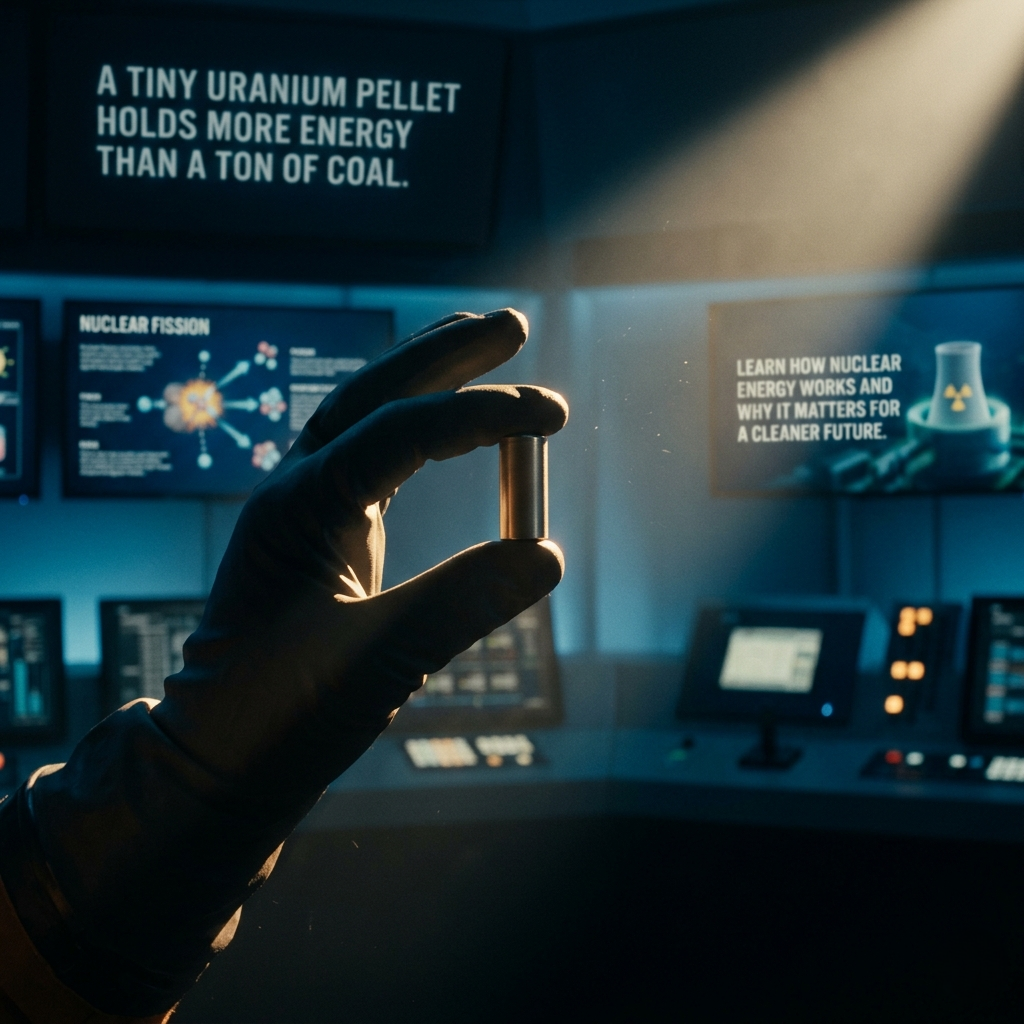
A uranium fuel pellet, about the size of a fingertip, holds more energy than an entire ton of coal. Because of this, nuclear energy stands out as one of the most powerful energy sources available today.
What Is a Uranium Fuel Pellet?
A uranium fuel pellet is a small ceramic cylinder made from processed uranium. Although it weighs only about 10 grams, it stores an incredible amount of energy.
In fact, according to experts at the World Nuclear Association, one pellet can power an average home for over 18 months.
How Does Uranium Produce Energy?
Unlike coal, uranium does not burn. Instead, it releases energy through a process called nuclear fission.
What Happens in Nuclear Fission
- Uranium atoms split into smaller atoms
- This process releases a large amount of heat
- Heat turns water into steam
- Steam spins turbines to generate electricity
Because of this process, nuclear energy produces far more power from a tiny amount of fuel.
Uranium vs Coal: A Simple Comparison
The difference between uranium and coal is huge. While coal requires large quantities, uranium delivers more with less.
Energy Comparison
| Feature | Uranium Pellet | Coal |
|---|---|---|
| Size | Fingertip | Large bulk |
| Weight | ~10 grams | 1 ton |
| Energy Output | Extremely high | Much lower |
| Emissions | Very low carbon | High carbon emissions |
As a result, nuclear energy is far more efficient and cleaner.
Why This Matters for the Environment
Coal has powered industries for decades. However, it comes with serious environmental costs.
It releases large amounts of carbon dioxide, which contributes to climate change.
On the other hand, nuclear energy produces almost zero carbon emissions during operation. Therefore, it plays a key role in reducing global pollution.
Real-World Impact
A single nuclear fuel assembly contains dozens of pellets. Together, they can generate as much electricity as burning thousands of tons of coal.
Because of this, nuclear plants require far less fuel and produce much less waste compared to fossil fuels.
What Experts Say
Organizations like the U.S. Nuclear Energy Institute and the MIT Energy Initiative highlight the importance of nuclear energy.
They believe it must be part of any serious plan to reduce carbon emissions and meet future energy demands.
Benefits of Nuclear Energy
Key Advantages
- Extremely high energy density
- Low greenhouse gas emissions
- Reliable and consistent power supply
- Less fuel required compared to coal
- Supports clean energy goals
Because of these benefits, many countries are investing more in nuclear technology.
Common Concerns
While nuclear energy is powerful, it also raises questions.
Main Concerns
- Radioactive waste management
- High initial setup cost
- Safety risks if not managed properly
However, modern technology continues to improve safety and efficiency.
FAQs
How much energy is in one uranium pellet?
One pellet can provide as much energy as a ton of coal and power a home for about 18 months.
Is nuclear energy cleaner than coal?
Yes. Nuclear energy produces very low carbon emissions compared to coal.
What is nuclear fission?
It is the process of splitting uranium atoms to release heat and generate electricity.
Is nuclear energy safe?
Modern nuclear plants are designed with advanced safety systems, making them much safer than earlier versions.
Why isn’t nuclear energy used everywhere?
Costs, regulations, and public concerns slow down adoption in some regions.
Final Thoughts
The comparison between a tiny uranium pellet and a ton of coal clearly shows the power of nuclear energy. While coal relies on bulk and combustion, uranium delivers massive energy in a compact form.
At the same time, it offers a cleaner alternative for a world facing climate challenges.
👉 As global energy needs grow, nuclear power could play a crucial role in building a more sustainable future.
