


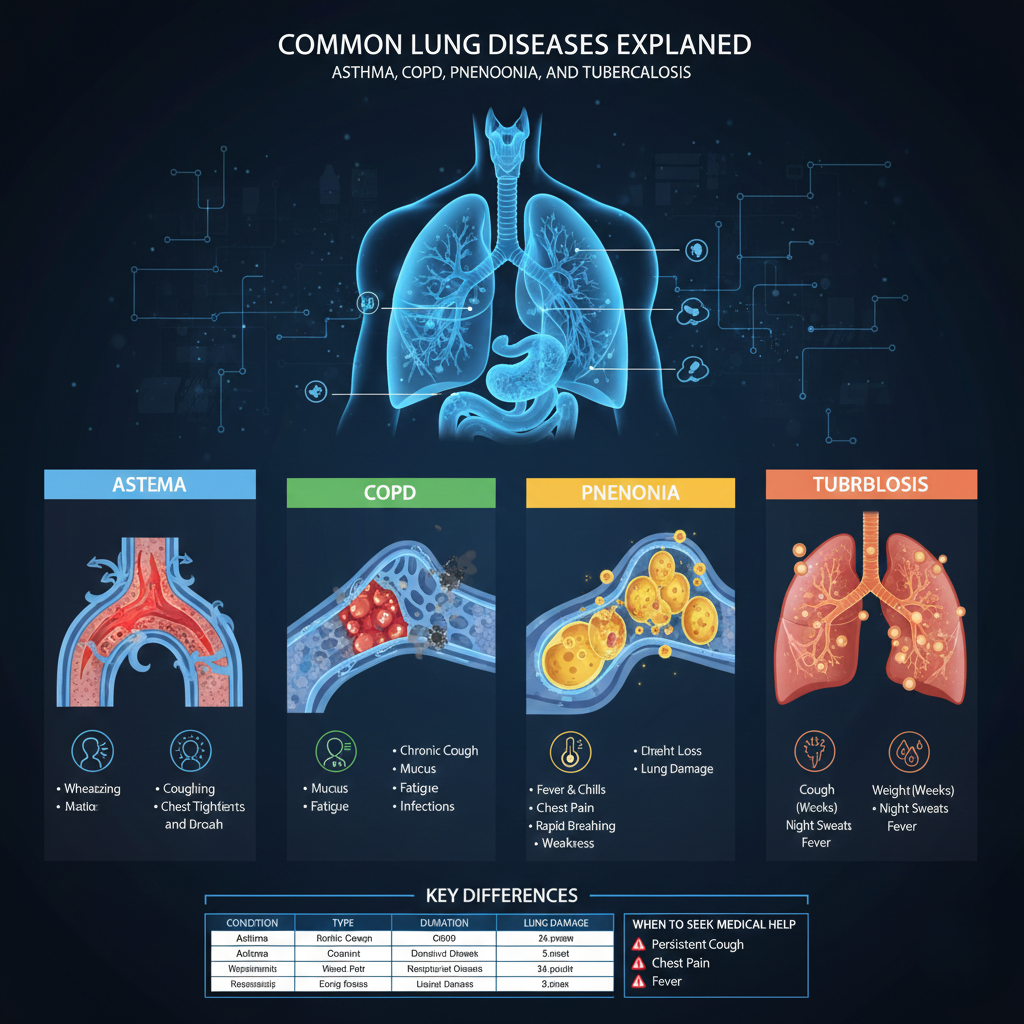
Introduction: Why Lung Health Matters
Your lungs work nonstop to supply oxygen to every cell in your body.
When lung diseases disrupt airflow, even simple activities can become exhausting.
Millions of people worldwide live with chronic or infectious lung conditions.
Understanding how these diseases work is the first step toward early care and prevention.
How Lung Diseases Affect the Body
Lung diseases interfere with how air moves in and out of the lungs.
This reduces oxygen delivery and strains the heart and other organs.
Over time, poor oxygen flow can impact energy levels, immunity, and overall health.
Some conditions are reversible, while others cause permanent damage.
Asthma: When Airways Become Overly Sensitive
Asthma is a chronic condition that causes airway inflammation and tightening.
The airways react strongly to triggers that may seem harmless.
Common Asthma Symptoms
- Wheezing or whistling sounds while breathing
- Persistent coughing, especially at night
- Chest tightness or pressure
- Shortness of breath during activity or rest
Symptoms often worsen at night or early morning.
Allergens, cold air, stress, and infections are common triggers.
COPD: Long-Term Damage to the Lungs
Chronic Obstructive Pulmonary Disease (COPD) develops slowly over time.
It causes permanent damage to lung tissue and airflow pathways.
Signs of COPD
- Ongoing cough that produces thick mucus
- Persistent shortness of breath
- Fatigue during mild activity
- Frequent chest infections
Smoking is the leading cause, but air pollution and chemical exposure also play a role.
Unlike asthma, COPD symptoms usually worsen over time.
Pneumonia: A Sudden Lung Infection
Pneumonia occurs when infections inflame the air sacs in the lungs.
These sacs fill with fluid or pus, making breathing painful and difficult.
Pneumonia Symptoms
- Fever and chills
- Sharp chest pain while breathing or coughing
- Rapid, labored breathing
- Weakness and confusion in severe cases
Pneumonia can be caused by bacteria, viruses, or fungi.
Older adults, children, and those with weak immunity face higher risk.
Tuberculosis: A Slow but Serious Infection
Tuberculosis (TB) is caused by bacteria that primarily attack the lungs.
The disease develops gradually and can be life-threatening if untreated.
Warning Signs of Tuberculosis
- Deep cough lasting several weeks
- Unexplained weight loss
- Fatigue and weakness
- Night sweats and fever
TB spreads through the air and requires long-term treatment.
Early diagnosis greatly improves recovery outcomes.
Key Differences Between These Lung Diseases
| Condition | Type | Duration | Lung Damage |
|---|---|---|---|
| Asthma | Chronic | Long-term | Usually reversible |
| COPD | Chronic | Progressive | Permanent |
| Pneumonia | Infectious | Short-term | Often reversible |
| Tuberculosis | Infectious | Long-term | Progressive if untreated |
Understanding these differences helps guide proper treatment and prevention.
When to Seek Medical Help
Breathing problems should never be ignored.
Early care can prevent complications and long-term damage.
See a Doctor If You Experience:
- Persistent cough lasting weeks
- Shortness of breath at rest
- Chest pain while breathing
- Fever with breathing difficulty
Prompt evaluation can save lives, especially in infectious cases.
Conclusion: Protecting Your Lung Health
Lung diseases can range from manageable to life-threatening.
Early awareness makes a critical difference in outcomes.
By recognizing symptoms and seeking timely care, many complications can be avoided.
Healthy lungs support a healthier, more active life.
Breathing is essential protecting your lungs should be a priority.
Frequently Asked Questions (FAQs)
Is asthma the same as COPD?
No. Asthma is usually reversible, while COPD causes permanent lung damage.
Can pneumonia be prevented?
Yes. Vaccinations, hygiene, and strong immunity reduce risk significantly.
Is tuberculosis still common today?
Yes. TB remains a global health concern, especially in developing regions.
Are lung diseases always caused by smoking?
No. Infections, genetics, pollution, and environmental factors also contribute.
