


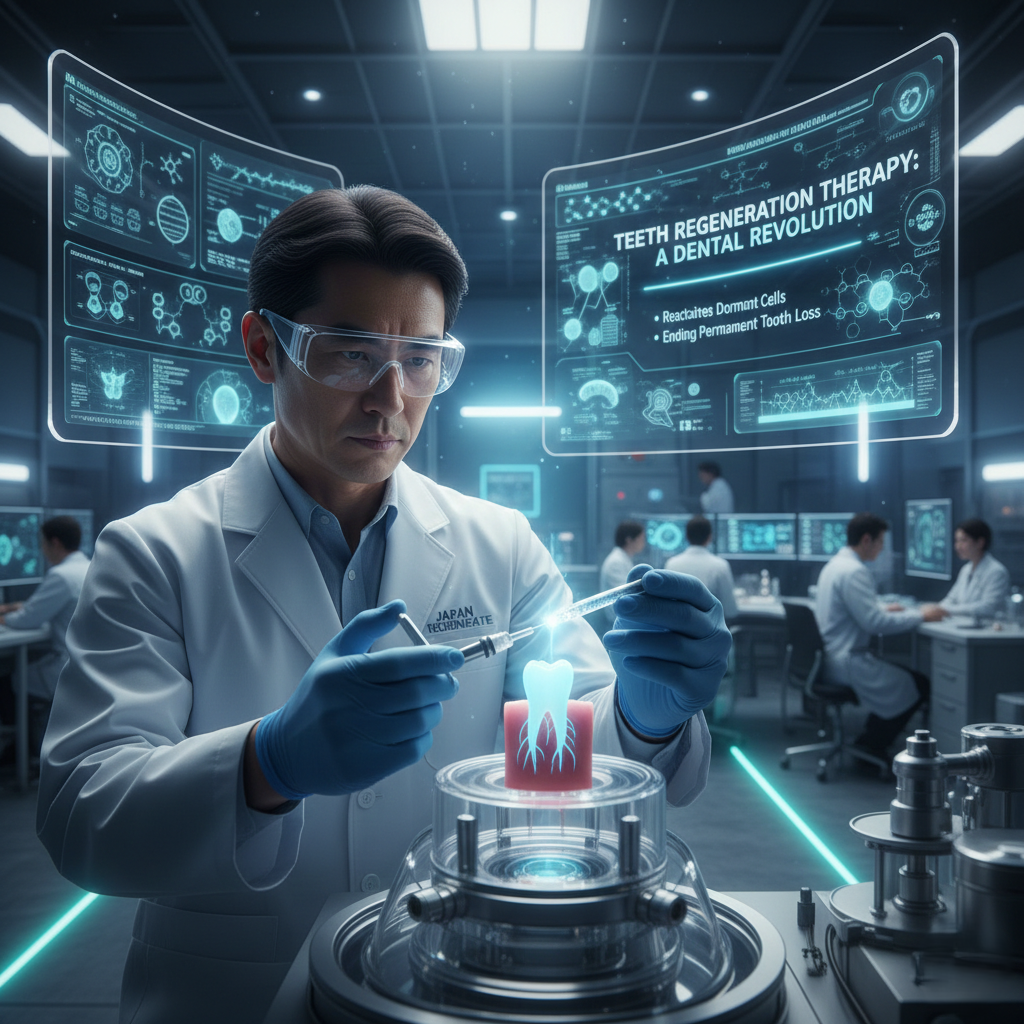
Introduction: What If Losing a Tooth Wasn’t Permanent?
Imagine losing a tooth and instead of replacing it, your body grows a new one.
For decades, this idea belonged to science fiction.
Now, researchers in Japan are testing an experimental drug that could activate the body’s natural tooth-regrowth potential.
If successful, it could transform dentistry as we know it.
Why Tooth Regrowth Was Once Thought Impossible
Humans are typically limited to two sets of teeth.
Unlike sharks or reptiles, adult humans do not naturally regenerate teeth.
Dentistry has long relied on external solutions.
Fillings, crowns, implants, and dentures replace what the body cannot restore.
This limitation made tooth loss a lifelong condition.
Until now.
The Science Behind Tooth Regrowth
Researchers discovered that the human body still carries dormant tooth-forming cells.
These cells are inactive due to specific genetic suppressors.
How the Experimental Drug Works
- Targets a protein that blocks tooth development
- Reactivates natural tooth-growth pathways
- Encourages the formation of new tooth structures
- Aims to regrow teeth rather than replace them
Instead of adding artificial materials, the drug works with biology.
Early Tests Show Promising Results
Initial laboratory and animal studies have delivered encouraging outcomes.
New teeth successfully formed where none existed before.
Human clinical trials are now underway in Japan.
These trials are focused on safety, dosage, and effectiveness.
Researchers stress that this is still experimental.
But the early data has exceeded expectations.
What This Could Mean for Dentistry
If proven safe and effective, this treatment could redefine dental care.
The shift would be from replacement to regeneration.
Potential Benefits of Tooth Regrowth
- Eliminates the need for dentures or implants
- Reduces long-term dental costs
- Restores natural tooth structure and function
- Improves quality of life for aging populations
Dentistry could become more biological and less mechanical.
Who Could Benefit Most
Tooth-regrowth therapy could help people with various conditions.
Especially those where replacement options are limited.
Possible Applications
- Adults who lost permanent teeth
- Patients with congenital tooth absence
- People unable to receive implants
- Individuals with severe dental trauma
However, broad use will depend on clinical trial results.
Important Limitations to Understand
This treatment is not available to the public yet.
It is still in the research and testing phase.
Long-term effects remain unknown.
Regulatory approval will take years if trials succeed.
Experts caution against unrealistic expectations.
Scientific progress must be measured and safe.
Ethical and Medical Considerations
As with any regenerative therapy, oversight matters.
The goal is healing not enhancement.
Strict guidelines are in place to prevent misuse.
Researchers emphasize medical necessity over cosmetic use.
This ensures the technology benefits health, not vanity.
How This Fits Into Regenerative Medicine
Tooth regrowth is part of a broader medical shift.
The body is increasingly viewed as capable of self-repair.
Similar advances are happening in nerve repair and tissue regeneration.
Together, they point toward a future of biological healing.
Conclusion: Grow It, Don’t Replace It
The idea of regrowing teeth once sounded impossible.
Today, it is being tested in real laboratories.
While still experimental, this breakthrough represents hope.
Hope for a future where tooth loss is no longer permanent.
Dentistry may soon enter a new era one guided by regeneration.
The future may not replace what we lose, but help us regrow it.
✨ Shared for educational purposes only. Not medical advice.
Frequently Asked Questions (FAQs)
Can adults really regrow teeth?
Possibly. Research suggests dormant tooth-forming cells can be reactivated.
Is this treatment available now?
No. It is currently in experimental clinical trials.
Could this replace dental implants?
If successful, it may reduce the need for implants in the future.
Is this safe?
Safety is still being evaluated through regulated trials.
