


Clean air is often taken for granted.
But growing scientific evidence shows that air pollution during pregnancy can directly affect a baby’s health, even before birth.
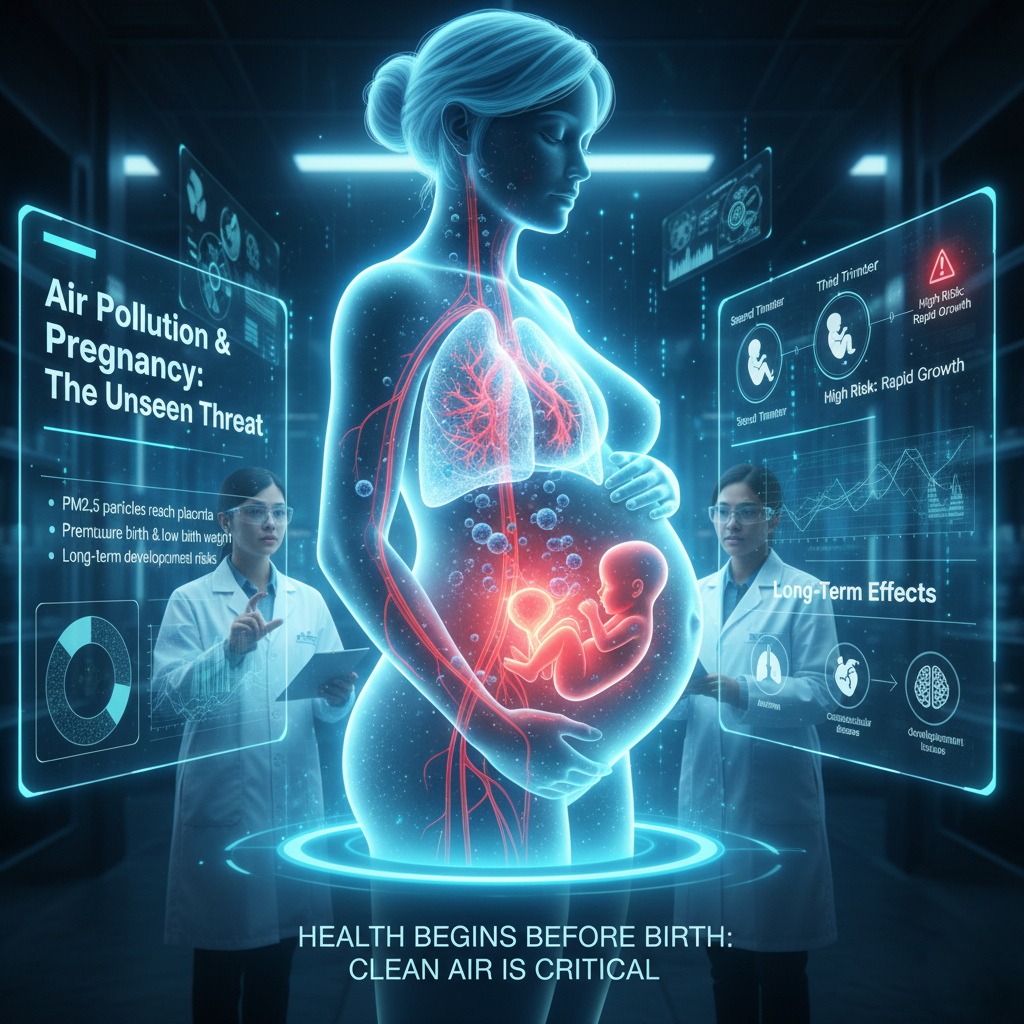
Researchers warn that exposure to fine air pollutants is linked to premature delivery, low birth weight, and long-term developmental problems, making air quality a critical yet overlooked factor in maternal health.
What Is PM2.5 and Why Is It Dangerous?
PM2.5 refers to microscopic airborne particles smaller than 2.5 micrometers.
Because of their size, these pollutants can bypass the body’s natural defenses.
How PM2.5 affects pregnant women
Once inhaled, PM2.5 particles can:
- Penetrate deep into the lungs
- Enter the bloodstream
- Reach the placenta
At the placenta, they may trigger inflammation and restricted blood flow, reducing the oxygen and nutrients a fetus needs to grow.
Critical Pregnancy Stages at Higher Risk
Scientists emphasize that timing matters when it comes to pollution exposure.
Second and third trimesters are most vulnerable
During these stages, babies undergo rapid growth and organ development.
High pollution exposure during this period has been linked to:
- Increased risk of premature labor
- Low birth weight
- Congenital complications
These early disruptions may set the stage for health problems later in life.
Long-Term Health Effects for Children
The risks don’t always end at birth.
Studies suggest prenatal exposure to air pollution may increase the likelihood of:
- Asthma and other breathing disorders
- Cardiovascular disease
- Metabolic conditions such as diabetes
- Weakened immune function
Early exposure can influence how organs develop and function across a lifetime.
Communities Facing the Greatest Burden
Air pollution doesn’t affect everyone equally.
Low-income families and marginalized communities often face higher exposure levels.
High-risk living environments include:
- Areas near highways
- Industrial and manufacturing zones
- Dense urban neighborhoods
Limited access to healthcare and air filtration tools can worsen these risks.
What Expectant Mothers Can Do to Reduce Exposure
While large-scale solutions require policy change, individual steps can still help lower risk.
Practical protective measures include:
- Monitoring daily air quality reports
- Avoiding outdoor activities during pollution peaks
- Keeping windows closed on poor air days
- Using indoor air purifiers
- Attending regular prenatal checkups
These steps won’t eliminate exposure entirely, but they can add important layers of protection.
Why Policy Action Is Essential
Experts agree that personal precautions are not enough.
Reducing health risks requires:
- Stricter air quality regulations
- Lower vehicle and industrial emissions
- Urban planning that protects residential areas
Clean air is not just an environmental issue it’s a public health necessity.
Frequently Asked Questions (FAQs)
Can air pollution really affect unborn babies?
Yes. Fine particles can reach the placenta and interfere with oxygen and nutrient delivery.
Is occasional exposure harmful?
Short-term exposure may be less dangerous, but chronic or high-level exposure raises serious risks.
Are indoor environments always safer?
Indoor air can still be polluted, but purifiers and proper ventilation can significantly reduce exposure.
The Bigger Picture: Health Begins Before Birth
This research reinforces a powerful truth:
Environmental conditions shape human health from the very start of life.
Ensuring clean air isn’t just about protecting today’s population.
It’s about safeguarding the next generation before they even take their first breath.
Healthy pregnancies begin with healthy environments and clean air is essential.
