


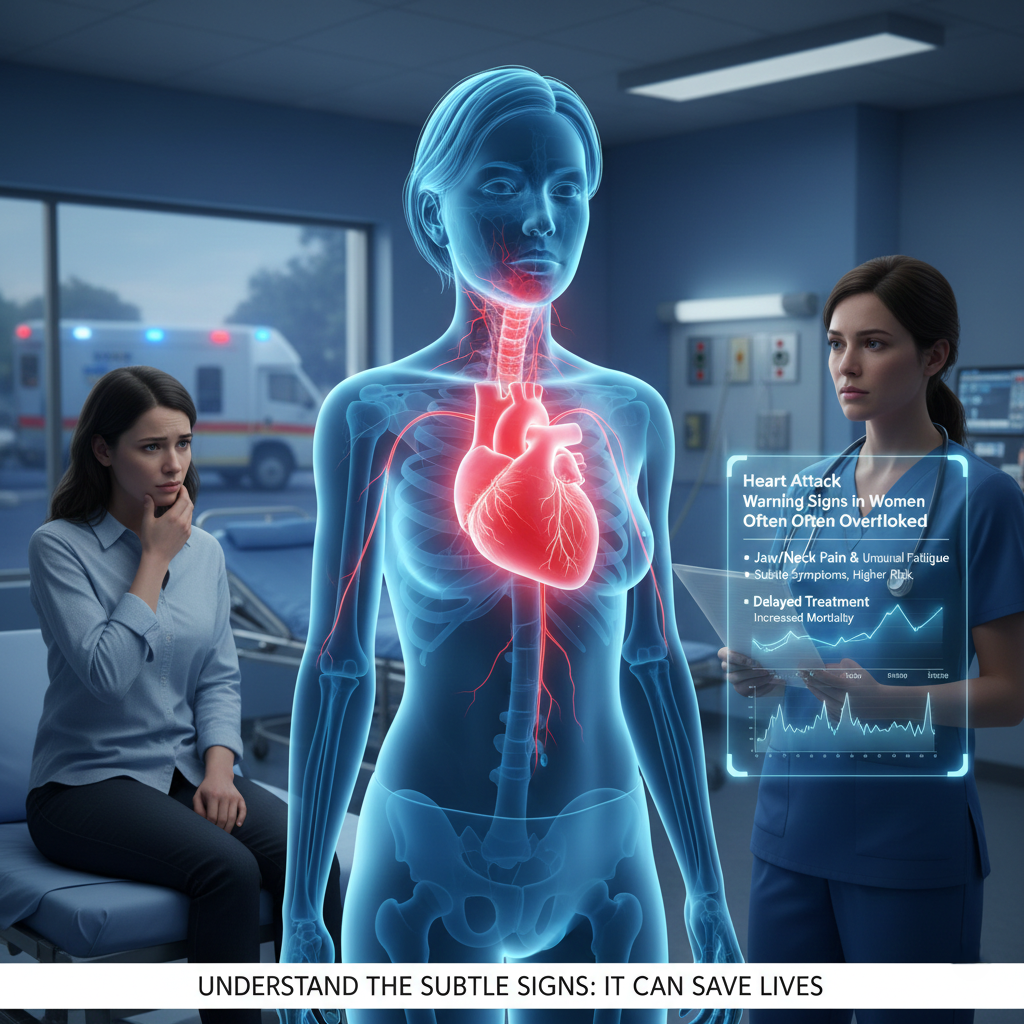
When it comes to heart attacks, the warning signs are not always dramatic or obvious especially for women.
New emergency room data suggests that some of the most dangerous symptoms are also the easiest to overlook, leading to delayed treatment and increased risk.
Understanding these subtle signals can truly save lives.
Jaw and Neck Pain: A Commonly Missed Symptom
Not All Heart Attacks Start in the Chest
One of the most frequently overlooked heart attack symptoms in women is sudden, unexplained jaw or neck pain.
This discomfort may:
- Appear without chest pain
- Feel dull, tight, or aching
- Come and go rather than remain constant
Because it doesn’t match the “classic” heart attack image, many women dismiss it as stress, dental issues, or muscle strain.
Unusual Fatigue That Feels Different
When Tiredness Is a Warning Sign
Another early red flag is sudden, extreme fatigue that feels out of proportion to activity.
Women often describe it as:
- Overwhelming exhaustion
- Feeling weak or heavy
- Struggling with routine tasks
This can happen when the heart isn’t pumping efficiently, even before chest discomfort appears.
Why Heart Pain Radiates Beyond the Chest
The Science Behind Atypical Symptoms
Medical experts explain that heart-related pain doesn’t always stay in one place.
Nerves connected to the heart also link to areas such as the:
- Jaw
- Neck
- Shoulders
- Upper back
As a result, the brain may interpret heart distress as pain in these regions instead of the chest.
Why These Symptoms Are Often Ignored
A Dangerous Awareness Gap
Many women delay seeking care because they don’t recognize these signs as heart-related.
Common reasons include:
- Symptoms feel mild or vague
- No sharp chest pain is present
- Fatigue is mistaken for stress or illness
This delay can significantly worsen outcomes.
Why Early Action Matters
Minutes Can Save Heart Muscle
Prompt medical attention dramatically increases survival rates and reduces long-term heart damage.
Early treatment can:
- Restore blood flow faster
- Limit heart muscle injury
- Improve recovery and quality of life
Recognizing symptoms early is one of the most powerful tools in heart attack survival.
Frequently Asked Questions (FAQs)
Do women experience heart attacks differently than men?
Yes. Women are more likely to experience subtle symptoms like jaw pain, fatigue, nausea, or shortness of breath.
Is jaw pain alone enough to seek emergency care?
If jaw or neck pain appears suddenly, without explanation, and especially with fatigue or shortness of breath, emergency evaluation is strongly advised.
Can young women have heart attacks?
Yes. While risk increases with age, heart attacks can occur in younger women, particularly with risk factors like smoking, diabetes, or family history.
Final Thoughts
Heart attacks don’t always announce themselves loudly especially in women.
Jaw or neck pain combined with unusual fatigue may be the body’s quiet cry for help.
Understanding that heart attack symptoms can look different helps close a dangerous awareness gap and that knowledge truly saves lives.
