


Introduction
For years, cholesterol has been blamed as the main cause of heart attacks.
High numbers were seen as the biggest warning sign.
But science is now asking a deeper question.
What if cholesterol is only part of the story?
Researchers are exploring how infections and immune responses may quietly damage the heart over time.
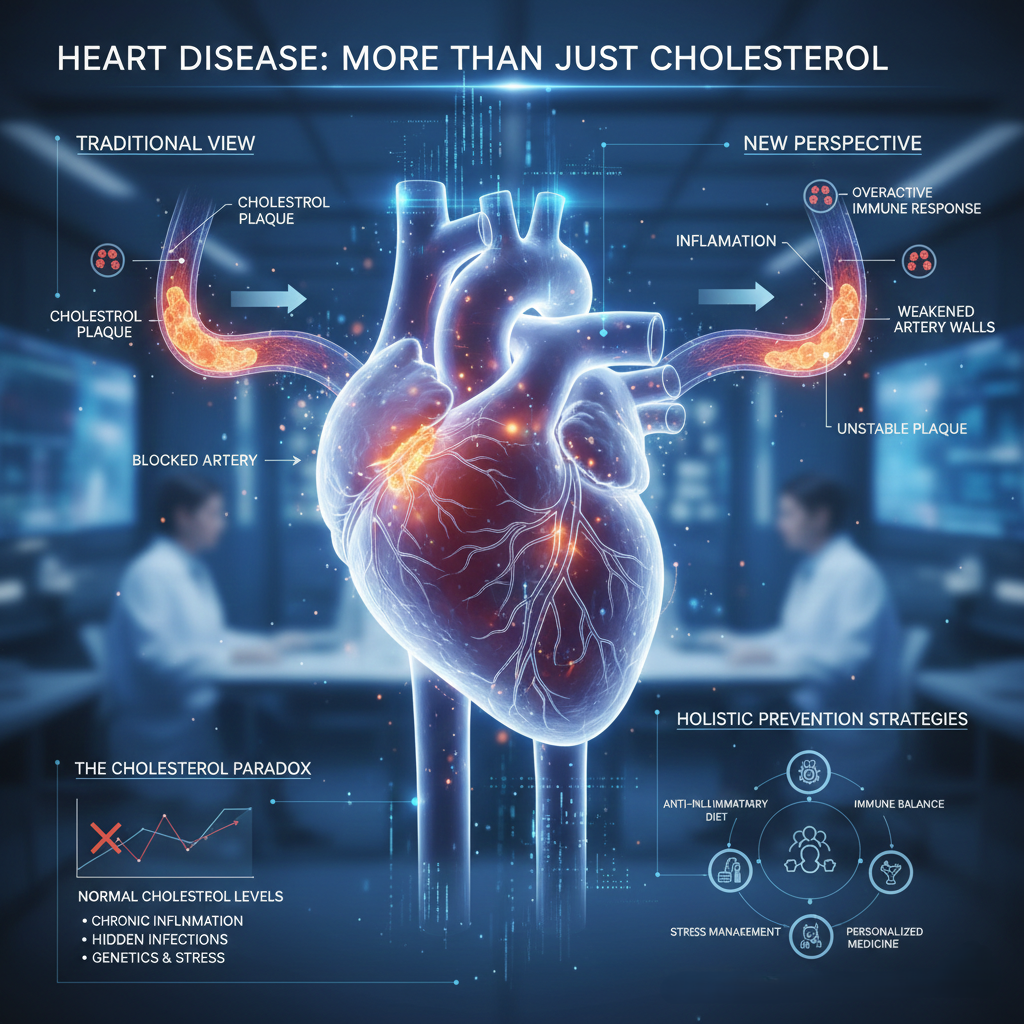
The Traditional View of Heart Disease
The classic explanation is simple.
Cholesterol builds up inside arteries and blocks blood flow.
This idea led to a strong focus on:
- Cholesterol numbers
- Low-fat diets
- Cholesterol-lowering drugs
While helpful, this view may not explain everything.
A New Perspective: Inflammation and Infection
Scientists are now looking at heart disease as an inflammatory condition.
Chronic inflammation can slowly damage blood vessels.
One possible trigger is long-term or repeated infections.
These infections keep the immune system switched on.
How the Immune System Affects the Heart
When the immune system fights infections, inflammation rises.
Short-term inflammation is normal and helpful.
Problems start when inflammation becomes constant.
Long-term immune activity can:
- Weaken artery walls
- Make plaques less stable
- Increase the risk of clots
This creates a dangerous environment inside blood vessels.
Where Cholesterol Fits In
Cholesterol is still important but it may not be the root cause.
In inflamed arteries, cholesterol can become trapped more easily.
In this way, cholesterol acts like fuel added to an existing fire.
The inflammation may come first.
Why Some People With “Normal” Cholesterol Get Heart Disease
This newer view helps explain a long-standing mystery.
Some people have heart attacks despite normal cholesterol levels.
Possible reasons include:
- Chronic infections
- Overactive immune responses
- Genetic differences
- Long-term stress
Heart disease risk is not based on one number alone.
A More Holistic View of Heart Health
Researchers are moving toward a broader approach.
Instead of focusing on a single risk factor, they now consider:
- Genetics
- Lifestyle
- Immune system health
- Environmental exposure
This approach reflects how complex the human body really is.
What This Means for Prevention
This shift does not mean cholesterol doesn’t matter.
It means prevention may need to go further.
Future strategies may focus on:
- Reducing chronic inflammation
- Supporting immune balance
- Addressing hidden infections
- Improving overall lifestyle health
Heart care may become more personalized.
FAQs About Heart Disease and Inflammation
Is cholesterol still dangerous?
Yes, especially when combined with inflammation.
Can infections really affect heart health?
Research suggests long-term infections may increase risk.
Does this change current treatment advice?
Not yet, but it may guide future prevention strategies.
Should people ignore cholesterol levels?
No. Cholesterol is still one piece of the puzzle.
Conclusion: Heart Disease Is More Complex Than We Thought
Heart disease is not caused by a single factor.
It is shaped by inflammation, immunity, genetics, and lifestyle together.
By questioning old assumptions and exploring overlooked causes like infections, science is moving closer to better answers.
This deeper understanding may lead to smarter prevention and better care—not just for heart disease, but many chronic illnesses.
