


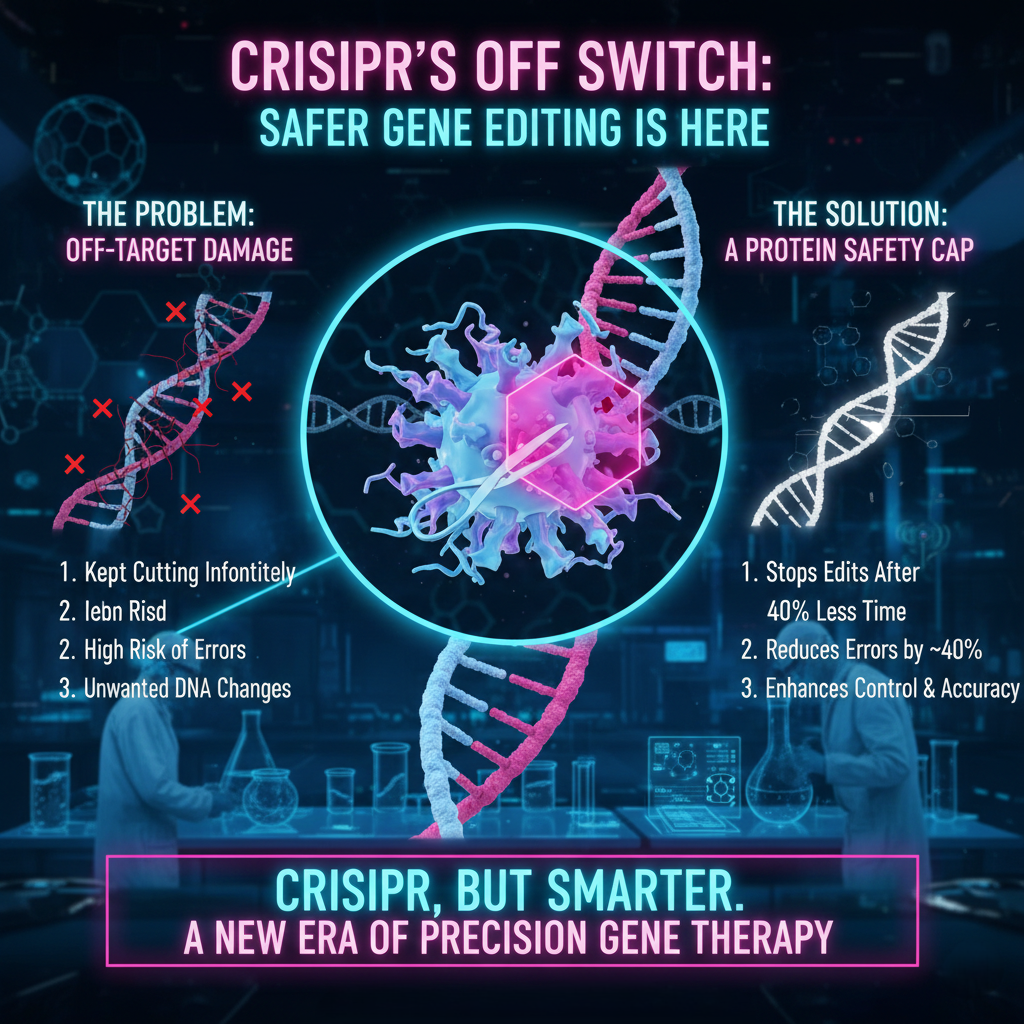
Solving a Key CRISPR Problem
CRISPR is powerful because it can cut DNA with precision.
But until now, it had one big flaw it didn’t always know when to stop.
That may have just changed.
Why CRISPR Staying Active Is a Problem
CRISPR works like molecular scissors.
Once turned on inside a cell, it can:
- Keep cutting longer than needed
- Increase the risk of unwanted DNA changes
- Edit places scientists didn’t intend
This is called off-target damage, and it’s a major safety concern.
The New Discovery: A Built-In Off Switch
Researchers have created a smart solution.
They designed a tiny protein cap that attaches to CRISPR after it finishes editing.
Once attached:
- CRISPR is physically blocked
- DNA cutting stops
- Extra edits are prevented
It’s like putting a cover on scissors after use.
How Effective Is This New Cap?
Laboratory tests show impressive results.
The protein cap:
- Reduced off-target DNA damage by about 40%
- Limited how long CRISPR stays active
- Improved control over where edits happen
That level of improvement matters in medical settings.
Why Timing Matters in Gene Editing
The longer CRISPR stays active, the higher the risk.
By shortening its working time, scientists can:
- Improve accuracy
- Reduce unintended changes
- Increase confidence in results
Control is just as important as precision.
What This Means for Gene Therapy
This breakthrough could make future treatments safer.
Potential areas of impact include:
- Inherited genetic disorders
- Cancer treatments
- Rare diseases caused by single gene errors
When working inside human cells, even small errors matter.
Why This Is Different From Past Solutions
Before this, researchers relied on:
- Chemical controls
- Timing-based shutdowns
- Complex delivery methods
This new approach adds something better — a physical stop.
Simple. Direct. Reliable.
CRISPR, But Smarter
CRISPR can still do what it does best.
It can:
- Find specific DNA sequences
- Make precise cuts
- Enable targeted genetic changes
Now, it can also stop itself when the job is done.
That’s a major step forward.
FAQs About CRISPR and Safety
Does this change how CRISPR edits DNA?
No. It only limits how long CRISPR stays active.
Is this ready for human use?
Not yet. More testing is needed before clinical use.
Why is off-target damage dangerous?
Unintended edits can disrupt healthy genes and cause problems.
Final Thoughts: A Safer Future for Gene Editing
CRISPR has already transformed science.
Adding an off switch makes it smarter — and safer.
With better control, gene editing moves closer to real-world treatments that people can trust.
Precision matters.
Knowing when to stop matters just as much.
