


Scientists have developed a new type of antivenom that could change how snakebites are treated worldwide.
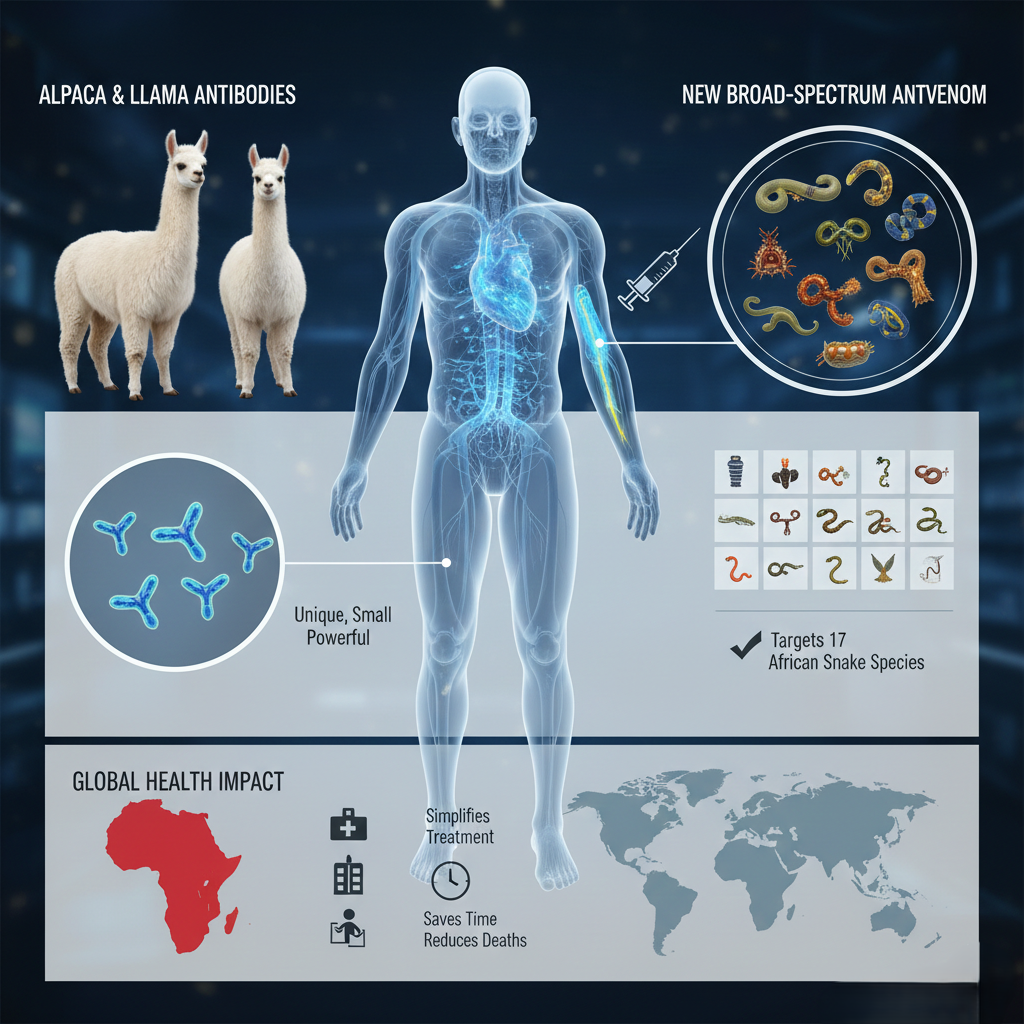
Using antibodies from an alpaca and a llama, researchers created a treatment that may protect against venom from 17 different African snake species.
Early results suggest this approach could save many lives.
Why Snakebites Are Still a Global Problem
Snakebites remain a serious health issue, especially in Africa and other low-resource regions.
Each year:
- Tens of thousands of people die
- Many survivors suffer permanent injuries
- Antivenom is often hard to find
- Treatment is expensive and complex
One major challenge is that most antivenoms are very specific.
The Limits of Traditional Antivenom
Conventional antivenoms are usually made to target:
- One snake species
- Or a small group of related snakes
This creates problems:
- Doctors must identify the snake quickly
- Stocking many antivenoms is costly
- Wrong treatment can be ineffective
In remote areas, this delay can be deadly.
How Alpacas and Llamas Made a Difference
Alpacas and llamas produce unique antibodies that are smaller and more flexible than human ones.
To create the antivenom:
- Scientists exposed the animals to a mix of snake venoms
- Their immune systems produced many antibodies
- Researchers selected the most powerful ones
- These antibodies were combined into a single formula
The result was a strong, wide-ranging antivenom.
What the Lab Tests Showed
In laboratory studies, the results were promising.
Mice treated with the new antivenom:
- Survived venom from many snake species
- Showed less tissue damage
- Had better overall recovery
This suggests the treatment may prevent long-term injuries, not just death.
Why Broad-Spectrum Antivenom Matters
A single antivenom that works against many snakes could:
- Simplify emergency treatment
- Reduce storage and transport costs
- Improve access in rural hospitals
- Save time when every minute counts
This could be a major breakthrough for global health.
What Still Needs to Happen
Despite the success so far, more work remains.
Next steps include:
- Human clinical trials
- Large-scale production planning
- Regulatory approval
- Distribution strategies
Scientists caution that real-world testing is essential before use in people.
A New Direction for Antibody Science
This research shows how modern science can find solutions in unexpected places.
By using alpacas and llamas, scientists unlocked a new way to fight deadly venom.
It proves that innovation can turn unlikely animals into powerful allies.
Frequently Asked Questions
Why use alpacas and llamas?
Their antibodies are small, stable, and effective against many toxins.
Does this replace all current antivenoms?
Not yet. More testing is needed before human use.
Could this work outside Africa?
Possibly. The method could be adapted for other regions.
Final Thoughts: Hope for Snakebite Victims Worldwide
Snakebites have been neglected for too long.
This broad-spectrum antivenom offers real hope for faster, simpler, and more effective treatment — especially where resources are limited.
If successful in humans, it could change the future of snakebite care.
