

Close Menu
Innovate And ExploreInnovate And Explore

    Subscribe to Updates

    Get the latest creative news from FooBar about art, design and business.

    What's Hot

    How to Grow Instagram from 0 to 10K Followers in 2026 Using Organic Methods

    May 22, 2026

    Smart Wearables Are Reshaping the Future of Everyday Technology

    May 13, 2026

    Everyday Tech How-To Guides for a Smarter and Easier Digital Life

    May 13, 2026
    Facebook Instagram
    Facebook Instagram YouTube TikTok
    Innovate And ExploreInnovate And Explore
    • Artificial Intelligence
    • Medical Research
    • Technology News
    • Science News
    • VR Headset
    • Palantir
    Innovate And ExploreInnovate And Explore
    Home » Scientists Build Computers Powered by Living Human Brain Cells
    Science News

    Scientists Build Computers Powered by Living Human Brain Cells

    alfredBy alfredFebruary 1, 2026No Comments3 Mins Read
    Facebook Twitter Pinterest LinkedIn Tumblr WhatsApp Email
    Share
    Facebook Twitter LinkedIn WhatsApp Pinterest Email

    Imagine a computer that learns like a human brain but without thinking or feeling.

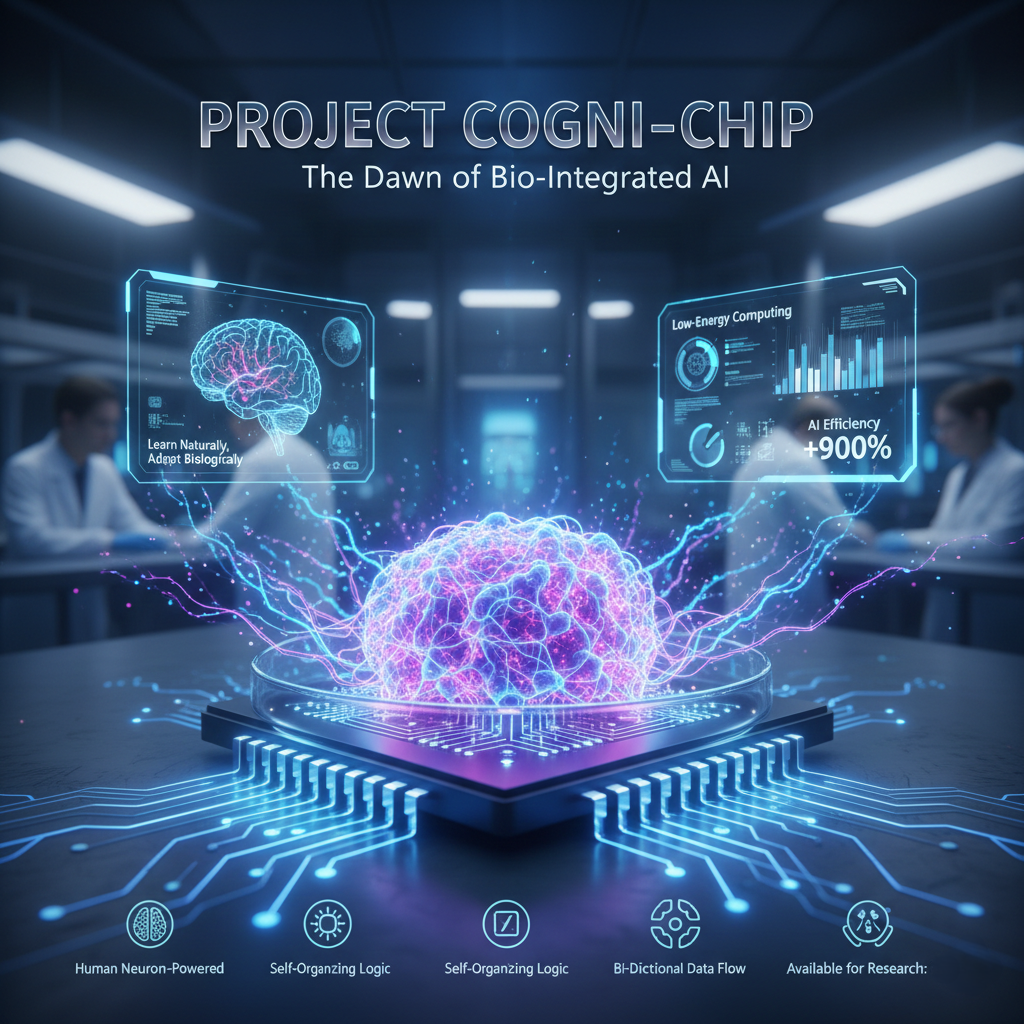
    Researchers have achieved a breakthrough by creating computers powered by living human brain cells grown in laboratories. These neuron-based systems process information and adapt biologically, opening a new frontier in computing technology.

    How Neuron-Powered Computers Work

    The system connects real human neurons to electronic chips.

    • The neurons communicate with the chips
    • They reorganize naturally as they learn
    • Early tests show the system can learn simple tasks faster and with far less energy than traditional AI models

    Unlike conventional AI, which needs massive datasets and powerful processors, neuron-powered computers are efficient and self-adapting.

    Who Is Behind This Research?

    Multiple universities and innovative companies are exploring this technology.

    Key Contributors:

    • Cortical Labs: Focuses on merging neuroscience and computing
    • Research teams blending biology and electronics to create adaptive systems

    These collaborations are helping design computers that mimic the learning processes of the human brain without being conscious.

    What Neuron-Powered Computers Can Do

    These systems aren’t human-like in thought. They’re tools for research and innovation.

    Potential Applications:

    • Studying learning processes in the brain
    • Testing new medicines efficiently
    • Developing low-energy computing systems
    • Exploring adaptive AI technologies

    The technology may also guide future computer design toward greener and smarter systems.

    Why This Is a Big Deal

    Traditional computers require huge energy and resources to train AI models.

    Neuron-powered computers, by contrast:

    • Learn naturally
    • Use far less electricity
    • Can adapt to new information without extensive retraining

    This approach could redefine the future of computing and neuroscience.

    Addressing Misconceptions

    It’s important to understand:

    • These computers are not conscious
    • They don’t think like humans
    • They are research tools, not artificial minds

    The goal is efficiency, adaptability, and insight not creating human-like intelligence.

    Frequently Asked Questions (FAQs)

    Can these computers think or feel?

    No. They process information but have no consciousness.

    Are neuron-powered computers ready for consumer use?

    Not yet. This technology is still in the research phase, mainly for scientific studies and experimentation.

    How are they more efficient than AI?

    Human neurons reorganize naturally, which reduces energy usage and accelerates learning compared to traditional AI models.

    Final Thoughts

    Neuron-powered computers show the exciting potential of blending biology and technology.

    They offer a path toward smarter, greener, and more adaptable computing systems, while helping scientists better understand how the human brain learns.

    This emerging field may shape the next generation of computers making them faster, more efficient, and more human-inspired than ever.

    advanced encryption standard ai chatgpt ai science news artificial general intelligence california science center hologram museum medical research palantir quantum physics science center science fair board science museum scientific method tech news virtual reality headset
    Share. Facebook Twitter Pinterest LinkedIn Tumblr WhatsApp Email
    alfred

    Related Posts

    How to Grow Instagram from 0 to 10K Followers in 2026 Using Organic Methods

    May 22, 2026

    Smart Wearables Are Reshaping the Future of Everyday Technology

    May 13, 2026

    Everyday Tech How-To Guides for a Smarter and Easier Digital Life

    May 13, 2026

    The Rise of AI Girlfriends and Virtual Companions: Future or Danger?

    May 10, 2026

    The Dark Side of Deepfake Technology in 2026

    May 9, 2026

    How AI Video Generators Are Replacing Traditional Content Creation

    May 9, 2026
    Add A Comment
    Leave A Reply Cancel Reply

    Don't Miss

    How to Grow Instagram from 0 to 10K Followers in 2026 Using Organic Methods

    By alfredMay 22, 2026

    Introduction Starting from zero on Instagram feels tough at first. However, with the right strategy,…

    Smart Wearables Are Reshaping the Future of Everyday Technology

    May 13, 2026

    Everyday Tech How-To Guides for a Smarter and Easier Digital Life

    May 13, 2026

    The Rise of AI Girlfriends and Virtual Companions: Future or Danger?

    May 10, 2026
    Stay In Touch
    • Facebook
    • Twitter
    • Pinterest
    • Instagram
    • YouTube
    • Vimeo
    Our Picks

    How to Grow Instagram from 0 to 10K Followers in 2026 Using Organic Methods

    May 22, 2026

    Smart Wearables Are Reshaping the Future of Everyday Technology

    May 13, 2026

    Everyday Tech How-To Guides for a Smarter and Easier Digital Life

    May 13, 2026

    The Rise of AI Girlfriends and Virtual Companions: Future or Danger?

    May 10, 2026

    Subscribe to Updates

    Get the latest creative news from SmartMag about art & design.

    Techlo Inno
    Innovate And Explore
    Facebook Instagram YouTube TikTok
    • About Us
    • Cookies Policy
    • Editorial Policy
    • Terms & Conditions
    © 2026 Innovate and Explore. Designed by Techlo Inno.

    Type above and press Enter to search. Press Esc to cancel.

    Powered by
    ►
    Necessary cookies enable essential site features like secure log-ins and consent preference adjustments. They do not store personal data.
    None
    ►
    Functional cookies support features like content sharing on social media, collecting feedback, and enabling third-party tools.
    None
    ►
    Analytical cookies track visitor interactions, providing insights on metrics like visitor count, bounce rate, and traffic sources.
    None
    ►
    Advertisement cookies deliver personalized ads based on your previous visits and analyze the effectiveness of ad campaigns.
    None
    ►
    Unclassified cookies are cookies that we are in the process of classifying, together with the providers of individual cookies.
    None
    Powered by