


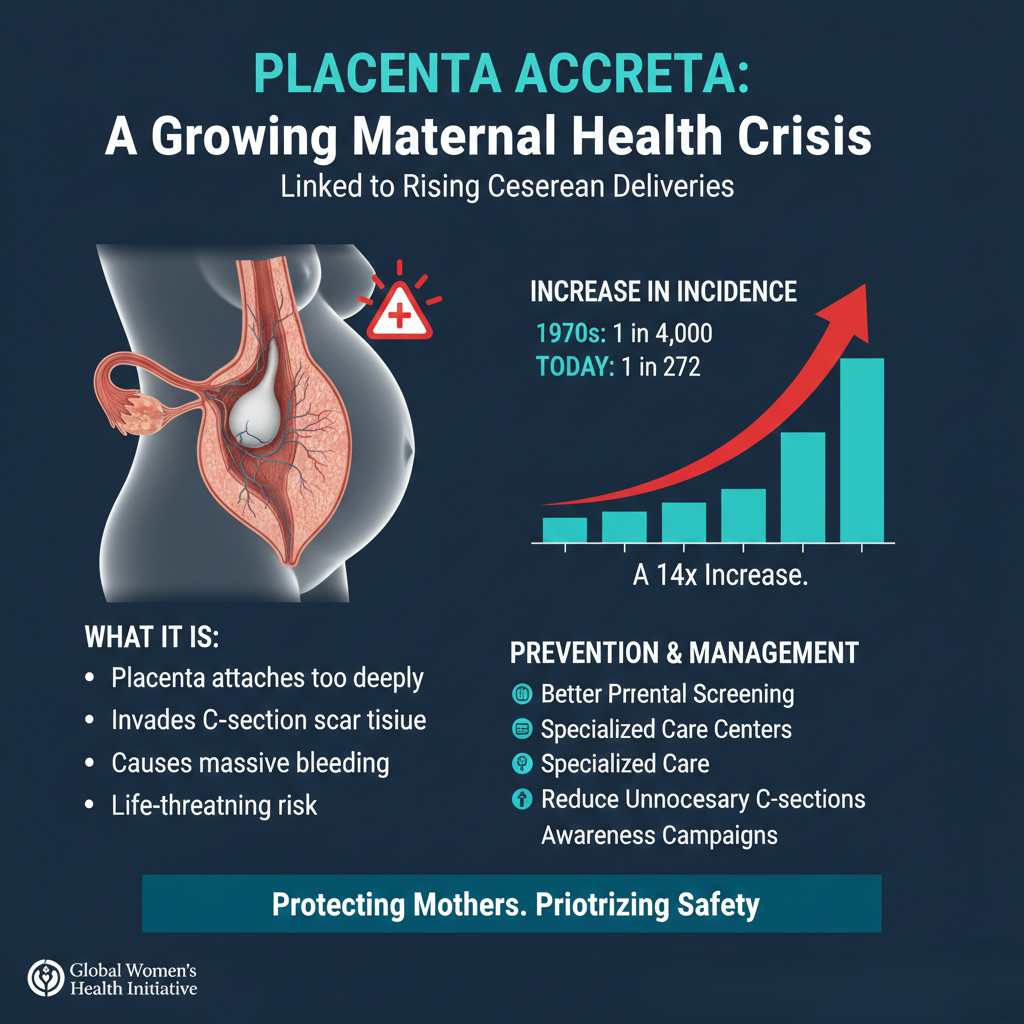
The number of cesarean deliveries is climbing worldwide, and with it comes a serious rise in placenta accreta, a rare but life-threatening pregnancy complication.
Placenta accreta occurs when the placenta attaches too deeply to the uterus, often growing into scar tissue from prior C-sections. Once considered rare, it is now a growing contributor to maternal deaths.
How Common Is Placenta Accreta Today?
In the 1970s, placenta accreta affected roughly 1 in 4,000 pregnancies.
Today, some studies suggest it may affect 1 in 272 pregnancies, a dramatic increase closely tied to the rise in cesarean deliveries.
When it occurs, the risks are severe: massive bleeding can happen within minutes, sometimes overwhelming even well-prepared hospitals and requiring multiple units of donated blood.
Challenges in Treating Placenta Accreta
The dangers go beyond delivery. Many hospitals are not equipped for severe accreta cases, and specialized care centers are limited.
As a result:
- Pregnant women may need to travel long distances or temporarily relocate
- Families face emotional stress and financial strain
- In tragic cases, maternal death can occur
Specialized care and advanced surgical teams are critical to improving outcomes.
Why Cesarean Deliveries Increase Risk
Cesarean sections can leave scar tissue in the uterus, which may allow the placenta to attach abnormally in future pregnancies.
The more C-sections a woman has, the higher the risk of developing placenta accreta.
Steps to Prevent and Manage the Risk
Medical experts emphasize:
- Better prenatal screening for high-risk pregnancies
- Access to specialized care centers for deliveries involving accreta
- Efforts to reduce unnecessary C-sections
- Awareness campaigns on long-term surgical birth risks
Proactive measures can protect maternal health and prevent future tragedies.
Frequently Asked Questions (FAQs)
What is placenta accreta?
It is a pregnancy complication where the placenta grows too deeply into the uterine wall, sometimes invading scar tissue from prior C-sections.
How dangerous is it?
Placenta accreta can cause massive, life-threatening bleeding during delivery if not properly managed.
Can it be detected before delivery?
Yes. Ultrasound and MRI screenings can identify high-risk cases, allowing for careful planning with specialized teams.
Final Thoughts
The rise in placenta accreta highlights the long-term risks of repeated C-sections.
Better awareness, screening, and access to specialized care are essential to protect mothers and families.
Reducing unnecessary cesarean deliveries could save lives and prevent this serious complication from becoming even more common.
