


What if losing vision could be fixed by briefly switching it off?
That idea sounds strange, but new research suggests it may actually work.
Scientists at MIT discovered a surprising way to restore vision by temporarily blocking it—then letting it come back stronger.
A Bold Experiment That Challenges Old Beliefs
The study focused on mice with a lazy eye, a condition caused by weak brain-eye connections.
Instead of surgery or long treatments, researchers tried something radical.
They temporarily shut down vision in the weaker eye for just 48 hours.
When vision returned, the results were remarkable.
How Scientists Temporarily Turned Vision Off
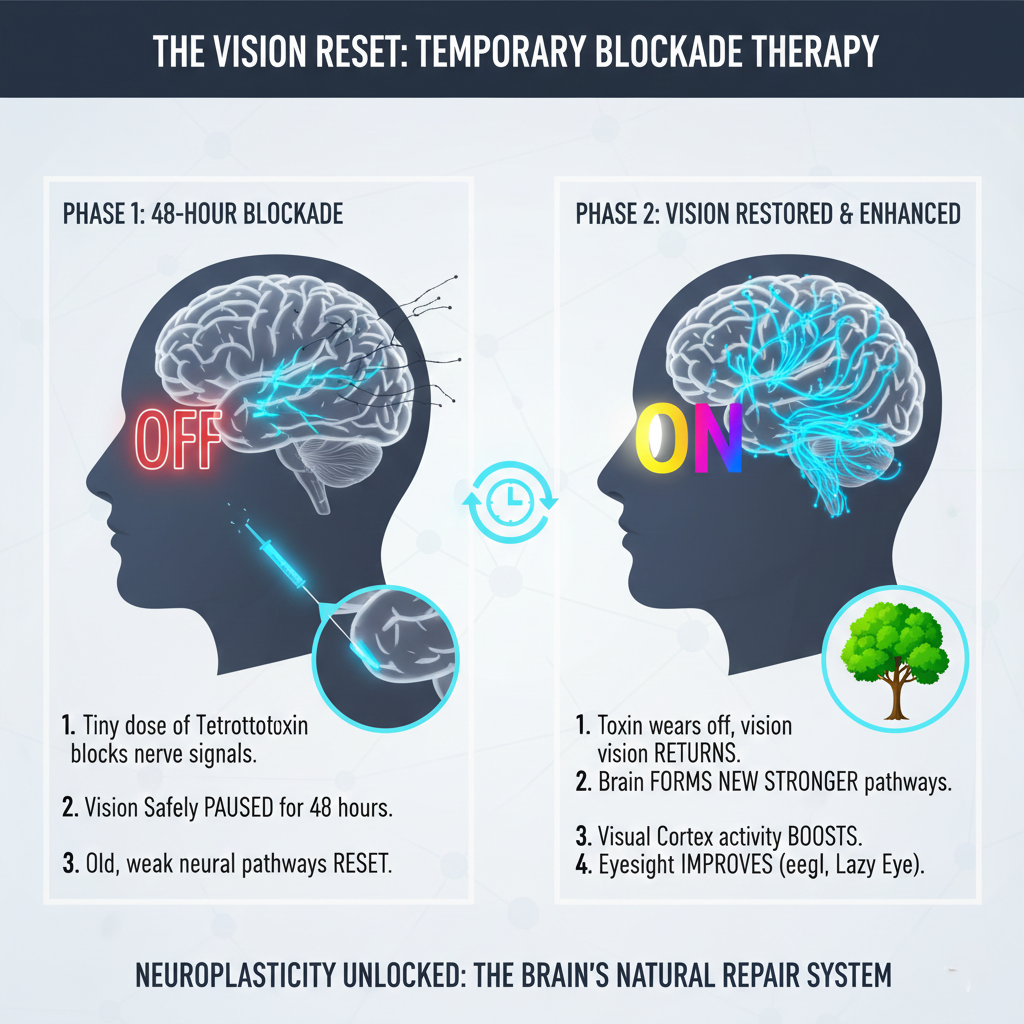
Researchers used a tiny dose of a toxin found in pufferfish, called tetrodotoxin.
This toxin blocks nerve signals for a short time.
In this experiment, it was used to safely stop visual signals from reaching the brain.
Key details from the study:
- Vision was blocked for only two days
- No permanent damage occurred
- Vision returned naturally
And once it returned, eyesight improved.
Why Vision Improved After the Shutdown
The improvement comes from neuroplasticity, the brain’s ability to rewire itself.
When vision was briefly turned off:
- The brain paused faulty visual processing
- Old, weak connections were reset
- New, stronger pathways formed
This “reset” allowed the brain to rebuild vision more effectively.
Brain Activity Increased After Vision Returned
Brain scans showed something even more exciting.
After vision came back, the visual areas of the brain became more active than before.
This means the brain wasn’t just restoring vision—it was improving how it processed images.
That’s a major breakthrough.
Why This Changes How We Think About Vision Loss
For decades, doctors believed vision problems must be fixed early in life.
After childhood, many thought recovery was impossible.
This study challenges that idea.
It shows the adult brain may still heal vision—if given the right conditions.
Could This Work for Humans?
Not yet—but the potential is huge.
This method has only been tested in mice so far.
Experts say human trials are the next step.
If successful, this could lead to:
- Non-surgical vision treatments
- Short-term therapies instead of lifelong ones
- New options for lazy eye and other vision disorders
Real-World Impact If Proven Safe
If adapted for people, this approach could help millions worldwide.
Possible future benefits include:
- Treating adult lazy eye
- Helping nerve-related vision loss
- Reducing the need for invasive eye procedures
A simple “off and on” reset could change eye care forever.
FAQs
What toxin was used to turn vision off?
Scientists used tetrodotoxin, a toxin found in pufferfish, in very small and controlled amounts.
How long was vision blocked?
Vision was blocked for just 48 hours before returning naturally.
Is this treatment available for humans?
No. Human trials have not started yet.
Why does turning vision off help?
It allows the brain to reset damaged visual connections and rebuild them stronger.
Final Thoughts
This study offers a powerful new idea: sometimes, healing starts with a pause.
By briefly turning vision off, scientists unlocked the brain’s natural repair system.
If future research confirms these results in humans, vision loss treatment could become simpler, safer, and more effective.
A two-day reset may one day restore sight for millions.
