
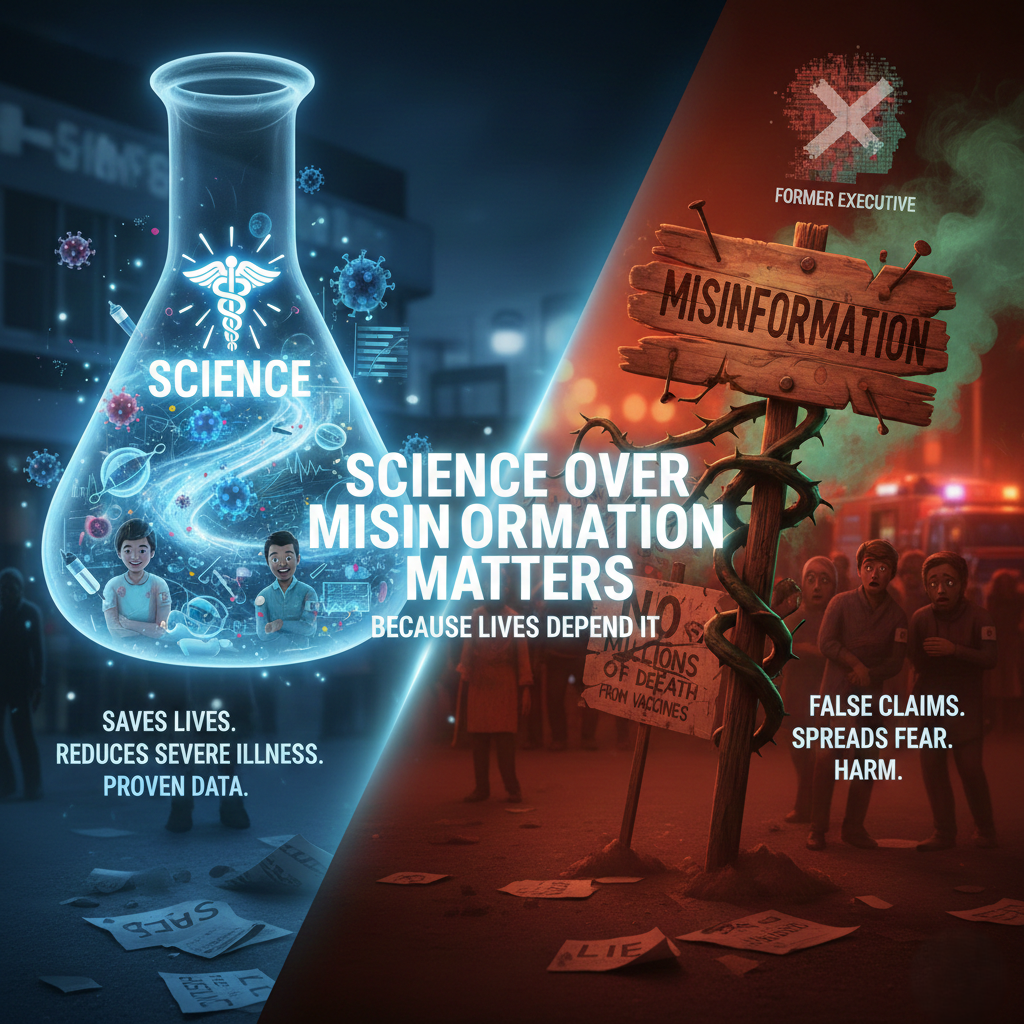
In times of crisis, information can save lives.
But misinformation can cost them.
A recent viral claim from a former Pfizer executive suggested there was “no pandemic” and that COVID vaccines caused millions of deaths.
Public health experts worldwide have strongly rejected these statements.
The evidence tells a very different story.
The Reality of the COVID-19 Pandemic
COVID-19 was not a theory or exaggeration.
It was a global health emergency.
Confirmed facts include:
- Over 6 million confirmed deaths worldwide
- Hospitals overwhelmed across continents
- Emergency responses in nearly every country
- Millions of families directly affected
These outcomes were documented by independent health agencies.
Why Experts Reject the Viral Claims
Medical authorities stress that the claims lack evidence.
They contradict:
- Hospital records
- Death registries
- Global surveillance data
- Peer-reviewed research
No credible data supports the idea that vaccines caused mass deaths.
What Large Studies Actually Show
Independent studies from the U.S., Europe, and Asia paint a clear picture.
COVID vaccines were shown to:
- Reduce severe illness
- Lower hospital admissions
- Decrease death rates
- Protect healthcare systems
Researchers estimate vaccines saved millions of lives globally.
Vaccine Safety and Ongoing Monitoring
COVID vaccines are among the most closely monitored medical products in history.
Safety systems track side effects in real time.
Findings consistently show:
- Most side effects are mild
- Symptoms are short-term
- Serious reactions are rare
Monitoring continues to ensure transparency and safety.
The Real Danger: Misinformation
Experts warn that misinformation can be as dangerous as a virus.
When false claims spread, especially under recognizable names, they can:
- Create fear and confusion
- Reduce vaccination rates
- Increase preventable illness
- Lead to unnecessary deaths
Loss of trust has real-world consequences.
Why Recognizable Names Increase Risk
When misinformation comes from someone with a medical or corporate background, it spreads faster.
People assume credibility without checking evidence.
That’s why experts stress verifying claims, not trusting titles.
Trust Is Built on Evidence, Not Opinion
Science relies on:
- Reproducible data
- Independent review
- Global collaboration
- Constant correction
Personal opinions, no matter how viral, do not outweigh decades of medical research.
How to Protect Yourself From Health Misinformation
Simple habits can reduce harm.
Helpful steps include:
- Checking trusted health sources
- Avoiding emotional or sensational claims
- Looking for scientific consensus
- Asking medical professionals
Information quality matters.
FAQs
Was COVID-19 a real pandemic?
Yes. It caused millions of confirmed deaths and global healthcare emergencies.
Did COVID vaccines cause millions of deaths?
No. There is no scientific evidence supporting that claim.
Are COVID vaccines safe?
Yes. Large studies show they are safe, with mostly mild side effects.
Why does misinformation spread so easily?
Fear, uncertainty, and recognizable names increase sharing.
What’s the biggest risk today?
False claims that undermine trust in proven, life-saving medicine.
Final Thoughts
Science isn’t perfect—but it corrects itself.
Misinformation doesn’t.
COVID vaccines were one of the most effective tools against a global crisis.
The real danger isn’t vaccination.
It’s false claims that weaken trust and put lives at risk.
