


Losing weight and staying healthy often feels complicated. However, intermittent fasting makes things much simpler.
Instead of focusing on what to eat, it focuses on when to eat. As a result, many people find it easier to follow and stick with long-term.
But what actually happens inside your body? And more importantly, is it really worth trying?
Let’s break it down in a simple, clear way.
What Is Intermittent Fasting?
Intermittent fasting is an eating pattern where you cycle between eating and fasting periods.
In other words, you don’t eat all day long. Instead, you give your body time to rest from digestion.
Popular Methods
- 16:8 method: Fast for 16 hours, eat within 8 hours
- 5:2 method: Eat normally for 5 days, reduce calories for 2 days
- Eat-Stop-Eat: 24-hour fast once or twice a week
Each method works differently. So, you can choose what fits your routine.
Top Benefits of Intermittent Fasting
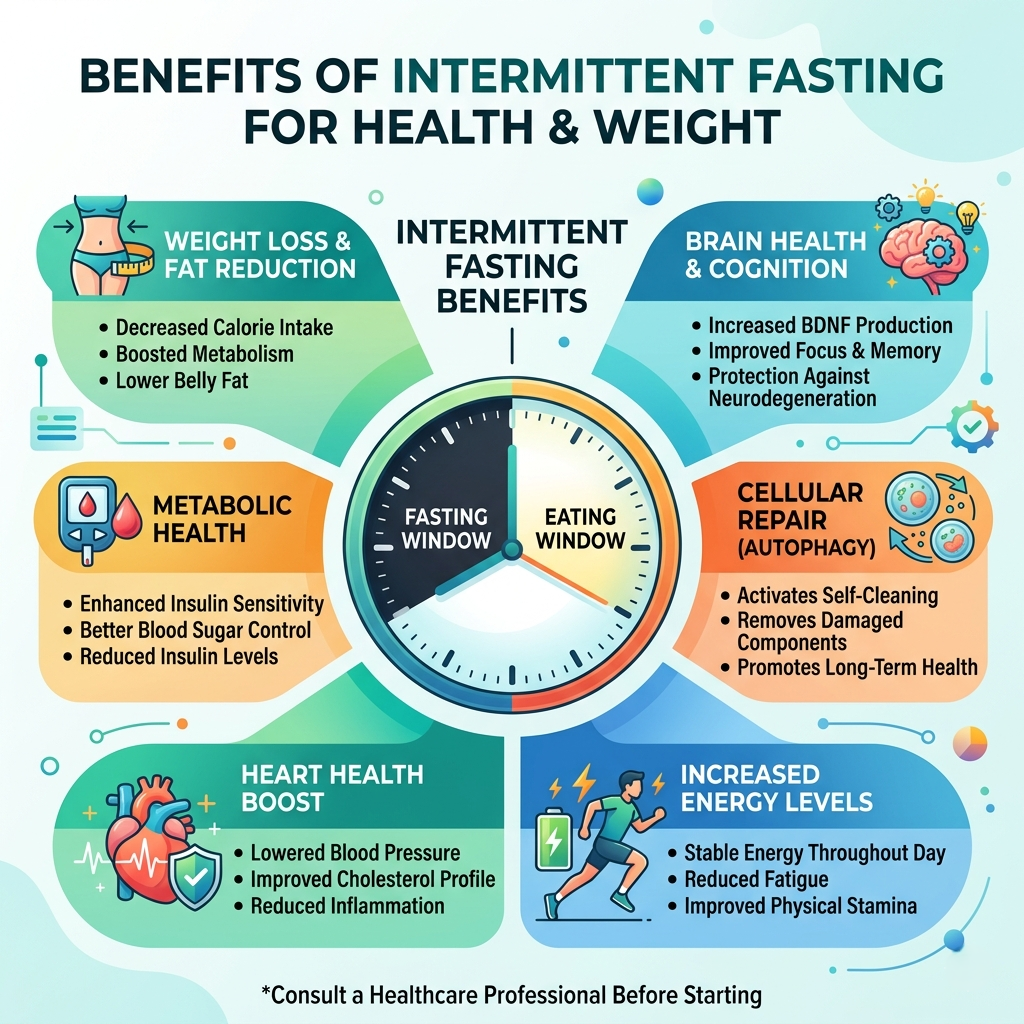
1. Supports Healthy Weight Loss
First of all, intermittent fasting helps reduce calorie intake naturally.
Since you eat in a shorter time window, you tend to consume fewer calories. As a result, weight loss becomes easier without strict dieting.
2. Improves Metabolism
Interestingly, fasting can boost your metabolism.
During fasting, your body switches from using sugar to burning fat for energy. Therefore, it becomes more efficient at using stored fat.
3. Helps Control Blood Sugar Levels
Intermittent fasting may improve insulin sensitivity.
This means your body can handle sugar better, which lowers the risk of type 2 diabetes over time.
4. Supports Brain Health
Your brain also benefits from fasting.
It may help increase brain function and protect against memory loss. In fact, some studies suggest it may reduce the risk of Alzheimer’s disease.
5. Promotes Heart Health
Heart health is another big advantage.
Fasting can help lower bad cholesterol, blood pressure, and inflammation. Together, these reduce the risk of heart disease.
6. Triggers Cellular Repair
When you fast, your body starts a process called “autophagy.”
This process removes damaged cells and helps your body repair itself. As a result, it supports overall health and longevity.
7. Simplifies Your Lifestyle
One underrated benefit is simplicity.
You don’t need to plan multiple meals all day. Instead, you eat fewer meals, which saves time and reduces stress.
Real-World Example: Why People Stick to It
Many people struggle with strict diets. However, intermittent fasting feels less restrictive.
For example, someone following the 16:8 method can skip breakfast and enjoy lunch and dinner normally. Because of this flexibility, it becomes easier to maintain.
Intermittent Fasting vs Traditional Dieting
| Feature | Intermittent Fasting | Traditional Diet |
|---|---|---|
| Focus | When you eat | What you eat |
| Flexibility | High | Medium |
| Ease of follow | Simple | Often strict |
| Long-term success | Higher for many | Varies |
Clearly, intermittent fasting offers a more flexible approach.
Who Should Avoid Intermittent Fasting?
While it works for many people, it’s not for everyone.
Avoid it or consult a doctor if you:
- Have a medical condition
- Are pregnant or breastfeeding
- Have a history of eating disorders
- Take medications that require food
Your health should always come first.
Tips to Start Intermittent Fasting Safely
If you’re new, start slow.
- Begin with a 12-hour fast
- Stay hydrated throughout the day
- Eat balanced meals (not junk food)
- Avoid overeating during eating windows
Most importantly, listen to your body.
FAQs (Frequently Asked Questions)
Is intermittent fasting safe?
Yes, for most healthy adults, it is safe when done properly. However, it’s best to start gradually.
How long does it take to see results?
Many people notice changes within 2–4 weeks, especially in weight and energy levels.
Can I drink water during fasting?
Yes, you can drink water, black coffee, and tea without sugar.
Does intermittent fasting slow metabolism?
No, short-term fasting may actually boost metabolism rather than slow it down.
Can I exercise while fasting?
Yes, light to moderate exercise is usually fine. However, beginners should take it easy at first.
Final Thoughts
Intermittent fasting is not just a trend. It’s a simple and effective way to improve your health without complicated rules.
Not only can it help with weight loss, but it also supports your brain, heart, and overall well-being.
👉 Ready to try it?
Start small, stay consistent, and see how your body responds. A healthier lifestyle might be easier than you think.
