


We all know laughter feels good.
But what if it also helps your heart?
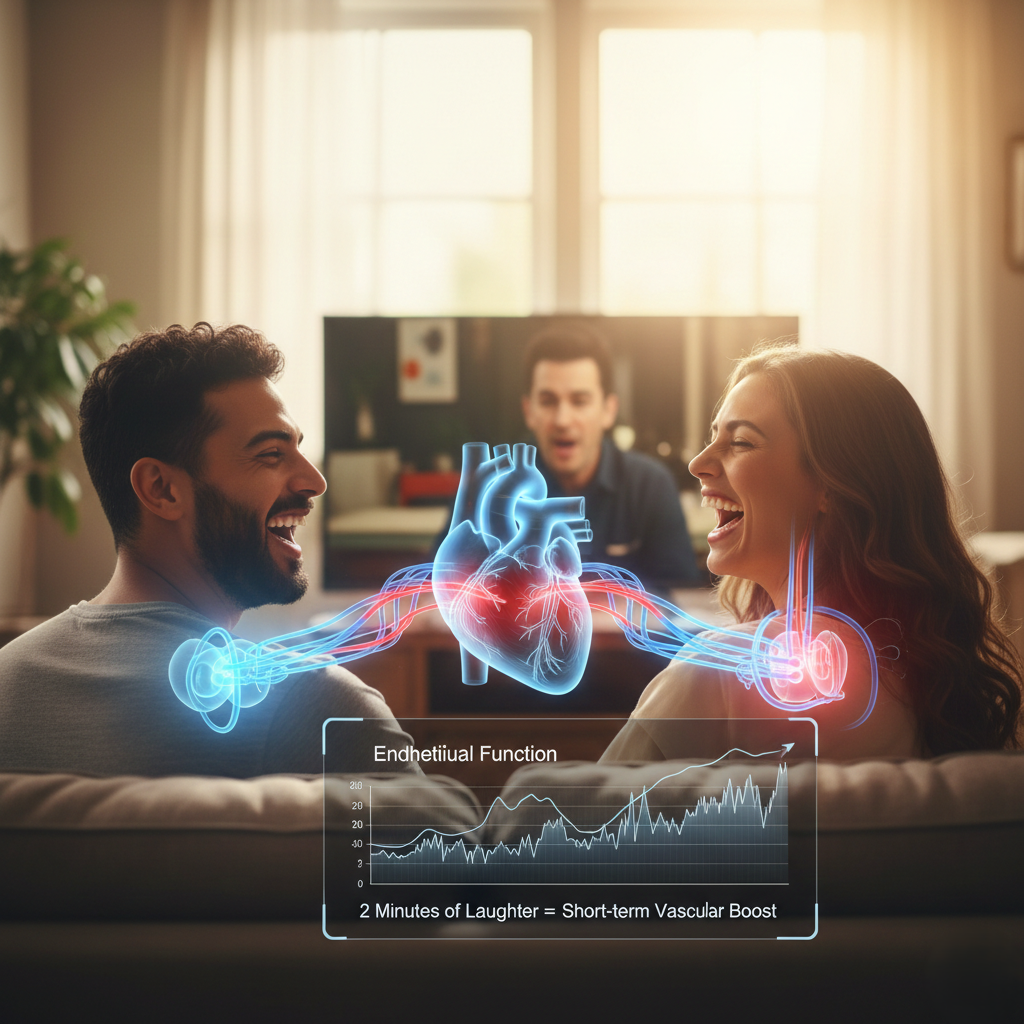
New findings presented at the European Society of Cardiology suggest that even two minutes of genuine laughter can improve blood vessel function—at least in the short term.
It’s not magic. It’s biology.
What the New Research Found
Researchers observed that real, natural laughter helped blood vessels relax.
When blood vessels relax, oxygen flows more easily through the body.
The effect lasted for a short time, but it was measurable.
Interestingly, the impact was similar to what happens during light physical activity.
That means positive emotions created real physical changes in the cardiovascular system.
How Laughter Affects Blood Vessels
To understand this, we need to look at something called the endothelium.
The endothelium is the thin inner lining of blood vessels.
It plays a key role in:
- Regulating blood flow
- Controlling inflammation
- Maintaining healthy circulation
Researchers at the University of Maryland School of Medicine previously reported that laughter improves endothelial function.
When the endothelium works well, the heart doesn’t have to work as hard.
That reduces strain on the cardiovascular system.
Why Positive Emotions Matter for the Heart
Stress hormones like cortisol can tighten blood vessels.
Over time, chronic stress increases heart disease risk.
Laughter may help by:
- Lowering stress hormones
- Encouraging relaxation
- Improving short-term circulation
- Supporting overall emotional balance
It’s not just “feeling happy.”
It’s a measurable biological response.
Is Laughter a Replacement for Exercise?
No. And this is important.
Laughing for two minutes does not replace:
- Regular cardio workouts
- Strength training
- Healthy eating
- Medical treatment
Exercise produces long-term structural benefits for the heart.
Laughter provides short-term vascular improvements.
Think of it as a helpful bonus—not a substitute.
Real-World Perspective
Let’s compare the effects clearly:
| Activity | Immediate Blood Flow Boost | Long-Term Heart Protection |
|---|---|---|
| Light exercise | Yes | Yes |
| Intense workouts | Yes | Strong |
| Genuine laughter | Yes (short-term) | Possible supportive role |
The key word is supportive.
Laughter works best when combined with healthy habits.
How to Add More Laughter to Your Life
This doesn’t mean forcing fake laughs.
Research focused on genuine, spontaneous laughter.
Simple ways to increase it:
- Watch something that truly makes you laugh
- Spend time with friends who lift your mood
- Engage in playful activities
- Practice stress-reduction habits
Your emotional health and heart health are closely linked.
The Bigger Message
Heart protection is never about one single trick.
Experts agree long-term cardiovascular health depends on:
- Regular physical activity
- Balanced nutrition
- Quality sleep
- Stress management
- Emotional well-being
Laughter may be one small but enjoyable piece of that puzzle.
FAQs
Can laughter really improve heart health?
Short-term studies show it can improve blood vessel relaxation and oxygen flow temporarily.
How long do the effects of laughter last?
The vascular boost appears to be temporary, similar to light activity.
Does laughter reduce heart disease risk?
It may help lower stress, which supports heart health, but it is not a standalone treatment.
Is fake laughter helpful?
Research suggests genuine laughter produces stronger physiological benefits.
Should laughter replace exercise?
No. Exercise remains essential for long-term cardiovascular protection.
Final Thoughts
The connection between laughter and heart health is a reminder that the body and emotions are deeply connected.
Two minutes of real laughter won’t replace a workout.
But it might give your heart a small, meaningful boost.
And honestly, adding more laughter to your day is one of the easiest health habits you can start.
