


Pregnancy changes everything—your body, your energy, and even your breathing.
But one thing remains powerful: movement.
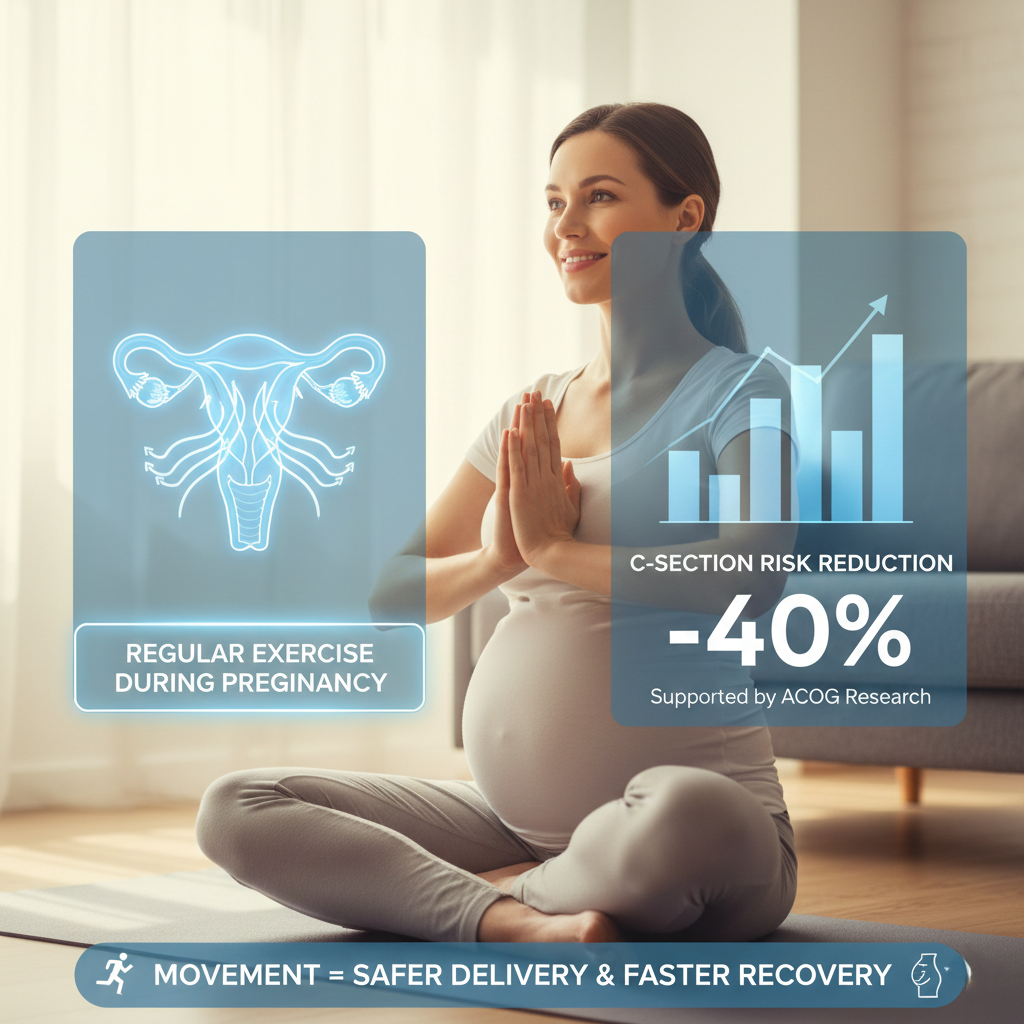
Research reviewed by the American College of Obstetricians and Gynecologists shows that regular physical activity during pregnancy can lower the chances of needing a cesarean section by nearly 40%.
That’s a big difference from something as simple as staying active.
Why Exercise During Pregnancy Matters
Exercise during pregnancy isn’t about intense workouts.
It’s about steady, moderate movement that supports your body as it adapts.
According to medical research, staying active can:
- Improve blood circulation
- Strengthen pelvic muscles
- Support healthy weight gain
- Reduce swelling
- Boost energy levels
All of this can help prepare the body for labor.
Lower Risk of Cesarean Section
One of the most important findings is the reduced need for C-sections.
Women who exercise regularly during pregnancy may experience:
- Shorter labor
- Better muscle coordination
- Improved endurance during delivery
Stronger pelvic muscles can also help with pushing during labor.
This may reduce the likelihood of emergency surgical intervention.
Reduced Risk of Gestational Diabetes and High Blood Pressure
Moderate exercise helps regulate blood sugar levels.
That lowers the risk of gestational diabetes.
It also supports healthy blood pressure, reducing the chances of pregnancy-related hypertension.
Both conditions can increase complications if left unmanaged.
Movement acts like natural support for the cardiovascular system.
What Happens Without Regular Movement?
A sedentary lifestyle during pregnancy has been linked to:
- Longer labor
- Higher emergency C-section rates
- Increased postpartum recovery time
- Greater risk of complications
Of course, every pregnancy is different.
But overall, research consistently supports safe physical activity.
Safe Exercises During Pregnancy
For most healthy pregnancies, low-impact activities are considered safe.
These include:
- Walking
- Prenatal yoga
- Swimming
- Light strength training
- Stationary cycling
These exercises improve circulation without putting excess strain on joints.
Always consult a healthcare provider before starting or continuing a routine.
How Much Exercise Is Recommended?
Experts generally recommend:
150 minutes of moderate exercise per week
That’s about 30 minutes a day, five days a week.
Moderate means you can talk, but not sing, during the activity.
However, doctors may adjust this advice for high-risk pregnancies.
Benefits Beyond Delivery
Exercise doesn’t just help during labor.
It may also:
- Speed up postpartum recovery
- Improve mood
- Reduce pregnancy-related back pain
- Support better sleep
- Promote long-term health for both mother and baby
Healthy habits during pregnancy often carry into motherhood.
Real-World Perspective
Think of exercise during pregnancy like training for a marathon—except the marathon is labor.
You’re preparing your muscles, heart, and stamina for one of the most demanding physical events your body will experience.
And the training doesn’t require extreme workouts.
It requires consistency.
FAQs
Is exercise safe during pregnancy?
For most healthy pregnancies, yes. Always consult your doctor before starting or continuing a routine.
Can exercise really lower C-section risk?
Research reviewed by ACOG suggests regular physical activity may reduce the likelihood of cesarean delivery.
What exercises should be avoided?
High-impact sports, contact sports, or activities with a risk of falling are usually not recommended.
How soon after birth can exercise resume?
It depends on delivery type and medical advice. Many women begin light movement within days or weeks.
What if I wasn’t active before pregnancy?
You can usually start with gentle activities like walking after speaking with your healthcare provider.
Final Thoughts
Staying active during pregnancy is one of the simplest ways to support a safer delivery and smoother recovery.
It’s not about intense fitness goals.
It’s about steady movement that strengthens your body for childbirth.
When combined with proper nutrition and regular medical care, exercise becomes a powerful tool for maternal health.
