


Cancer treatment has long come with a difficult trade-off.
Destroy the cancer—but risk damaging healthy cells too.
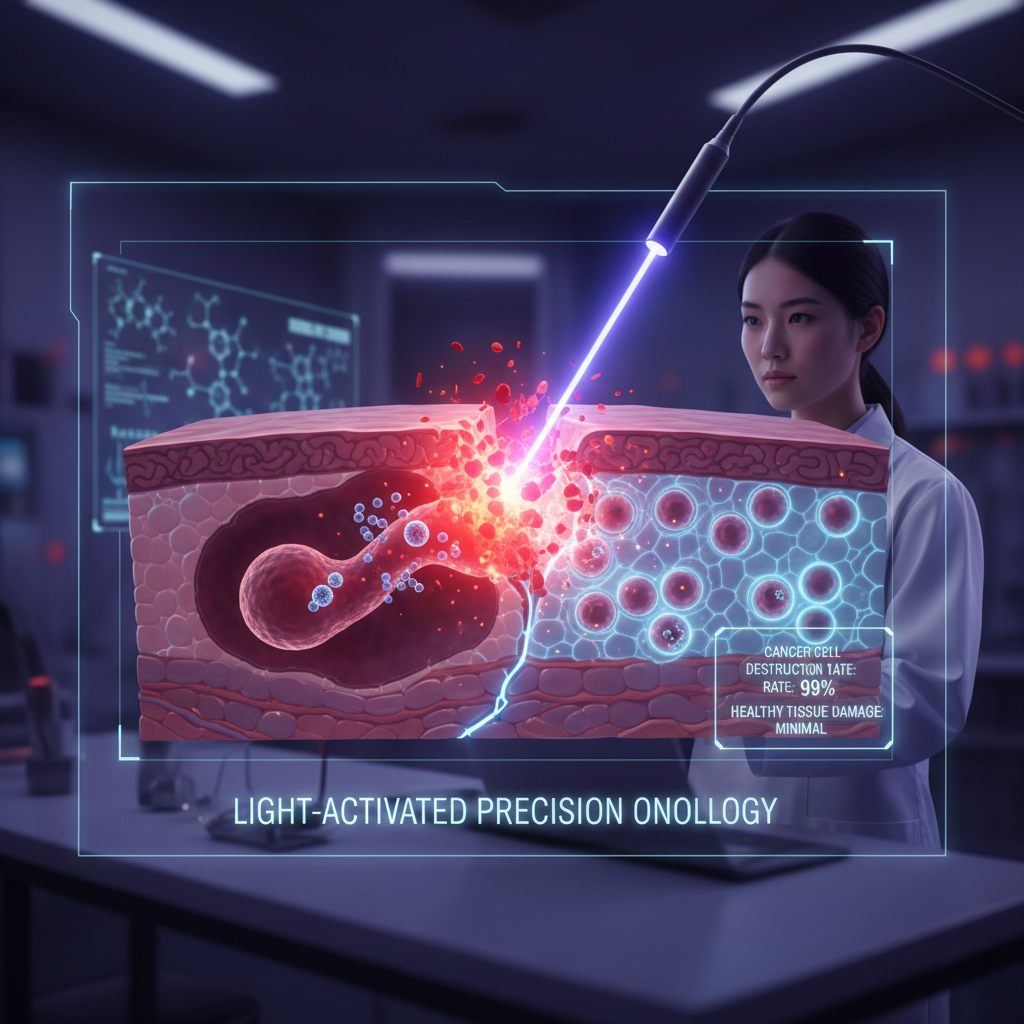
Now, researchers are studying a light-activated cancer treatment that may target tumors more precisely while leaving nearby healthy tissue mostly unharmed.
Early lab results are encouraging. But experts say more research is still needed.
What Is Light-Activated Cancer Treatment?
This approach builds on a method known as photodynamic therapy.
Here’s how it works in simple terms:
- A light-sensitive compound is introduced into the body.
- The compound collects more in cancer cells than in healthy cells.
- Doctors shine a specific wavelength of light on the tumor.
- The compound activates and triggers a chemical reaction.
- Cancer cells are damaged from within.
The key idea is precision.
The treatment only activates where light is applied.
How Effective Is It?
In laboratory conditions, researchers have reported cancer cell destruction rates of up to 99%.
Even more promising, surrounding healthy cells showed minimal damage in controlled settings.
That’s a major difference compared to traditional chemotherapy, which affects both cancerous and healthy cells.
However, it’s important to remember:
Most strong results so far come from lab-based studies, not large-scale human trials.
Why This Method May Cause Fewer Side Effects
Traditional chemotherapy works systemically.
It travels throughout the body, attacking rapidly dividing cells.
That’s why patients often experience:
- Hair loss
- Nausea
- Fatigue
- Weakened immunity
Light-activated therapy works locally.
It activates only in areas exposed to specific light wavelengths.
That targeted activation may reduce widespread side effects.
Research Institutions Behind the Work
Medical teams at institutions such as Harvard Medical School and University College London have studied light-activated cancer approaches in recent years.
Findings published in peer-reviewed journals suggest promising potential.
But they also emphasize the need for larger clinical trials.
Challenges and Limitations
Despite the excitement, several challenges remain:
- Light must reach the tumor directly.
- Deep internal cancers may require specialized delivery systems.
- Long-term safety needs further evaluation.
- Large-scale human trials are still ongoing or pending.
Until those studies are completed, this therapy remains under development.
How This Could Change Cancer Care
If future research confirms safety and effectiveness, light-activated treatment could:
- Improve tumor targeting
- Reduce damage to healthy tissue
- Lower treatment side effects
- Enhance patient recovery
It represents a shift toward precision oncology—treating cancer with greater accuracy and less harm.
Comparison: Traditional vs Light-Activated Treatment
| Feature | Chemotherapy | Light-Activated Therapy |
|---|---|---|
| Targets whole body | Yes | No |
| Local precision | Limited | High |
| Side effects | Often significant | Potentially reduced |
| Clinical maturity | Established | Still developing |
This comparison highlights why researchers are optimistic—but cautious.
FAQs
Is light-activated cancer treatment available now?
Some forms of photodynamic therapy are available, but newer experimental approaches are still under clinical evaluation.
Does it completely replace chemotherapy?
No. It may complement or improve treatment options in the future, but it is not a full replacement yet.
Is it safe?
Early lab results are promising, but large human trials are needed to confirm safety and long-term outcomes.
What types of cancer can it treat?
Research is ongoing. Certain surface or accessible tumors may be easier to treat with light-based methods.
Why is light important in this therapy?
The treatment only activates when exposed to specific light wavelengths, allowing controlled targeting.
Final Thoughts
Light-activated cancer treatment represents a promising step toward more precise and less harmful cancer care.
Early lab studies showing up to 99% cancer cell destruction are impressive.
But science moves carefully—and rightly so.
Large clinical trials must confirm safety and real-world effectiveness before widespread adoption.
If results continue to be positive, this approach could reshape how we think about cancer therapy in the coming years.
