


Introduction: A Possible Shift in Heart Disease Treatment
Heart disease has been treated the same way for decades.
Open blocked arteries. Insert stents. Perform bypass surgery.
These methods save lives. But they don’t fully remove the plaque already stuck inside artery walls.
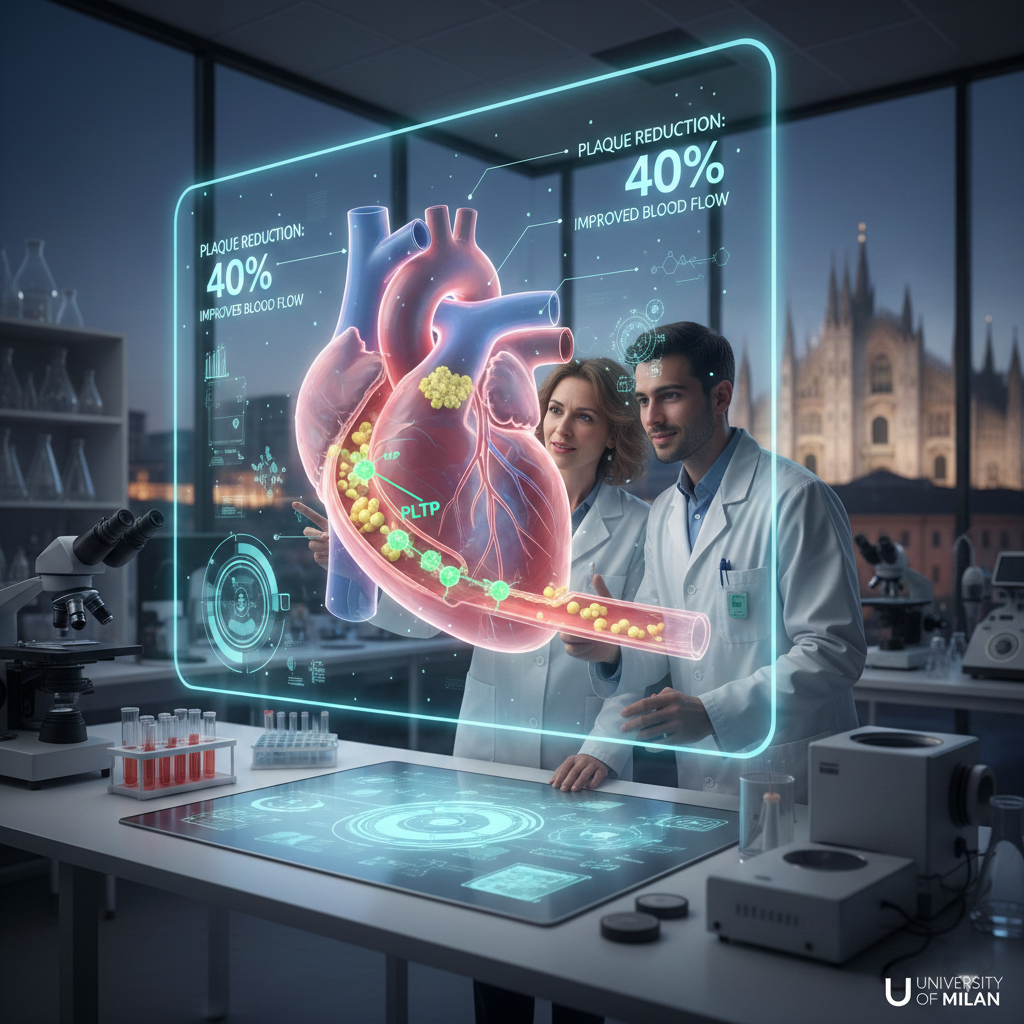
Now, scientists at the University of Milan may have found something different — a biological way to help the body clear plaque on its own.
The discovery centers around an enzyme called phospholipid transfer protein, or PLTP.
If future studies confirm the results, this could change how we treat cardiovascular disease.
Why Heart Disease Is Still the World’s Biggest Killer
Heart disease remains the leading cause of death worldwide.
The main problem is plaque buildup inside arteries.
This buildup narrows blood vessels and limits blood flow to the heart.
Over time, this can lead to:
- Heart attacks
- Strokes
- Chest pain (angina)
- Heart failure
Current treatments focus on:
- Lowering cholesterol with medication
- Reducing inflammation
- Reopening blocked arteries using surgery or stents
These methods help manage damage.
But they don’t actively remove existing plaque in a natural way.
That’s where PLTP becomes interesting.
What Is PLTP and Why Does It Matter?
PLTP (phospholipid transfer protein) is an enzyme involved in cholesterol transport.
Instead of just slowing new plaque formation, PLTP helps move cholesterol out of artery walls.
Here’s how it works in simple terms:
- PLTP pulls cholesterol from plaque deposits
- It sends it back into the bloodstream
- The liver then processes and removes it
In other words, it may help clean arteries from the inside.
What the Animal Studies Showed
In recent studies, researchers increased PLTP activity in animals with arterial plaque.
The results were impressive.
Within three months:
- Plaque size shrank by about 40%
- Blood flow improved
- Arteries became more stable
Stable plaques are less likely to rupture — which is what often triggers heart attacks.
This is important because most current treatments don’t significantly shrink existing plaque.
How This Differs From Stents and Bypass Surgery
Traditional procedures are mechanical fixes.
For example:
- Angioplasty pushes plaque aside
- Stents hold arteries open
- Bypass surgery reroutes blood flow
These procedures restore circulation quickly.
But they don’t remove plaque from the artery wall itself.
If PLTP-based therapy works in humans, it could offer a biological repair method instead of a surgical one.
That’s a major shift in cardiovascular medicine.
Human Clinical Trials Are Beginning
Researchers are now starting early human trials.
These trials are focusing on patients with advanced coronary artery disease, especially those who cannot undergo surgery.
The goal is to see:
- Is it safe?
- Does plaque shrink in humans too?
- Does it reduce heart attack risk?
It’s still early.
Many treatments that succeed in animals fail in human trials.
But the early data is promising enough to move forward.
Why This Discovery Matters
This research represents something bigger than just another drug.
It suggests a move toward regenerative treatment — helping the body repair itself.
Instead of:
- Managing symptoms
- Inserting devices
- Performing invasive procedures
Future therapies might focus on activating natural repair systems.
That could mean:
- Fewer surgeries
- Lower recovery time
- Reduced long-term complications
- Less stress on patients
If confirmed, this may become one of the most important heart disease breakthroughs in decades.
Important Reality Check
It’s important to stay balanced.
Early-stage research is exciting, but medical breakthroughs take years.
Before becoming widely available, PLTP-based treatments must prove:
- Long-term safety
- Consistent plaque reduction
- Real reduction in heart attack and stroke risk
Until then, proven strategies still matter most:
- Healthy diet
- Regular exercise
- Cholesterol management
- Blood pressure control
Lifestyle changes remain the foundation of heart health.
Frequently Asked Questions (FAQs)
Is this a cure for heart disease?
No. It’s still experimental and under clinical testing.
Could this replace stents and bypass surgery?
Possibly in the future, but not anytime soon. Surgery will remain necessary for many patients.
How long before this becomes available?
If trials are successful, it could take several years before approval and public use.
Does PLTP already exist in the body?
Yes. It’s a natural enzyme. Researchers are studying ways to increase or enhance its activity.
Final Thoughts: A New Direction in Heart Care
This discovery from the University of Milan is exciting because it shifts the conversation.
Instead of just opening blocked arteries, scientists are asking:
Can we help the body clean them naturally?
If future trials confirm these results, PLTP-based therapies could reduce the need for invasive heart procedures.
That would mean safer, gentler treatment for millions of patients worldwide.
For now, it’s a hopeful step — not a finished solution.
But sometimes, real change begins with one promising enzyme.
