

Close Menu
Innovate And ExploreInnovate And Explore

    Subscribe to Updates

    Get the latest creative news from FooBar about art, design and business.

    What's Hot

    What Are Phonons? The Tiny Physics Behind Future Technology

    April 23, 2026

    Vitamin K Shot Refusal Raises Serious Risks for Newborns

    April 23, 2026

    Top AI Tools for Remote Work to Boost Productivity in 2026

    April 23, 2026
    Facebook Instagram
    Facebook Instagram YouTube TikTok
    Innovate And ExploreInnovate And Explore
    • Artificial Intelligence
    • Medical Research
    • Technology News
    • Science News
    • VR Headset
    • Palantir
    Innovate And ExploreInnovate And Explore
    Home » Are Babies Born Without Kneecaps? The Truth About Patella Development
    Medical Research

    Are Babies Born Without Kneecaps? The Truth About Patella Development

    alfredBy alfredFebruary 15, 2026No Comments3 Mins Read
    Facebook Twitter Pinterest LinkedIn Tumblr WhatsApp Email
    Share
    Facebook Twitter LinkedIn WhatsApp Pinterest Email

    Introduction: The Kneecap Myth

    Many people believe babies are born with fully formed kneecaps.

    It sounds logical. Adults have them, so babies must too — right?

    Actually, that’s not how it works.

    Newborns do have kneecaps.
    But they’re not made of hard bone yet.

    They start out as soft cartilage.

    What Is the Patella?

    The kneecap is medically known as the Patella.

    It sits at the front of the knee joint and protects it.

    The patella also helps with movement by improving how the thigh muscles pull on the lower leg.

    Without it, walking and running would be much harder.

    Why Babies’ Kneecaps Don’t Show on X-Rays

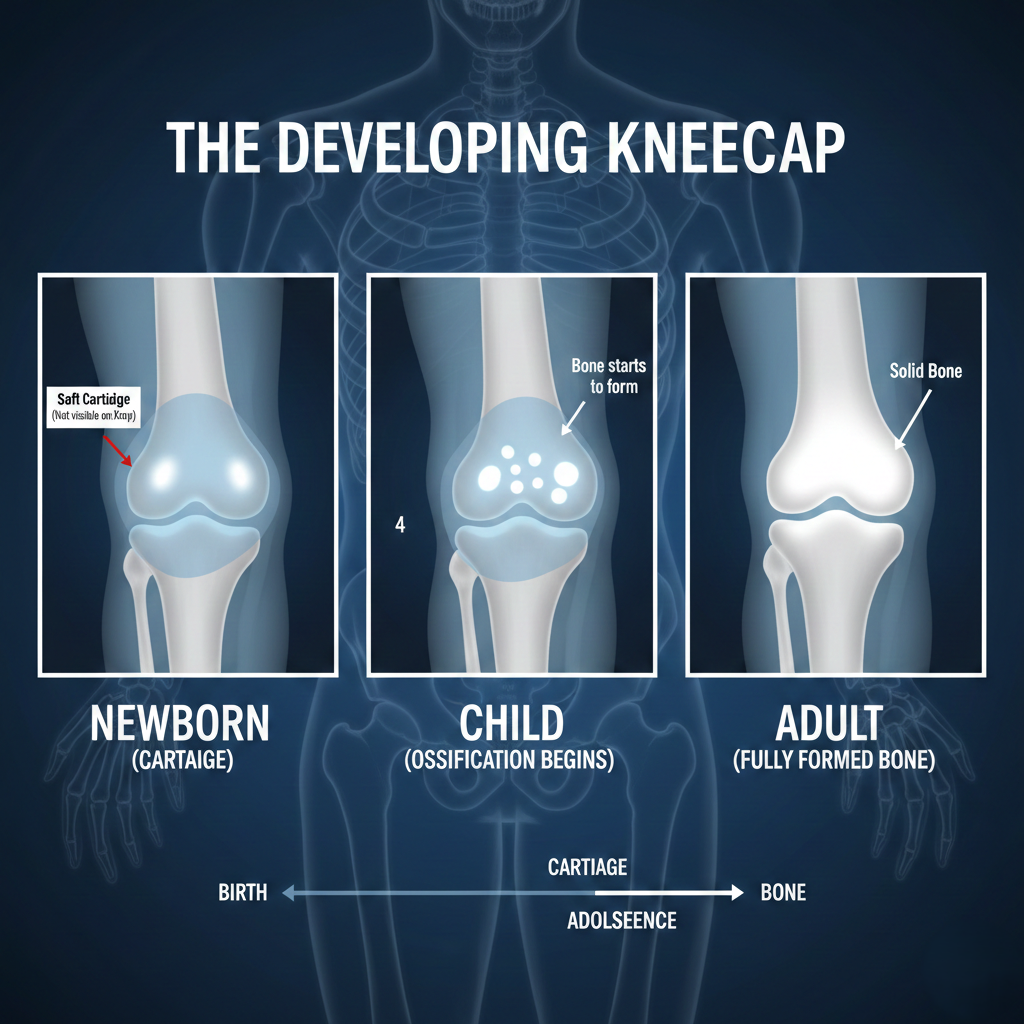
    In early childhood, the patella is made mostly of cartilage.

    Cartilage is softer and more flexible than bone.

    Because X-rays mainly show dense structures like bone, the kneecap doesn’t appear clearly in young children.

    That’s why some people assume babies don’t have kneecaps at all.

    They do — they’re just softer.

    When Does the Kneecap Turn Into Bone?

    The process of turning cartilage into bone is called ossification.

    This usually begins between ages three and five.

    But it doesn’t happen overnight.

    Here’s how it works:

    1. Small areas of bone start forming inside the cartilage
    2. These areas slowly grow and merge
    3. The patella becomes stronger over time

    By late adolescence, the kneecap is fully developed and hardened.

    Why Start With Cartilage?

    There’s a smart reason for this design.

    Soft cartilage is more flexible and better suited for early development.

    It helps:

    • Absorb pressure during crawling
    • Allow safe growth of surrounding tissues
    • Reduce injury risk during early movement

    As children grow heavier and more active, the kneecap strengthens to handle walking, running, and jumping.

    How the Patella Supports Movement

    As it develops, the patella plays a key role in:

    • Protecting the knee joint
    • Improving leg extension
    • Distributing force during movement

    A fully developed kneecap helps the knee handle stress efficiently.

    That’s especially important during teenage growth spurts and sports activity.

    Common Questions

    Are babies born without kneecaps?

    No. They are born with kneecaps made of cartilage, not bone.

    At what age does the kneecap become bone?

    Ossification typically starts between ages three and five and continues through adolescence.

    Why doesn’t it show on early X-rays?

    Cartilage doesn’t appear clearly on standard X-rays because it’s not dense like bone.

    A Simple Reminder About the Human Body

    The body doesn’t stop developing at birth.

    It continues building, strengthening, and refining itself for years.

    The kneecap is a great example of that gradual process.

    From soft cartilage to strong bone, the patella develops step by step.

    It’s a small detail — but it shows how carefully the human body is designed to grow over time.

    advanced encryption standard ai chatgpt ai science news artificial general intelligence california science center hologram museum medical research palantir quantum physics science center science fair board science museum scientific method tech news virtual reality headset
    Share. Facebook Twitter Pinterest LinkedIn Tumblr WhatsApp Email
    alfred

    Related Posts

    What Are Phonons? The Tiny Physics Behind Future Technology

    April 23, 2026

    Vitamin K Shot Refusal Raises Serious Risks for Newborns

    April 23, 2026

    Top AI Tools for Remote Work to Boost Productivity in 2026

    April 23, 2026

    Earth’s CO₂ Levels Hit 430 ppm: A Serious Climate Warning

    April 22, 2026

    AI Cameras in Factories: What’s Really Happening Behind Viral Videos?

    April 22, 2026

    Top AI Tools for Startups to Grow Faster in 2026

    April 22, 2026
    Add A Comment
    Leave A Reply Cancel Reply

    Don't Miss

    What Are Phonons? The Tiny Physics Behind Future Technology

    By alfredApril 23, 2026

    Introduction Most people have never heard of phonons. Yet, they quietly control how modern technology…

    Vitamin K Shot Refusal Raises Serious Risks for Newborns

    April 23, 2026

    Top AI Tools for Remote Work to Boost Productivity in 2026

    April 23, 2026

    Earth’s CO₂ Levels Hit 430 ppm: A Serious Climate Warning

    April 22, 2026
    Stay In Touch
    • Facebook
    • Twitter
    • Pinterest
    • Instagram
    • YouTube
    • Vimeo
    Our Picks

    What Are Phonons? The Tiny Physics Behind Future Technology

    April 23, 2026

    Vitamin K Shot Refusal Raises Serious Risks for Newborns

    April 23, 2026

    Top AI Tools for Remote Work to Boost Productivity in 2026

    April 23, 2026

    Earth’s CO₂ Levels Hit 430 ppm: A Serious Climate Warning

    April 22, 2026

    Subscribe to Updates

    Get the latest creative news from SmartMag about art & design.

    Techlo Inno
    Innovate And Explore
    Facebook Instagram YouTube TikTok
    • About Us
    • Cookies Policy
    • Editorial Policy
    • Terms & Conditions
    © 2026 Innovate and Explore. Designed by Techlo Inno.

    Type above and press Enter to search. Press Esc to cancel.

    Powered by
    ►
    Necessary cookies enable essential site features like secure log-ins and consent preference adjustments. They do not store personal data.
    None
    ►
    Functional cookies support features like content sharing on social media, collecting feedback, and enabling third-party tools.
    None
    ►
    Analytical cookies track visitor interactions, providing insights on metrics like visitor count, bounce rate, and traffic sources.
    None
    ►
    Advertisement cookies deliver personalized ads based on your previous visits and analyze the effectiveness of ad campaigns.
    None
    ►
    Unclassified cookies are cookies that we are in the process of classifying, together with the providers of individual cookies.
    None
    Powered by