


For millions of people, long COVID feels invisible.
The fatigue is overwhelming.
The brain fog is frustrating.
And medical tests often look “normal.”
Now, new research suggests there may be a measurable reason behind these symptoms: tiny blood clots called microclots.
What Did Scientists Discover?
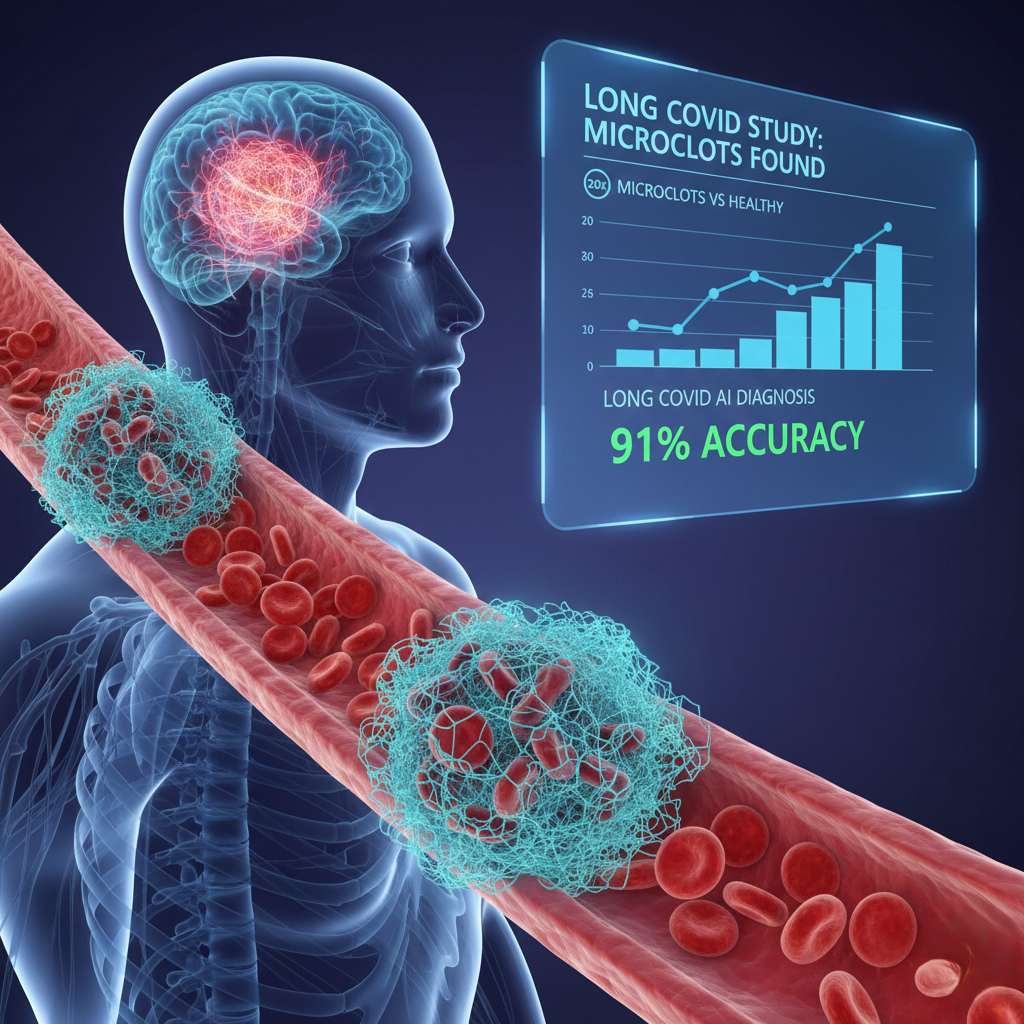
A study published in the Journal of Medical Virology found that people with long COVID had nearly 20 times more microclots than healthy individuals.
These are not regular clots.
They are extremely small and reinforced by sticky structures known as neutrophil extracellular traps, or NETs.
This discovery shifts long COVID from a mystery illness to something physically measurable.
What Are Microclots?
Microclots are tiny clumps in the blood.
They are small enough to block the body’s smallest blood vessels, called capillaries.
When capillaries are blocked:
- Oxygen flow is reduced
- Tissues don’t get enough nutrients
- Organs struggle to function properly
Even slight disruptions in oxygen delivery can cause serious symptoms over time.
The Role of NETs: Why the Clots Persist
NETs are web-like structures released by white blood cells.
Normally, they help trap and neutralize pathogens.
But in long COVID patients, these NETs don’t break down properly.
Instead, they:
- Reinforce microclots
- Create a sticky mesh
- Prevent normal blood flow
This creates what researchers call a “thromboinflammatory” environment—meaning inflammation and clotting are happening together.
How This Explains Fatigue and Brain Fog
Your brain and muscles need constant oxygen.
When tiny vessels are partially blocked:
- Energy production drops
- Muscles tire quickly
- Cognitive clarity decreases
This may explain why patients report:
- Extreme exhaustion
- Memory issues
- Slow thinking
- Head pressure
It’s not “just stress.”
There may be a biological reason.
AI’s Role in Diagnosing Long COVID
One of the most exciting parts of this study is how artificial intelligence was used.
Researchers trained AI models to analyze blood samples.
The result?
The system identified long COVID samples with 91% accuracy.
That’s a huge step forward.
For a condition that is often dismissed or hard to diagnose, objective detection matters.
Why This Changes Everything
For years, long COVID has been described mainly through symptoms.
Now, scientists have found measurable abnormalities in blood chemistry.
This discovery:
- Validates patient experiences
- Provides a clear biological target
- Opens the door to new treatment strategies
Instead of guessing, researchers can now focus on dissolving persistent microclots and reducing abnormal clot formation.
Potential Treatment Implications
If microclots are confirmed as a major driver of long COVID symptoms, future treatments may focus on:
- Improving blood flow
- Reducing inflammation
- Breaking down abnormal clots
- Regulating immune response
Clinical trials will be needed before any new therapies become standard practice.
But this gives researchers a concrete direction.
FAQs
1. Are microclots the confirmed cause of long COVID?
They are strongly associated with long COVID symptoms, but more research is needed to confirm direct causation.
2. What are neutrophil extracellular traps (NETs)?
They are web-like immune structures meant to trap pathogens, but in long COVID, they may persist and worsen clotting.
3. Can current blood tests detect these microclots?
Standard blood tests often miss them. Specialized analysis and AI tools were used in the study.
4. Does this mean long COVID is purely a blood disorder?
Not necessarily. Long COVID is complex and may involve multiple systems, but abnormal clotting appears to play a major role.
5. Could treatments dissolve these clots?
Researchers are exploring therapies aimed at breaking down persistent clots, but clinical approval will require more trials.
Final Thoughts
Long COVID has left many patients searching for answers.
This discovery of persistent microclots offers something powerful: evidence.
It shows that the fatigue and brain fog may stem from real, measurable changes in the blood.
With AI-driven detection and a clearer biological target, science is finally moving toward better diagnosis and treatment.
For millions struggling with long COVID, that progress matters.
As research continues, targeted therapies focused on restoring healthy blood flow could bring real relief—and real hope.
