


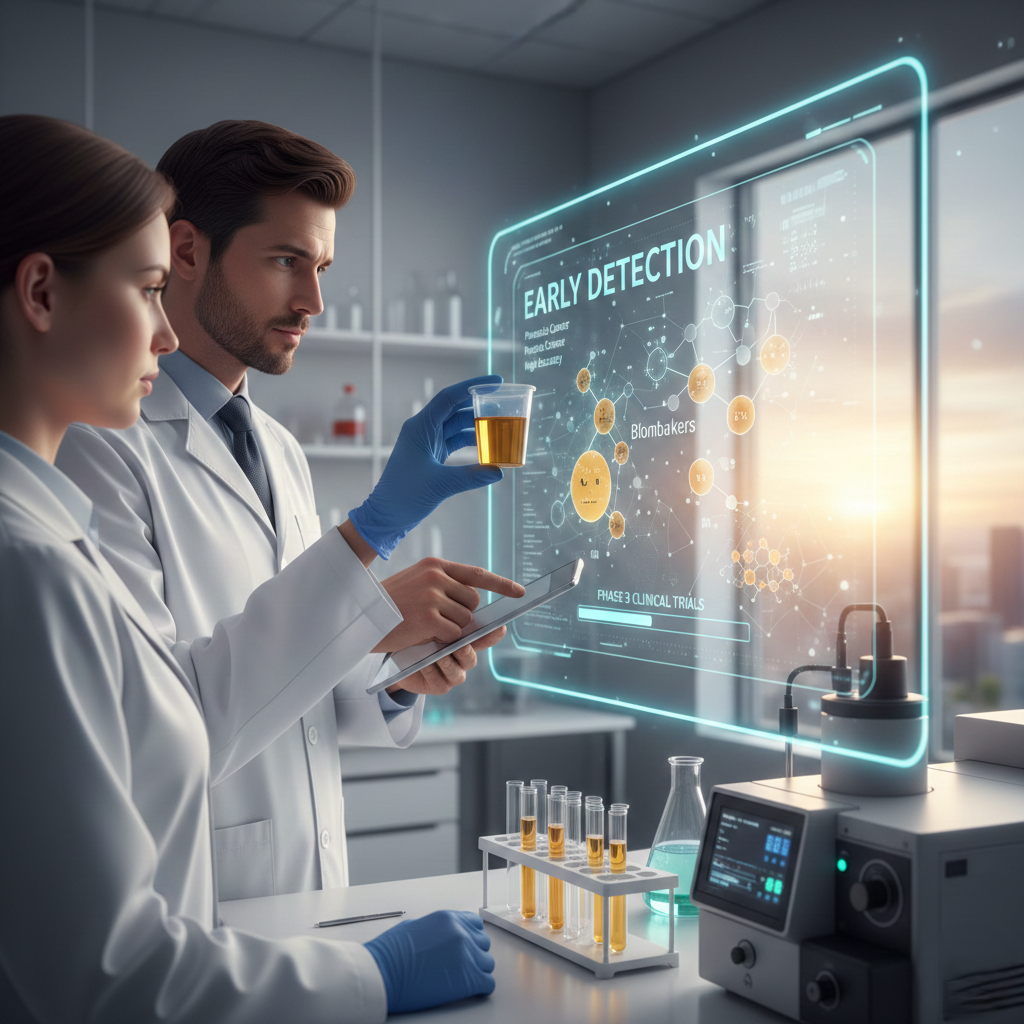
Scientists are working on a simple urine test that may help detect both pancreatic and prostate cancer.
If successful, this could make cancer screening easier, earlier, and far less stressful for patients.
Instead of invasive procedures or repeated blood tests, a simple urine sample might provide early warning signs.
Let’s look at why this matters.
Why Early Detection Is So Important
Pancreatic Cancer: Often Found Too Late
Pancreatic cancer is one of the deadliest cancers.
It usually causes no clear symptoms in early stages. By the time it’s diagnosed, treatment options are often limited.
Late detection is the main reason survival rates remain low.
Even finding it one or two years earlier could dramatically improve outcomes.
Prostate Cancer: Common but Complicated Screening
Prostate cancer is one of the most common cancers in men.
The current standard screening tool is the PSA blood test.
While helpful, PSA testing can:
- Trigger false alarms
- Cause anxiety
- Lead to unnecessary biopsies
- Result in overdiagnosis
That’s where urine testing could offer an improvement.
How the New Urine Test Works
This new approach focuses on biomarkers.
Biomarkers are proteins or molecules released by tumors. These can enter bodily fluids, including urine.
Researchers are studying specific combinations of biomarkers that may:
- Detect cancer early
- Distinguish cancer from non-cancer conditions
- Reduce false positives
The idea is simple: if tumors release certain molecules, urine may carry those signals.
And collecting urine is completely noninvasive.
Promising Results So Far
Early research findings are encouraging.
For Prostate Cancer
Some urine-based tests have shown better accuracy than traditional PSA screening.
This could mean:
- Fewer unnecessary biopsies
- Reduced patient stress
- More precise detection
For Pancreatic Cancer
Studies suggest certain urine biomarker panels may detect warning signs up to two years before a typical diagnosis.
That time window could be life-saving.
The research paper (DOI: 10.1016/j.bios.2023.115076) highlights how combining multiple biomarkers improves detection accuracy.
Could Combining Tests Improve Results?
Researchers are now studying whether urine testing works even better when combined with
- Existing blood markers
- Imaging results
- Clinical risk factors
This combined approach may increase accuracy and reduce missed cases.
In cancer screening, balance is important.
You want early detection—without unnecessary procedures.
Why Non-Invasive Testing Matters
Traditional cancer diagnostics can involve:
- Blood draws
- Imaging scans
- Tissue biopsies
Biopsies, in particular, can be uncomfortable and stressful.
A urine test offers:
- Simplicity
- Convenience
- Lower cost potential
- No surgical procedure
That alone makes this research exciting.
Important: These Tests Are Still in Development
It’s important to be clear.
These urine tests are not yet part of routine medical care.
They are still being tested and validated in larger studies.
Before becoming widely available, they must prove:
- High accuracy
- Consistent reliability
- Clinical usefulness
But the early signals are promising.
What This Means for the Future of Cancer Screening
If successful, urine biomarker testing could:
- Detect deadly cancers earlier
- Reduce overdiagnosis
- Lower healthcare costs
- Make screening more accessible
For diseases like pancreatic cancer, even small improvements in early detection can change survival rates dramatically.
This is why researchers are optimistic.
FAQs
Can a urine test really detect cancer?
Yes. Tumors release biomarkers that can appear in urine. Researchers are identifying specific patterns linked to cancer.
Is this test available in hospitals now?
No. It is still in development and undergoing research validation.
How is this different from PSA testing?
Urine tests may improve accuracy and reduce false positives compared to PSA blood screening alone.
Could this replace biopsies?
Not immediately. It may reduce unnecessary biopsies, but tissue testing will likely still be needed for confirmation.
Final Thoughts
A simple urine test for pancreatic and prostate cancer may sound small.
But it represents a big shift in how we think about early detection.
Non-invasive, affordable, and easier screening tools could help catch deadly cancers sooner—when treatment works best.
While more research is needed, this breakthrough moves us closer to smarter and less stressful cancer detection.
