


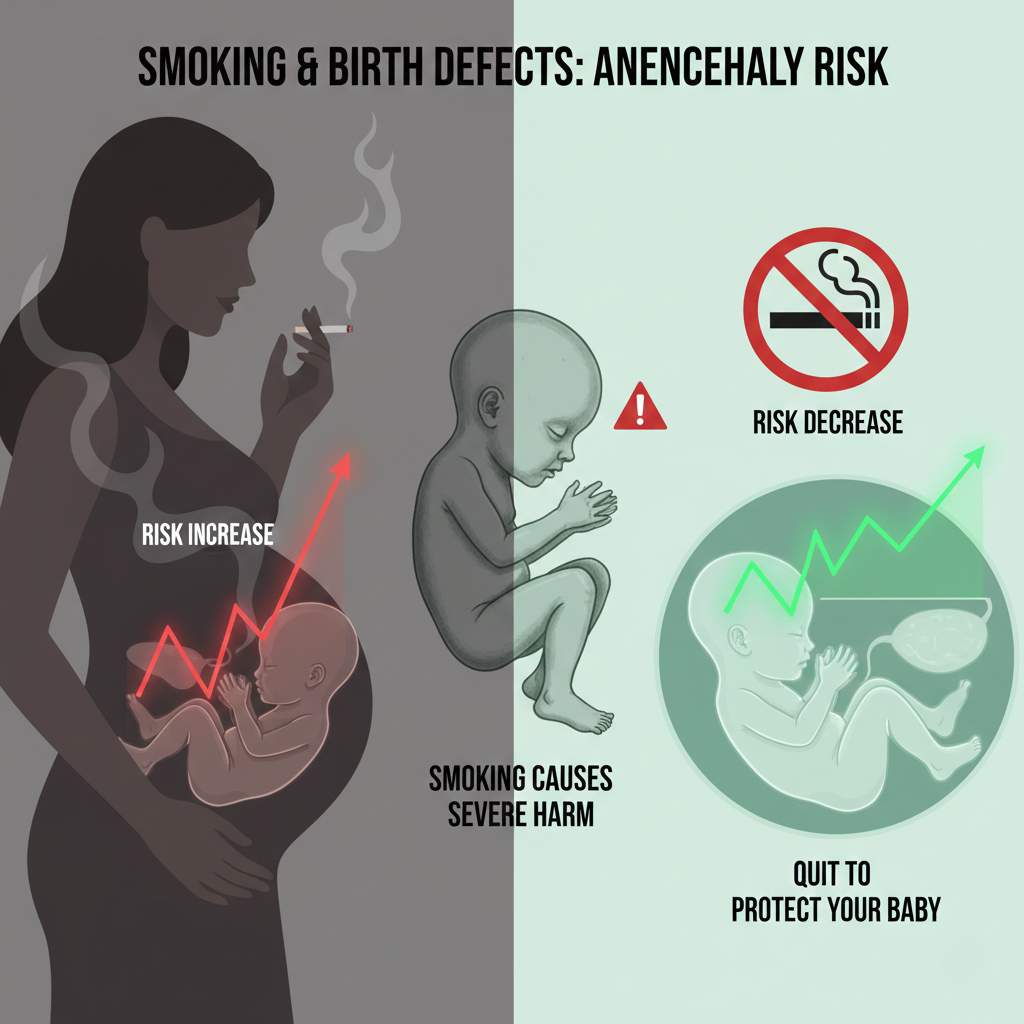
Smoking is often treated as a personal habit. But science shows it doesn’t stop with the smoker. Its impact can reach the next generation.
If you’re planning a family someday, this matters more than you might think.
Research suggests smoking can raise the risk of serious birth defects. One of the most heartbreaking conditions linked to smoking is anencephaly — a severe brain development disorder.
Let’s break this down in simple terms.
What Is Anencephaly?
Anencephaly is a serious birth condition. In this disorder, major parts of the brain and skull do not form properly during early pregnancy.
It happens very early — often before many women even know they’re pregnant.
Sadly:
- Most affected babies are stillborn.
- Those born alive usually survive only a few hours or days.
It’s one of the most severe neural tube defects known.
The Link Between Smoking and Birth Defects
Several scientific studies show a clear connection between smoking and higher risks of birth defects.
Research findings suggest:
- Smokers have about a 41% higher risk of having a baby with anencephaly.
- The risk increases with heavier smoking.
- Each additional half-pack per day raises the chances even more.
This means the more cigarettes smoked daily, the greater the danger.
That’s not a small difference. It’s a serious increase.
How Smoking Damages Future Children’s Health
You might wonder: how can smoking before pregnancy affect a baby later?
Here’s how.
1. Damage to Sperm DNA
Cigarette smoke contains thousands of harmful chemicals.
These substances can:
- Damage sperm DNA
- Reduce sperm quality
- Increase genetic errors
If the sperm carries damaged DNA, it may affect embryo development from day one.
This means fathers’ smoking habits matter too — not just mothers’.
2. Epigenetic Changes
Smoking doesn’t just harm DNA directly.
It can also interfere with epigenetics — the system that controls how genes turn on and off.
Think of epigenetics like light switches for your genes. Smoking can flip those switches the wrong way.
When gene control systems are disrupted, normal brain and skull development may fail.
3. Lower Folate Levels
Folate (vitamin B9) is essential for early brain development.
Low folate levels are strongly linked to neural tube defects, including anencephaly.
Smoking can:
- Reduce folate levels in the body
- Interfere with nutrient absorption
- Increase oxidative stress
Without enough folate, the neural tube may not close properly in early pregnancy.
Why Early Pregnancy Is So Critical
Neural tube development happens within the first 3–4 weeks of pregnancy.
That’s often before a woman confirms she’s pregnant.
If smoking has already affected sperm DNA or maternal health, the damage may occur before lifestyle changes begin.
That’s why quitting before conception is so important.
Real-World Example
Public health programs worldwide have tracked birth defect rates among smokers and non-smokers.
In populations with high smoking rates, researchers observed increased rates of neural tube defects.
When smoking rates dropped due to awareness campaigns, birth defect rates also declined.
This pattern strengthens the link between smoking and prenatal health risks.
Does Passive Smoking Matter?
Yes.
Secondhand smoke also exposes the body to harmful chemicals.
For couples planning a baby:
- Avoid smoking environments
- Create smoke-free homes
- Encourage both partners to quit
Protection works best when both parents take action.
Benefits of Quitting Before Pregnancy
Quitting smoking improves health almost immediately.
Within weeks:
- Blood circulation improves
- Oxygen levels increase
- Sperm quality can improve
- Nutrient levels begin recovering
Long term, quitting reduces risks of:
- Miscarriage
- Low birth weight
- Preterm birth
- Birth defects
It’s one of the most powerful preventive steps you can take.
Common Questions About Smoking and Future Children
Can smoking years before pregnancy still affect a baby?
Yes, especially in men. Smoking can damage sperm DNA over time. Quitting earlier improves reproductive health.
Is light smoking safe?
No amount of smoking is considered safe during family planning. Even low levels increase risk.
Does taking folic acid cancel out the risk?
Folic acid helps reduce neural tube defects. But it does not fully cancel out the damage caused by smoking.
Does vaping carry similar risks?
Research is still ongoing. However, nicotine and chemicals in many vape products may also affect reproductive health.
A Simple Way to Think About It
Smoking isn’t just about lungs.
It affects:
- DNA
- Nutrients
- Blood flow
- Hormones
- Gene regulation
All of these play a role in healthy pregnancy and brain development.
Your future child’s health may start long before pregnancy begins.
Final Thoughts: Protecting the Next Generation Starts Today
Choosing to quit smoking is not just a personal health decision.
It’s an investment in your future family.
The science is clear: smoking increases the risk of serious birth defects like anencephaly. The heavier the smoking, the greater the risk.
The good news?
Quitting reduces those risks.
If you’re thinking about having children — now or someday — today is a powerful day to start.
Talk to a healthcare professional. Build a quit plan. Get support.
Your future child deserves the healthiest start possible.
And that choice begins with you.
