


The idea of controlling a computer with your mind once sounded like science fiction.
Now, it’s moving closer to reality.
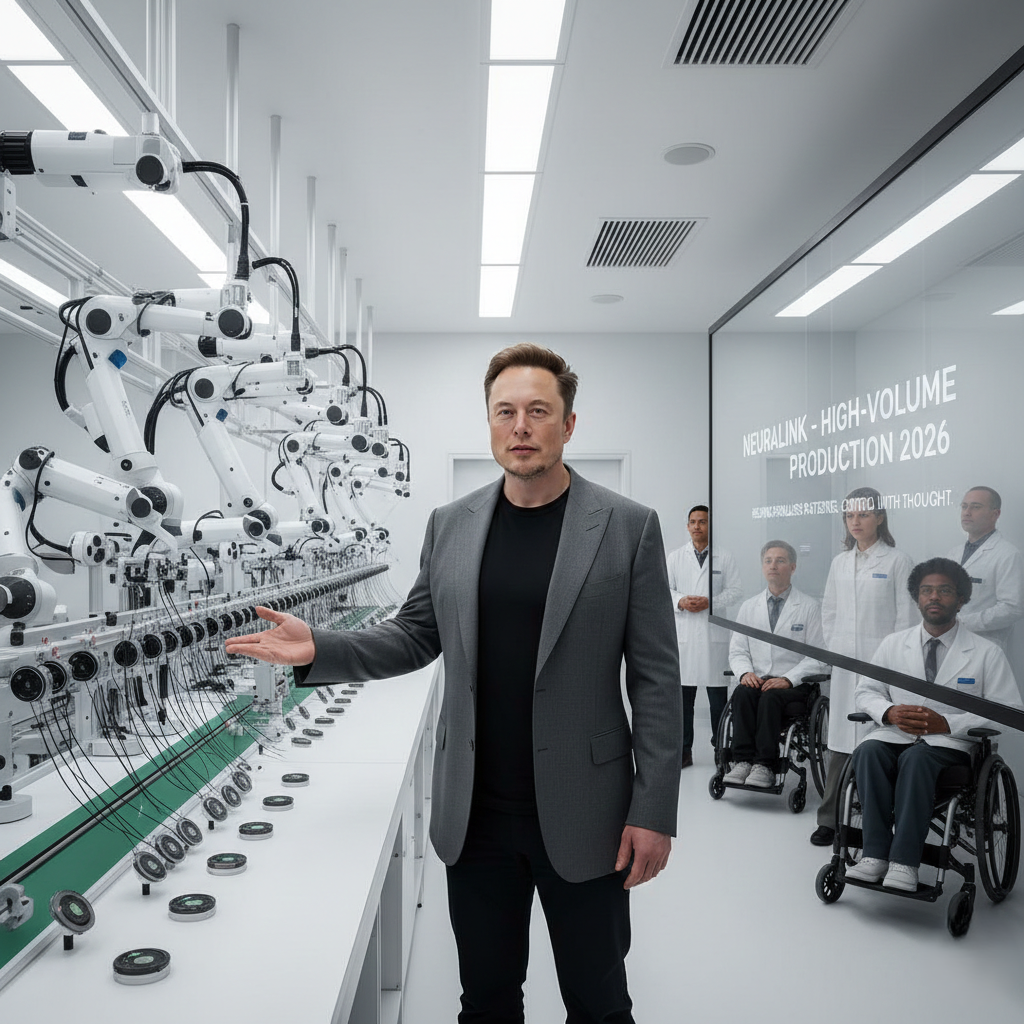
Elon Musk announced on his X account that Neuralink plans to begin high-volume production of its brain-computer interface implants in 2026.
The company also aims to shift toward fully automated surgical procedures.
That’s a big step forward.
What Is Neuralink’s Brain Implant?
Neuralink is developing a small brain-computer interface (BCI) implant.
It is designed to help people with paralysis or spinal cord injuries communicate directly with computers.
Instead of using hands or voice, users send signals from their brain.
The implant reads those signals and translates them into digital commands.
The goal is simple but powerful.
Restore independence.
What Can the Implant Do So Far?
According to early reports, trial participants have already used the device to:
- Move a computer cursor
- Play video games
- Browse the web
- Post on social media
All of this was done using neural signals alone.
No physical movement required.
That’s a major breakthrough for people who cannot move due to injury.
From Rejection to Human Trials
The journey hasn’t been smooth.
In 2022, the U.S. Food and Drug Administration rejected Neuralink’s initial application.
The agency raised safety concerns that required further review.
After addressing those issues, Neuralink received regulatory clearance in 2024.
Human trials began shortly after.
This approval marked a turning point for the company.
What Changes in 2026?
Until now, Neuralink implants have been produced in limited numbers for trials.
In 2026, the company plans to move toward high-volume production.
This suggests confidence in:
- Manufacturing processes
- Safety standards
- Surgical systems
- Clinical outcomes
Musk also mentioned a shift toward fully automated surgical procedures.
That likely means robotics will play a larger role in implant placement.
Automation could improve precision and reduce human error.
Why Automated Surgery Matters
Brain surgery requires extreme accuracy.
Even tiny mistakes can cause serious complications.
Neuralink has been developing a robotic system designed to implant its tiny threads safely into the brain.
Moving toward full automation could:
- Increase consistency
- Improve speed
- Scale procedures faster
- Reduce dependency on specialized surgeons
However, safety will remain the top priority.
How This Fits Into Musk’s Bigger Vision
Neuralink is part of a larger technology strategy.
Musk’s ventures often connect AI, robotics, and human capability.
The long-term idea is bold.
Enhance how humans interact with machines.
In the future, brain-computer interfaces could potentially:
- Restore movement
- Treat neurological conditions
- Improve communication abilities
For now, the focus remains on medical use.
Real-World Impact: Why This Matters
For someone with severe paralysis, even small digital control can change daily life.
Being able to:
- Send messages
- Control smart devices
- Access the internet
- Communicate independently
can dramatically improve quality of life.
Neuralink’s progress suggests that such capabilities may become more accessible over time.
Challenges Ahead
Despite progress, several challenges remain:
- Long-term safety data
- Ethical concerns
- Regulatory approvals in other countries
- Cost and accessibility
- Public trust
Brain implants are highly sensitive technology.
Widespread adoption will require transparency and proven results.
FAQs
What is Neuralink’s brain implant designed to do?
It helps people with paralysis or spinal cord injuries control digital devices using brain signals.
When will Neuralink begin mass production?
The company plans to start high-volume production in 2026.
Has Neuralink tested the implant in humans?
Yes. Human trials began in 2024 after receiving regulatory clearance.
What can trial participants do with the implant?
They have reportedly moved cursors, played games, browsed the web, and posted on social media using neural signals.
Is the surgery fully automated?
Neuralink plans to move toward fully automated surgical procedures, likely using advanced robotics.
Final Thoughts
Neuralink’s 2026 production plan signals a new phase for brain-computer interfaces.
What started as a bold idea is slowly becoming a clinical reality.
If high-volume production succeeds, more patients could gain access to this technology.
Still, safety, regulation, and ethics will shape the future of this field.
One thing is clear.
The line between human capability and machine interaction is getting thinner.
And 2026 could be a major milestone in that journey.
