


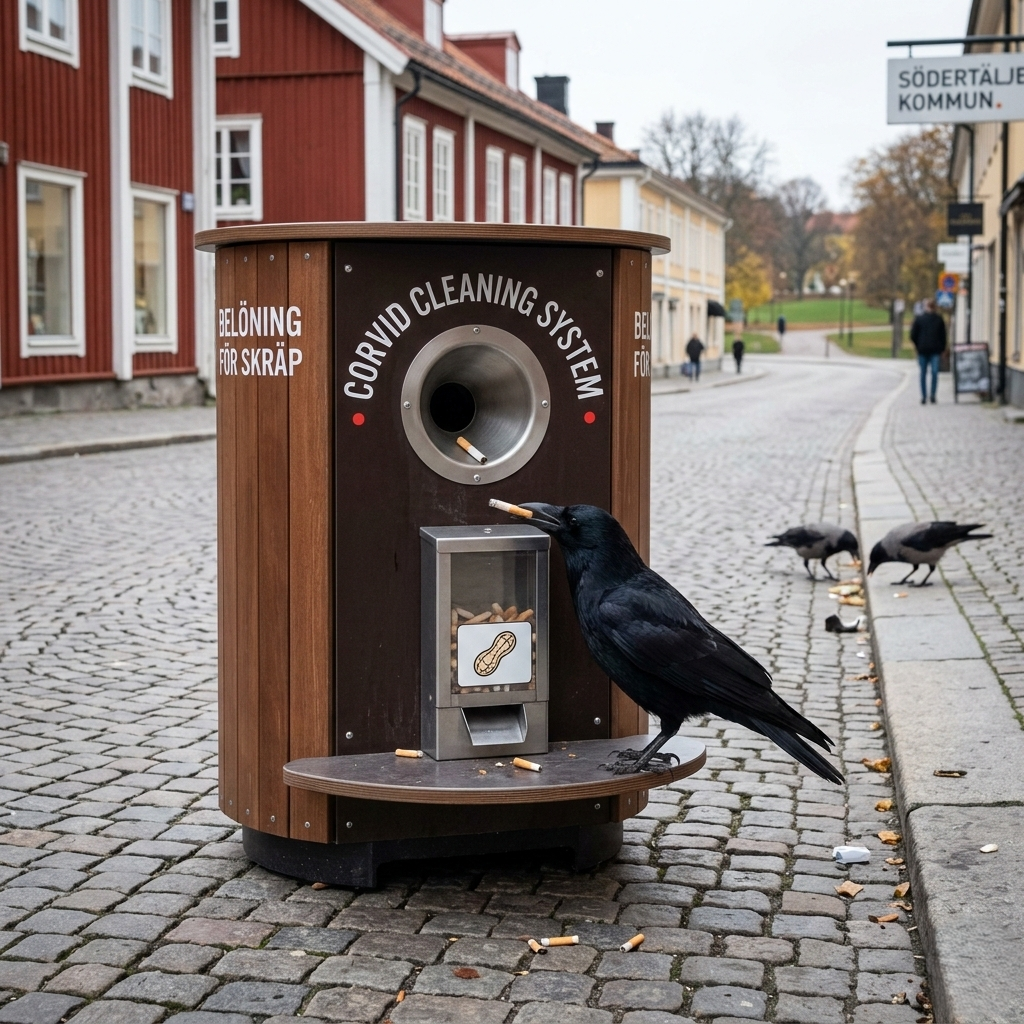
Imagine walking down a street where birds help keep the city clean. It sounds unusual, yet it’s happening in Sweden right now.
In a smart environmental move, a company called Corvid Cleaning created a machine that rewards wild crows for picking up litter. As a result, cities may soon save money while reducing pollution at the same time.
Let’s look at how this idea works and why it matters.
How the Crow Cleaning Machine Works
The system is simple but clever. When a crow drops a small piece of trash into the machine, it receives a small food reward.
Here’s how the process works:
- A crow finds litter, mainly cigarette butts.
- The bird drops the trash into the machine.
- The machine detects the item.
- It releases food as a reward.
Because crows learn quickly through repetition, they understand the pattern fast. Over time, they begin searching for litter on purpose.
Why Cigarette Butts Are a Major Problem
Cigarette litter might seem small. However, it causes serious environmental damage.
Each cigarette butt contains toxic chemicals. When rain washes them into drains, they contaminate water systems. Moreover, they take years to break down.
In Södertälje, a city in Sweden, cigarette waste has become a persistent issue. Therefore, local testing began there to see if trained crows could make a difference.
Reports show cities spend millions every year cleaning cigarette waste. So naturally, leaders began searching for smarter solutions.
Why Crows Are Perfect for This Job
Crows are not ordinary birds. In fact, they are among the most intelligent animals in the world.
Researchers at Lund University and other European institutions have studied crow behavior for years. Their findings reveal impressive abilities:
- They can use tools.
- They solve complex puzzles.
- They recognize patterns quickly.
- They remember tasks long term.
Because of this intelligence, training them through reward-based systems works effectively.
Unlike machines alone, crows can move freely, access tight spaces, and adapt to different environments.
The Environmental and Economic Benefits
This initiative focuses on two clear goals.
1. Reducing Street Cleaning Costs
City cleaning operations require workers, vehicles, and equipment. Consequently, costs rise every year.
If trained crows collect even a portion of litter, municipalities could reduce expenses significantly.
2. Limiting Toxic Waste
Cigarette butts release harmful chemicals into soil and water. Therefore, removing them quickly protects public health and ecosystems.
Instead of relying only on manual labor, cities now explore partnerships with nature itself.
Is It Ethical to Train Wild Crows?
This is an important question.
The system uses positive reinforcement only. Crows receive food rewards for voluntary participation. No force or harm is involved.
Because crows naturally search for food, this activity simply redirects their behavior in a controlled way.
However, researchers continue monitoring long-term effects to ensure balance in local ecosystems.
Real-World Example: Testing in Södertälje
The pilot project in Södertälje showed promising results.
Crows quickly learned to use the device. Additionally, early reports suggested noticeable litter reduction in test areas.
Although the project remains under observation, it proves that behavioral science can solve real city problems.
How This Innovation Connects Science and Sustainability
This project combines three powerful ideas:
- Behavioral science
- Urban innovation
- Environmental responsibility
Instead of building more machines, the system uses natural intelligence. As a result, it lowers environmental impact while improving efficiency.
Many cities now watch closely. If results continue improving, similar systems may expand across Europe.
FAQs
Do crows really understand the reward system?
Yes. Studies show crows quickly associate actions with rewards. Once they learn the pattern, they repeat the behavior consistently.
Why focus on cigarette butts specifically?
Because they are among the most common types of street litter. Moreover, they contain toxic chemicals that harm soil and water.
Could this idea work in other countries?
Potentially, yes. However, each city must consider local wildlife behavior and environmental regulations first.
Is this cheaper than traditional cleaning methods?
Early projections suggest it could reduce costs. Still, long-term data will confirm the full economic impact.
Final Thoughts
At first, the idea of birds cleaning streets sounds surprising. Yet when you look closer, it makes perfect sense.
By combining science, creativity, and environmental awareness, Corvid Cleaning shows how cities can rethink everyday problems.
Instead of fighting nature, this approach works with it.
As urban areas continue growing, smart and sustainable solutions become more important than ever. Therefore, initiatives like this could shape the future of eco-friendly cities.
