


Introduction
Fatty liver disease affects millions of people around the world. In fact, experts estimate that about one in four adults now lives with the condition.
Even more concerning, doctors still have very few treatment options. Most patients are simply told to improve diet, lose weight, and exercise.
However, a new scientific discovery could change that.
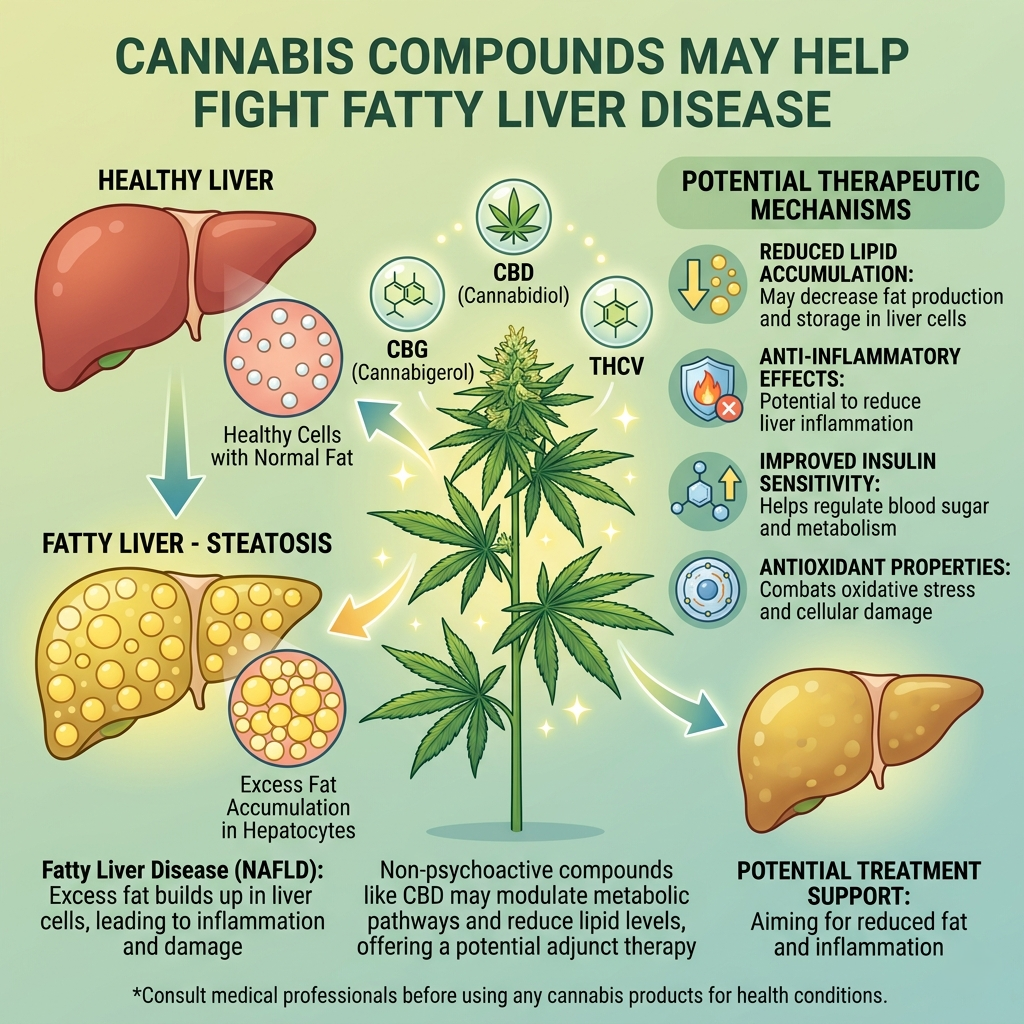
Researchers recently found that certain non-intoxicating compounds from the cannabis plant may help liver cells remove excess fat and function more efficiently.
Because these compounds do not cause a high, scientists believe they may offer a promising path toward future treatments.
Let’s explore what the research shows and why experts are paying close attention.
Understanding Fatty Liver Disease
What Is Fatty Liver Disease?
Fatty liver disease occurs when too much fat builds up inside liver cells.
Normally, the liver processes fats and removes toxins. However, when fat accumulates, the organ cannot function properly.
One of the most common forms is nonalcoholic fatty liver disease, which is not caused by alcohol.
Instead, it often develops because of:
- Poor diet
- Obesity
- Insulin resistance
- Type 2 diabetes
- Metabolic syndrome
As a result, fatty liver disease has become a global health problem.
Why Fatty Liver Disease Is So Concerning
In early stages, many people feel no symptoms at all.
However, the condition can slowly progress.
Over time, it may lead to:
- Liver inflammation
- Liver scarring (fibrosis)
- Cirrhosis
- Liver failure
Therefore, scientists continue searching for safe and effective treatments.
Until now, options have remained limited.
A Surprising Discovery From Cannabis Research
Scientists Found Two Key Compounds
According to findings reported by researchers and highlighted by ScienceDaily, scientists studied natural compounds found in cannabis.
During lab experiments, they discovered something surprising.
Two non-psychoactive compounds helped liver cells:
- Increase their energy reserves
- Improve cellular efficiency
- Reduce fat buildup
Most importantly, these substances do not cause intoxication.
That means they may provide medical benefits without the “high” commonly associated with cannabis.
Why Non-Psychoactive Compounds Matter
Many people associate cannabis with its mind-altering effects.
However, the plant contains dozens of different compounds, and only some affect the brain.
The compounds in this study were non-psychoactive, meaning they do not impact mental state.
Therefore, researchers believe these substances could be used safely in medical treatments if future studies confirm the results.
How These Compounds Help Liver Cells
Reactivating the Body’s “Cell Cleaning” System
Inside our cells, a natural process removes damaged parts and extra fat.
Scientists often describe it as a cellular cleaning system.
When the system works well, cells stay healthy.
However, when it slows down, fat begins to accumulate inside liver cells.
In this study, researchers observed that cannabis compounds reactivated this cleaning process.
As a result, liver cells could remove excess fat more effectively.
Boosting Energy Inside Cells
The compounds also increased energy reserves inside liver cells.
This matters because cells require energy to perform essential tasks, including the following:
- Breaking down fats
- Repairing damage
- Maintaining healthy metabolism
Therefore, higher energy levels allowed the liver cells to work more efficiently.
Consequently, fat accumulation decreased during laboratory tests.
Why This Discovery Is Important
Fatty Liver Cases Are Rising Worldwide
Doctors around the world are seeing rapidly increasing cases of fatty liver disease.
Several lifestyle changes contribute to this trend, including:
- High-sugar diets
- Processed foods
- Sedentary lifestyles
- Rising obesity rates
Because of this, experts expect fatty liver disease to become one of the leading causes of liver problems globally.
Therefore, discovering new treatment options has become urgent.
Current Treatments Are Limited
Right now, most patients receive lifestyle advice rather than medication.
Doctors usually recommend:
- Weight loss
- Healthier diet
- Increased physical activity
- Blood sugar control
Although these steps help many people, they do not work for everyone.
Moreover, some patients continue developing liver damage despite lifestyle changes.
That is why researchers continue searching for targeted therapies.
What Makes Cannabis-Based Treatments Promising
Natural Compounds With Medical Potential
Plants have long served as sources for medicines.
For example:
- Aspirin originated from willow bark.
- Some cancer drugs come from plant compounds.
Similarly, the cannabis plant contains many biologically active substances.
Scientists now believe some of these compounds may help treat the following:
- Chronic pain
- Inflammation
- Neurological conditions
- Metabolic disorders
Fatty liver disease may soon join this list.
No Intoxicating Effects
One major advantage of the compounds studied is their lack of psychoactive effects.
That means they:
- Do not impair thinking
- Do not cause euphoria
- Do not produce a “high.”
Because of this, they could be developed into safe medications if clinical trials confirm their benefits.
Important Limitations of the Research
Although the results sound promising, several important points remain.
First, the research took place in laboratory studies, not large human trials.
Second, scientists must still determine:
- The safest dosage
- Long-term effects
- Possible interactions with medications
Therefore, experts stress that more research is needed before these compounds become medical treatments.
Nevertheless, the discovery offers an exciting starting point.
What This Means for the Future of Liver Health
If further studies confirm the findings, cannabis-derived compounds could help doctors
- Develop new fatty liver treatments
- Prevent fat buildup in liver cells
- Slow disease progression
- Protect liver function
Consequently, this research may eventually lead to targeted therapies for millions of patients worldwide.
Moreover, it highlights how natural compounds can unlock unexpected medical breakthroughs.
Practical Tips for Protecting Your Liver Today
While research continues, people can still take steps to protect their liver.
Experts recommend the following habits:
1. Maintain a Healthy Weight
Even modest weight loss can reduce liver fat.
2. Reduce Sugar Intake
High-sugar drinks and processed foods increase fat storage in the liver.
3. Stay Physically Active
Regular exercise improves metabolism and supports liver health.
4. Eat Whole Foods
Focus on vegetables, fruits, lean proteins, and healthy fats.
5. Manage Blood Sugar
Controlling insulin resistance helps prevent fatty liver progression.
Although these steps may seem simple, they remain the most effective prevention strategies today.
Frequently Asked Questions (FAQs)
Can cannabis cure fatty liver disease?
No current evidence shows cannabis can cure fatty liver disease. However, researchers are studying specific non-psychoactive compounds that may help reduce liver fat.
Do these compounds cause a high?
No. The compounds studied are non-psychoactive, meaning they do not produce mind-altering effects.
When could treatments become available?
New medications require years of clinical testing. Therefore, it may take time before cannabis-based therapies become widely available.
What is the most common cause of fatty liver disease?
The most common causes include obesity, poor diet, insulin resistance, and metabolic disorders.
Conclusion
Fatty liver disease continues to affect millions of people worldwide. Unfortunately, treatment options remain limited.
However, new research into compounds from the cannabis plant offers an intriguing possibility.
Scientists discovered that certain non-intoxicating substances can help liver cells remove excess fat and restore healthy function.
Although the findings are still early, they open the door to potential new therapies for a rapidly growing disease.
As research continues, discoveries like this remind us that important medical solutions may sometimes come from unexpected natural sources.
