


Introduction
Fasting has become one of the most discussed health trends in recent years.
However, scientists have studied fasting for decades. Researchers now believe that periods without food may activate powerful cellular repair systems inside the body.
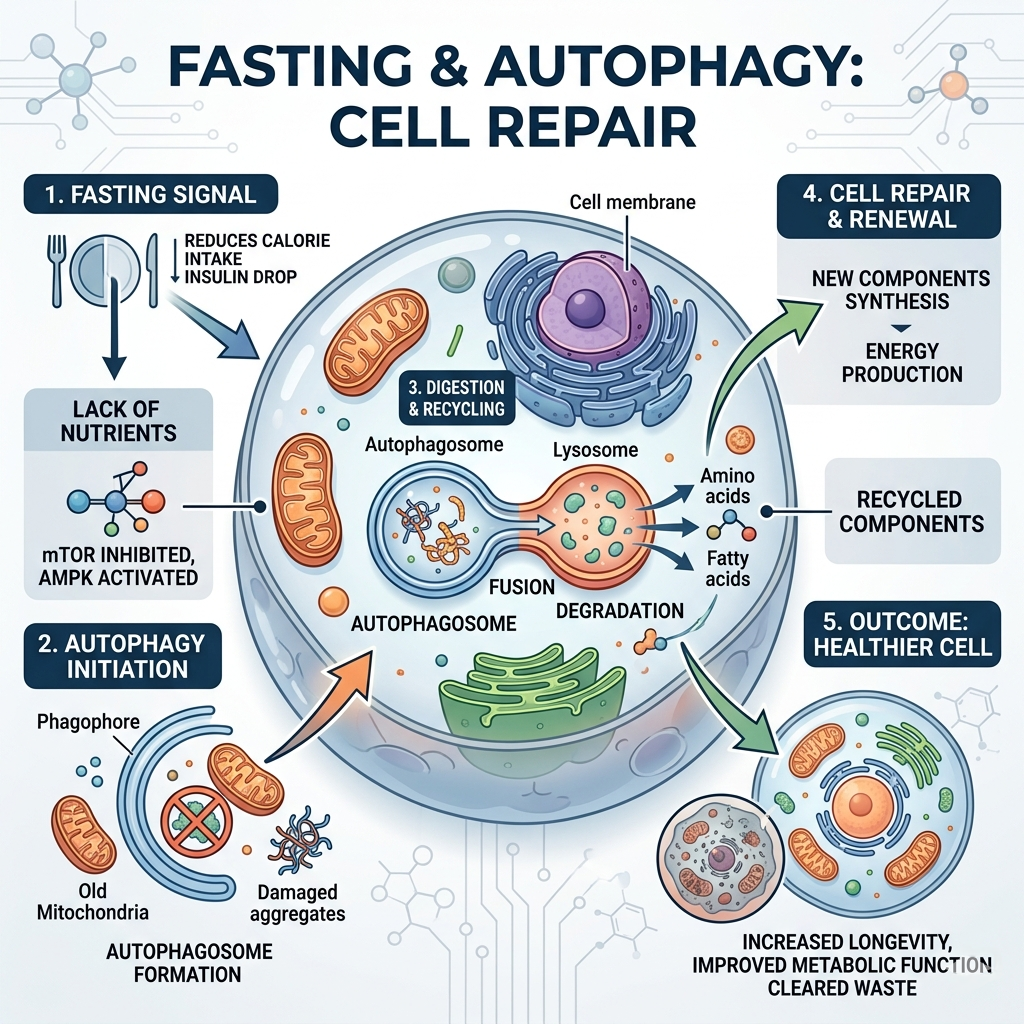
One of the most important of these systems is called “autophagy.”
During this process, the body removes damaged cell parts and recycles them into healthier components.
As a result, cells may function more efficiently and stay healthier over time.
Because of these effects, fasting has attracted growing interest from scientists studying aging, metabolism, and long-term health.
What Happens Inside the Body During Fasting
The Body Switches Into Repair Mode
When you eat regularly throughout the day, your body focuses on digesting food and storing energy.
However, when you stop eating for several hours, the body shifts its priorities.
Instead of processing new nutrients, it begins to repair and maintain existing cells.
During this time, several biological processes activate.
These processes help the body:
- Remove damaged cellular components
- Improve energy efficiency
- Maintain metabolic balance
Consequently, fasting may support healthier cellular function.
The Role of Autophagy in Cellular Health
What Is Autophagy?
The word “autophagy” literally means “self-eating.”
In simple terms, it is the body’s natural cell-cleaning system.
During autophagy, cells identify worn-out parts and break them down.
Then the body recycles those materials to build new and healthier cellular structures.
Scientists studying this process gained global attention after the work of Yoshinori Ohsumi, who helped explain how autophagy works inside cells.
His research later earned him the Nobel Prize in Physiology or Medicine.
Why Autophagy Matters
Autophagy plays an important role in keeping cells healthy.
It helps the body:
- Remove damaged proteins
- Clear malfunctioning cell components
- Maintain cellular balance
- Improve cell efficiency
Because of these benefits, scientists believe autophagy may help slow certain age-related cellular changes.
However, research is still ongoing.
How Fasting May Trigger Autophagy
Energy Shortage Activates Cellular Recycling
When the body goes without food for a period of time, cells experience lower energy availability.
As a result, the body activates internal recycling systems to conserve resources.
Autophagy then begins breaking down unnecessary or damaged cell components.
This process allows the body to:
- Generate energy from recycled materials
- Replace damaged cell parts
- Improve cellular efficiency
Therefore, fasting may help stimulate natural cellular maintenance systems.
Fasting and Inflammation
Why Inflammation Matters
Inflammation is the body’s natural defense response.
Short-term inflammation helps the body fight infections and heal injuries.
However, chronic inflammation can become harmful.
Long-term inflammation has been linked to several health issues, including:
- Heart disease
- Metabolic disorders
- Joint problems
- Certain chronic illnesses
Because of this, researchers continue exploring ways to reduce persistent inflammation.
How Fasting May Help Reduce Inflammation
Some studies suggest that fasting periods may influence the body’s inflammatory response.
Researchers have observed that fasting may:
- Lower certain inflammatory markers
- Support metabolic balance
- Improve cellular stress responses
Although more research is needed, these findings suggest fasting could play a role in supporting overall health.
Understanding Intermittent Fasting
A Popular Fasting Approach
One widely studied fasting method is intermittent fasting.
Instead of focusing on what foods to eat, intermittent fasting focuses on when to eat.
People alternate between periods of eating and fasting.
Common approaches include:
1. The 16:8 Method
- Fast for 16 hours
- Eat within an 8-hour window
2. The 5:2 Method
- Eat normally five days per week
- Reduce calories on two days
3. Alternate-Day Fasting
- Alternate between fasting days and regular eating days
Each approach creates periods where the body temporarily shifts away from digestion toward cellular maintenance.
Potential Health Benefits of Fasting
Research continues to explore how fasting affects the body.
Some studies suggest fasting patterns may support the following:
1. Metabolic Health
Fasting may help the body regulate energy use and improve metabolic efficiency.
2. Insulin Sensitivity
Periods without food may improve how the body responds to insulin.
3. Cellular Maintenance
Fasting may activate processes that maintain healthy cell function.
4. Weight Management
Structured eating windows may help some people manage calorie intake more easily.
However, individual results can vary.
Lifestyle, diet quality, and genetics all influence the outcome.
Important Considerations Before Trying Fasting
Although fasting can offer potential benefits, it is not suitable for everyone.
Certain people should approach fasting carefully.
This includes individuals who:
- Have diabetes or blood sugar disorders
- Take medications requiring regular meals
- Are pregnant or breastfeeding
- Have nutritional deficiencies
Because of these factors, health experts recommend consulting a healthcare professional before starting a fasting routine.
This ensures fasting is done safely and appropriately.
Real-World Example: Why Researchers Study Fasting
Scientists continue studying fasting because it affects multiple biological systems at once.
Unlike medications that target a single pathway, fasting influences the following:
- Energy metabolism
- Cellular repair mechanisms
- Hormonal balance
- Inflammatory responses
Therefore, researchers believe fasting may provide valuable insights into how lifestyle patterns affect long-term health.
Frequently Asked Questions (FAQs)
How long does fasting take to trigger autophagy?
The exact timing varies between individuals. Some research suggests autophagy may increase after 12–24 hours of fasting, but more studies are needed.
Is intermittent fasting safe?
For many healthy adults, intermittent fasting can be safe when practiced properly. However, people with medical conditions should consult a healthcare professional first.
Does fasting help with aging?
Scientists are studying how fasting influences cellular repair processes. While research is promising, fasting is not a guaranteed anti-aging solution.
Can fasting reduce inflammation?
Some studies suggest fasting may lower certain inflammatory markers. However, results vary depending on diet, lifestyle, and overall health.
Conclusion
Fasting is more than just a dietary trend.
Scientific research shows that periods without food may activate important biological systems, including autophagy and cellular repair mechanisms.
These processes help the body remove damaged cell parts, recycle nutrients, and maintain healthy cellular function.
Additionally, fasting may influence inflammation and metabolic health, which makes it an interesting focus for modern medical research.
However, fasting is not a one-size-fits-all solution.
Because individual needs vary, anyone considering fasting should approach it carefully and seek professional guidance when necessary.
As research continues, scientists hope to better understand how simple lifestyle patterns like fasting can influence long-term health and cellular maintenance.
