


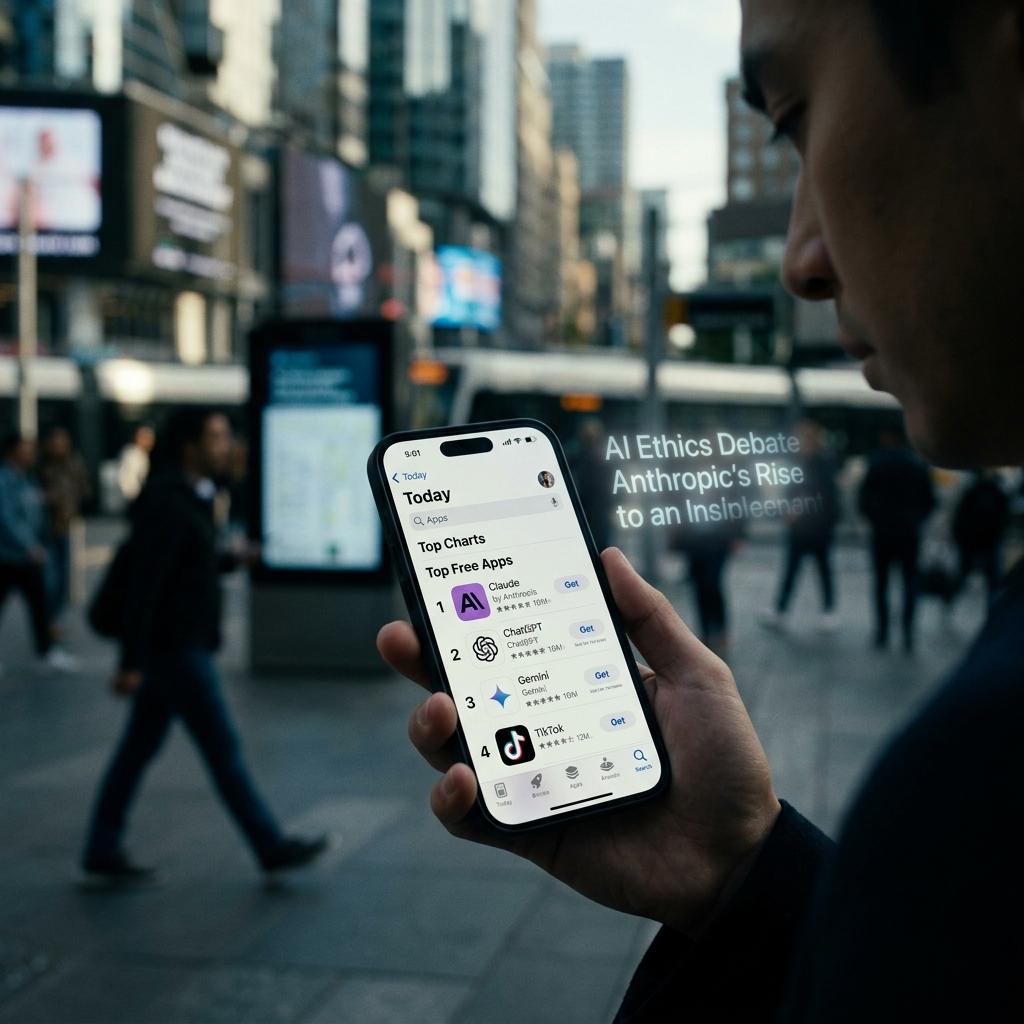
A major discussion about artificial intelligence ethics and national security has recently drawn attention across the tech world.
The chatbot app Claude surged to the top of the Apple App Store, temporarily surpassing ChatGPT in downloads.
The sudden rise followed reports that Dario Amodei, head of Anthropic, refused requests to weaken safety protections built into the company’s AI systems.
The situation quickly sparked a broader conversation about how artificial intelligence should be used in government and military environments.
Why the AI Ethics Debate Started
According to reporting referenced by NPR, the dispute centered on safeguards designed to prevent AI systems from being used for controversial purposes.
These included:
- Mass surveillance systems
- Autonomous weapons development
- Certain military applications
Reports suggested that Amodei declined requests to loosen these restrictions.
This decision reportedly led the administration of Donald Trump to classify Anthropic as a potential supply-chain risk.
Government agencies were then instructed to phase out the company’s technology from some federal systems.
AI Companies and Defense Partnerships
While Anthropic faced scrutiny, other AI companies have taken a different approach.
For example, OpenAI, the developer of ChatGPT, has explored partnerships with defense organizations such as the United States Department of Defense.
These collaborations often focus on areas like the following:
- Cybersecurity
- Data analysis
- Military logistics
- Decision-support systems
Supporters say such partnerships help governments responsibly adopt powerful technologies.
Critics, however, worry about the risks of using AI in warfare or large-scale monitoring.
Why Claude Suddenly Became the #1 App
After the news about Anthropic’s stance spread online, interest in the Claude app increased rapidly.
Users began downloading the chatbot in large numbers, pushing it to #1 on the Apple App Store rankings for a short period.
Some analysts believe this surge reflects public interest in companies that emphasize AI safety and ethical boundaries.
For many users, the situation became more than just a technology story.
It raised deeper questions about the direction of artificial intelligence.
The Bigger Question: Safety vs. Rapid Innovation
The controversy highlights a growing tension inside the AI industry.
Companies face two competing pressures:
1. Rapid technological progress
Governments and industries want powerful AI tools quickly.
2. Strong safety protections
Researchers worry about misuse and unintended consequences.
Balancing these goals is becoming one of the most difficult challenges in modern technology.
Why AI Ethics Matters More Than Ever
Artificial intelligence is now being integrated into many critical areas, including:
- National security
- Healthcare systems
- Scientific research
- Financial infrastructure
Because of this influence, decisions about how AI is designed and deployed have far-reaching consequences.
Questions about safety policies, transparency, and ethical limits are increasingly shaping both government regulation and public opinion.
FAQs
What is Claude?
Claude is an AI chatbot created by the company Anthropic. It is designed to provide helpful responses while following strict safety guidelines.
Why did Claude become the #1 app?
The app’s downloads surged after news reports about an AI ethics dispute involving Anthropic spread online.
What was the dispute about?
Reports suggested that Anthropic refused requests to weaken safeguards that prevent its AI systems from being used for mass surveillance or autonomous weapons.
Which companies are working with defense organizations?
Several AI companies, including OpenAI, have explored partnerships with defense agencies such as the U.S. Department of Defense.
Why is AI ethics important?
As artificial intelligence becomes more powerful, ethical rules help prevent misuse and ensure the technology benefits society.
Final Thoughts
The rise of Claude to the top of the Apple App Store shows how quickly public attention can shift in the fast-moving AI industry.
What began as a policy dispute about safety protections turned into a larger discussion about the future of artificial intelligence.
As governments, companies, and researchers continue developing advanced AI systems, debates about ethics, security, and responsibility will likely become even more important.
This episode highlights a key reality of modern technology: decisions about AI safety can shape not only policy but also public trust and user behavior.
