

Close Menu
Innovate And ExploreInnovate And Explore

    Subscribe to Updates

    Get the latest creative news from FooBar about art, design and business.

    What's Hot

    How to Grow Instagram from 0 to 10K Followers in 2026 Using Organic Methods

    May 22, 2026

    Smart Wearables Are Reshaping the Future of Everyday Technology

    May 13, 2026

    Everyday Tech How-To Guides for a Smarter and Easier Digital Life

    May 13, 2026
    Facebook Instagram
    Facebook Instagram YouTube TikTok
    Innovate And ExploreInnovate And Explore
    • Artificial Intelligence
    • Medical Research
    • Technology News
    • Science News
    • VR Headset
    • Palantir
    Innovate And ExploreInnovate And Explore
    Home » Bacteria That Fight Cancer: A New Era of Precision Treatment
    Medical Research

    Bacteria That Fight Cancer: A New Era of Precision Treatment

    alfredBy alfredMarch 22, 2026No Comments3 Mins Read
    Facebook Twitter Pinterest LinkedIn Tumblr WhatsApp Email
    Share
    Facebook Twitter LinkedIn WhatsApp Pinterest Email

    Introduction: A New Way to Fight Cancer

    Cancer treatment is changing fast. And now, scientists are exploring something surprising using bacteria to fight tumors from the inside.

    Researchers in Canada have developed engineered bacteria that can enter tumors and attack them directly. As a result, this approach could make treatment more precise and less harmful.

    While it may sound unusual, it could become one of the most powerful tools in modern medicine.

    How Bacteria Can Target Tumors

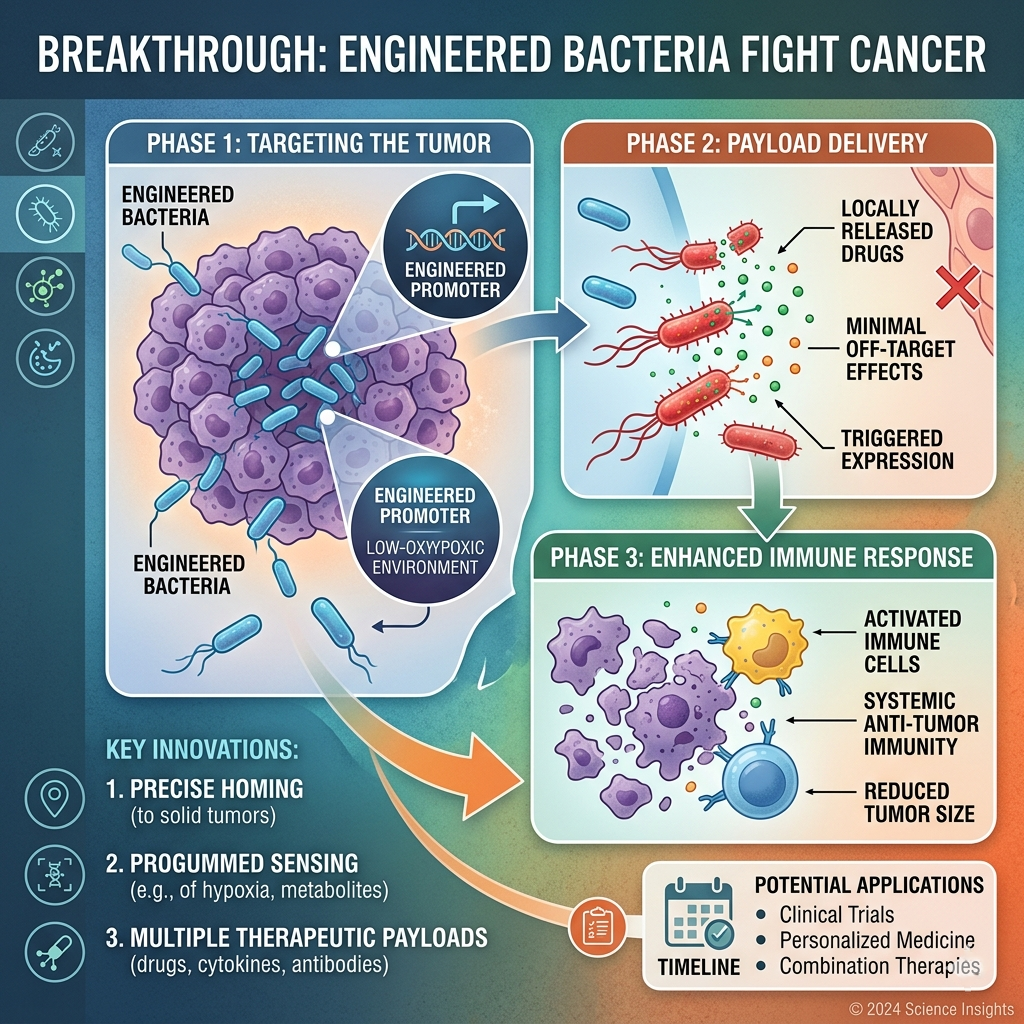
    At first, the idea might seem strange. However, bacteria naturally prefer low-oxygen environments—and tumors often have exactly that.

    Because of this, scientists can guide bacteria straight into cancerous tissue.

    This method is part of biotechnology, where living organisms are used to solve medical problems.

    What these engineered bacteria do:

    • Enter tumor cells directly
    • Release cancer-fighting substances
    • Trigger the immune system to attack

    As a result, they work from the inside out.

    Why This Approach Is So Different

    Traditional treatments like chemotherapy affect the whole body. While they kill cancer cells, they also harm healthy ones.

    In contrast, bacteria-based therapy is much more targeted.

    Key advantages include the following:

    • High precision
      Targets tumors without widespread damage
    • Fewer side effects
      Protects healthy tissues
    • Stronger immune response
      Helps the body fight cancer naturally

    Because of these benefits, this method fits perfectly into the idea of precision medicine.

    Real-World Example: How It Works

    Let’s break it down in a simple way.

    Imagine bacteria as tiny delivery systems. Scientists program them to carry medicine directly into tumors.

    Once inside, they can:

    • Release drugs exactly where needed
    • Break down cancer cells
    • Signal the immune system to respond

    As a result, treatment becomes more focused and efficient.

    How This Compares to Traditional Treatments

    To better understand the impact, let’s compare this new method with existing options.

    Treatment TypeHow It WorksLimitation
    ChemotherapyKills fast-growing cellsDamages healthy cells
    RadiationTargets tumor areaCan affect nearby tissue
    Bacteria therapyAttacks tumor internallyStill in development

    Clearly, this new approach offers a more targeted solution.

    Challenges Scientists Still Face

    Although the results are promising, there are still hurdles to overcome.

    Current challenges include:

    • Ensuring bacteria remain safe in the body
    • Controlling their behavior precisely
    • Testing long-term effects in humans

    Because of this, more research and clinical trials are needed before it becomes widely available.

    Why This Breakthrough Matters

    This discovery shows how far science has come. Instead of only using chemicals or machines, researchers are now using living organisms as treatment tools.

    The bigger impact:

    • Opens new doors for hard-to-treat cancers
    • Supports personalized treatment plans
    • Pushes the limits of medical innovation

    In other words, it changes how we think about fighting disease.

    FAQs About Bacteria-Based Cancer Treatment

    1. Is this treatment available now?

    No, it is still in the research and testing stage.

    2. Are these bacteria dangerous?

    They are specially engineered to be safe, but testing is ongoing.

    3. Can this replace chemotherapy?

    Not yet, but it may complement or improve existing treatments in the future.

    4. What makes this approach unique?

    It targets tumors directly from the inside, reducing harm to healthy cells.

    Conclusion: The Future of Cancer Treatment

    This breakthrough highlights a powerful idea—using life to fight disease. By turning bacteria into targeted tools, scientists are opening a new chapter in cancer treatment.

    Although it will take time to reach patients, the potential is huge. More precise, less harmful, and highly effective treatments may soon become reality.

    advanced encryption standard ai chatgpt ai science news artificial general intelligence california science center hologram museum medical research palantir quantum physics science center science fair board science museum scientific method tech news virtual reality headset
    Share. Facebook Twitter Pinterest LinkedIn Tumblr WhatsApp Email
    alfred

    Related Posts

    How to Grow Instagram from 0 to 10K Followers in 2026 Using Organic Methods

    May 22, 2026

    Smart Wearables Are Reshaping the Future of Everyday Technology

    May 13, 2026

    Everyday Tech How-To Guides for a Smarter and Easier Digital Life

    May 13, 2026

    The Rise of AI Girlfriends and Virtual Companions: Future or Danger?

    May 10, 2026

    The Dark Side of Deepfake Technology in 2026

    May 9, 2026

    How AI Video Generators Are Replacing Traditional Content Creation

    May 9, 2026
    Add A Comment
    Leave A Reply Cancel Reply

    Don't Miss

    How to Grow Instagram from 0 to 10K Followers in 2026 Using Organic Methods

    By alfredMay 22, 2026

    Introduction Starting from zero on Instagram feels tough at first. However, with the right strategy,…

    Smart Wearables Are Reshaping the Future of Everyday Technology

    May 13, 2026

    Everyday Tech How-To Guides for a Smarter and Easier Digital Life

    May 13, 2026

    The Rise of AI Girlfriends and Virtual Companions: Future or Danger?

    May 10, 2026
    Stay In Touch
    • Facebook
    • Twitter
    • Pinterest
    • Instagram
    • YouTube
    • Vimeo
    Our Picks

    How to Grow Instagram from 0 to 10K Followers in 2026 Using Organic Methods

    May 22, 2026

    Smart Wearables Are Reshaping the Future of Everyday Technology

    May 13, 2026

    Everyday Tech How-To Guides for a Smarter and Easier Digital Life

    May 13, 2026

    The Rise of AI Girlfriends and Virtual Companions: Future or Danger?

    May 10, 2026

    Subscribe to Updates

    Get the latest creative news from SmartMag about art & design.

    Techlo Inno
    Innovate And Explore
    Facebook Instagram YouTube TikTok
    • About Us
    • Cookies Policy
    • Editorial Policy
    • Terms & Conditions
    © 2026 Innovate and Explore. Designed by Techlo Inno.

    Type above and press Enter to search. Press Esc to cancel.

    Powered by
    ►
    Necessary cookies enable essential site features like secure log-ins and consent preference adjustments. They do not store personal data.
    None
    ►
    Functional cookies support features like content sharing on social media, collecting feedback, and enabling third-party tools.
    None
    ►
    Analytical cookies track visitor interactions, providing insights on metrics like visitor count, bounce rate, and traffic sources.
    None
    ►
    Advertisement cookies deliver personalized ads based on your previous visits and analyze the effectiveness of ad campaigns.
    None
    ►
    Unclassified cookies are cookies that we are in the process of classifying, together with the providers of individual cookies.
    None
    Powered by