

Close Menu
Innovate And ExploreInnovate And Explore

    Subscribe to Updates

    Get the latest creative news from FooBar about art, design and business.

    What's Hot

    One Uranium Pellet vs One Ton of Coal: The Energy Difference Explained

    April 16, 2026

    China’s Photonic Quantum Chip Could Transform AI and Data Centers

    April 16, 2026

    Top Social Media Management Tools to Grow Faster in 2026

    April 16, 2026
    Facebook Instagram
    Facebook Instagram YouTube TikTok
    Innovate And ExploreInnovate And Explore
    • Artificial Intelligence
    • Medical Research
    • Technology News
    • Science News
    • VR Headset
    • Palantir
    Innovate And ExploreInnovate And Explore
    Home » McDonald’s Tests Humanoid Robots in Shanghai: The Future of Fast Food Service
    Artificial Intelligence

    McDonald’s Tests Humanoid Robots in Shanghai: The Future of Fast Food Service

    alfredBy alfredMarch 28, 2026No Comments4 Mins Read
    Facebook Twitter Pinterest LinkedIn Tumblr WhatsApp Email
    Share
    Facebook Twitter LinkedIn WhatsApp Pinterest Email

    Introduction

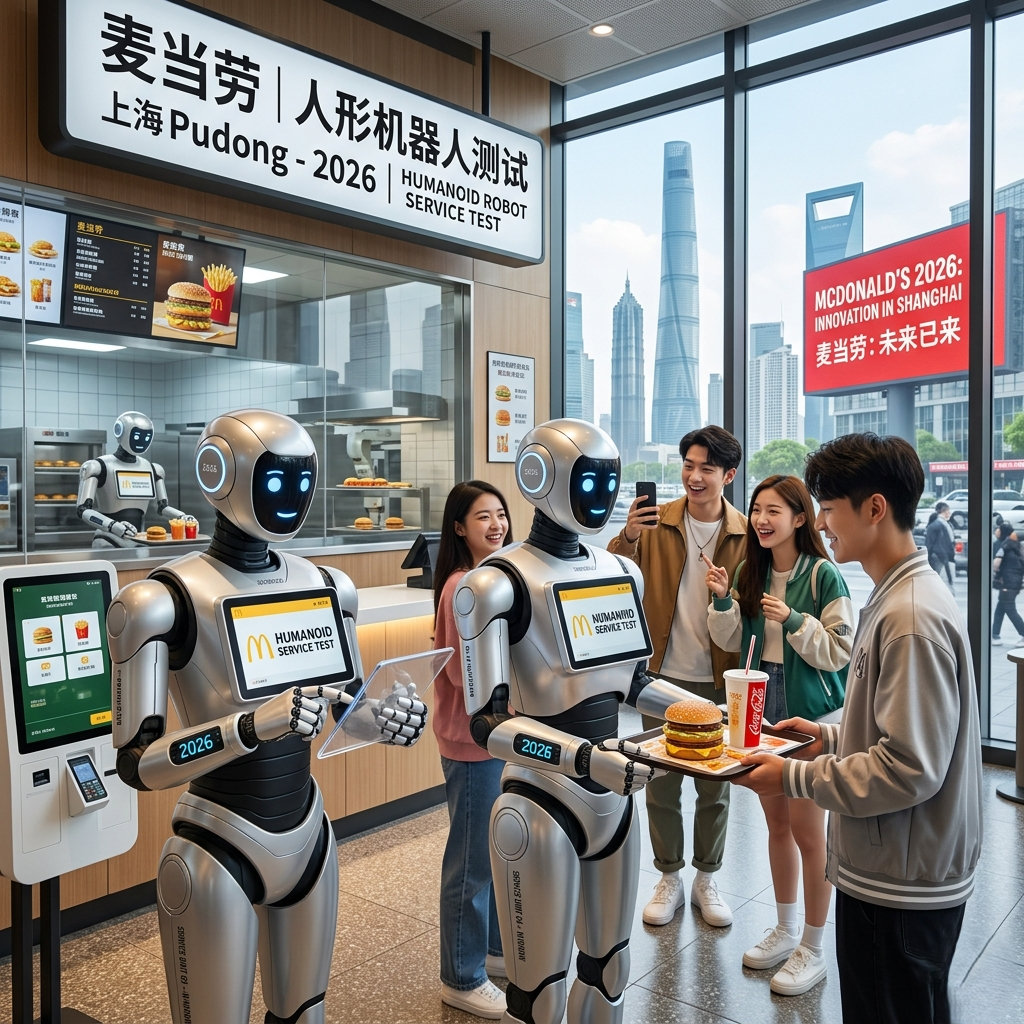
    Technology is changing the way we eat, order, and experience restaurants. In March 2026, a McDonald’s restaurant in Shanghai tested humanoid robots, giving customers a glimpse into the future of dining.

    The experiment did not replace workers. Instead, it showed how robots and humans could work together to improve service, speed, and customer experience.

    The Robot Test at McDonald’s Shanghai

    The test took place at a branch of McDonald’s during a special event at the Shanghai Science and Technology Museum.

    The robots were developed by Keenon Robotics, a company known for service robots used in restaurants and hotels.

    The event lasted about five days and attracted many visitors who wanted to see robots working inside a restaurant.

    What the Humanoid Robots Did

    The humanoid robots were designed to interact with customers and make the restaurant experience more engaging.

    They were able to:

    • Welcome customers at the entrance
    • Guide people to counters or tables
    • Share menu information
    • Talk and interact with visitors
    • Provide entertainment and greetings

    Some robots even wore McDonald’s uniforms, which made the experience more fun and realistic for customers.

    Wheeled Robots Handled Food Delivery

    While humanoid robots interacted with customers, wheeled robots handled the practical tasks inside the restaurant.

    These robots were used for:

    • Delivering food to tables
    • Collecting trays
    • Moving items around the restaurant
    • Supporting staff during busy hours

    Because of this, human workers could focus more on cooking, customer service, and managing orders.

    Robots Did Not Replace Human Workers

    One important thing about this test is that robots did not replace employees. Instead, they worked alongside human staff.

    This shows an important trend in automation:
    Technology is being used to assist workers, not completely replace them.

    Robots are especially useful for:

    • Repetitive tasks
    • Carrying items
    • Greeting customers
    • Providing information
    • Reducing workload during busy times

    As a result, employees can focus on tasks that require human skills like communication and problem-solving.

    Why Big Companies Are Testing Robots

    Large companies are testing robots because they want to improve efficiency and customer experience at the same time.

    Here are some reasons restaurants are exploring robotics:

    1. Faster service
    2. Lower workload for staff
    3. More consistent service
    4. Entertainment and customer engagement
    5. Modern brand image
    6. Long-term cost efficiency

    Therefore, robot assistants may become common in restaurants in the future.

    Real-World Example: Robots in Restaurants

    Robots are already being used in many restaurants around the world. For example:

    • Robots delivering food in China restaurants
    • Robot baristas making coffee
    • Automated cooking machines in fast food kitchens
    • Self-ordering kiosks in many global chains

    However, humanoid robots interacting with customers is still new, which makes this McDonald’s test important.

    What This Means for the Future of Restaurants

    This short experiment showed how restaurants may look in the future. Instead of fully automated restaurants, we may see human-robot teamwork.

    Future restaurants may include:

    • Robot greeters
    • Robot food delivery
    • AI ordering systems
    • Smart kitchens
    • Human staff for customer support

    As technology improves, robots will likely become more common in customer service environments.

    FAQs

    Are robots replacing McDonald’s workers?

    No, the robots were used to assist workers, not replace them. Human staff still handled cooking and operations.

    Who made the robots used in McDonald’s Shanghai?

    The robots were developed by Keenon Robotics, a company that builds service robots for restaurants and hotels.

    How long did the robot test last?

    The robot trial lasted around five days during a special event in March 2026.

    Will robots be used in McDonald’s worldwide?

    It is still experimental, but if successful, similar robots may appear in more restaurants in the future.

    Conclusion

    The McDonald’s robot test in Shanghai showed how technology is slowly transforming the restaurant industry. Instead of replacing workers, robots are being used to improve service, reduce workload, and create a more interactive customer experience.

    As AI and robotics continue to develop, restaurants of the future may combine human workers and robots to create faster, smarter, and more engaging dining experiences.

    The future of fast food may not be fully robotic but it will definitely be technology-driven.

    advanced encryption standard ai chatgpt ai science news artificial general intelligence california science center hologram museum medical research palantir quantum physics science center science fair board science museum scientific method tech news virtual reality headset
    Share. Facebook Twitter Pinterest LinkedIn Tumblr WhatsApp Email
    alfred

    Related Posts

    One Uranium Pellet vs One Ton of Coal: The Energy Difference Explained

    April 16, 2026

    China’s Photonic Quantum Chip Could Transform AI and Data Centers

    April 16, 2026

    Top Social Media Management Tools to Grow Faster in 2026

    April 16, 2026

    Biodegradable Fruit Wash Removes Pesticides and Keeps Fruit Fresh Longer

    April 15, 2026

    NASA Finds Its Own Spacecraft Debris on Mars: A Strange Discovery

    April 15, 2026

    Top Marketing Automation Tools to Boost Your Business in 2026

    April 15, 2026
    Add A Comment
    Leave A Reply Cancel Reply

    Don't Miss

    One Uranium Pellet vs One Ton of Coal: The Energy Difference Explained

    By alfredApril 16, 2026

    Introduction It sounds unbelievable at first. However, it’s true. A uranium fuel pellet, about the…

    China’s Photonic Quantum Chip Could Transform AI and Data Centers

    April 16, 2026

    Top Social Media Management Tools to Grow Faster in 2026

    April 16, 2026

    Biodegradable Fruit Wash Removes Pesticides and Keeps Fruit Fresh Longer

    April 15, 2026
    Stay In Touch
    • Facebook
    • Twitter
    • Pinterest
    • Instagram
    • YouTube
    • Vimeo
    Our Picks

    One Uranium Pellet vs One Ton of Coal: The Energy Difference Explained

    April 16, 2026

    China’s Photonic Quantum Chip Could Transform AI and Data Centers

    April 16, 2026

    Top Social Media Management Tools to Grow Faster in 2026

    April 16, 2026

    Biodegradable Fruit Wash Removes Pesticides and Keeps Fruit Fresh Longer

    April 15, 2026

    Subscribe to Updates

    Get the latest creative news from SmartMag about art & design.

    Techlo Inno
    Innovate And Explore
    Facebook Instagram YouTube TikTok
    • About Us
    • Cookies Policy
    • Editorial Policy
    • Terms & Conditions
    © 2026 Innovate and Explore. Designed by Techlo Inno.

    Type above and press Enter to search. Press Esc to cancel.

    Powered by
    ►
    Necessary cookies enable essential site features like secure log-ins and consent preference adjustments. They do not store personal data.
    None
    ►
    Functional cookies support features like content sharing on social media, collecting feedback, and enabling third-party tools.
    None
    ►
    Analytical cookies track visitor interactions, providing insights on metrics like visitor count, bounce rate, and traffic sources.
    None
    ►
    Advertisement cookies deliver personalized ads based on your previous visits and analyze the effectiveness of ad campaigns.
    None
    ►
    Unclassified cookies are cookies that we are in the process of classifying, together with the providers of individual cookies.
    None
    Powered by