


6G Sounds futuristic. However, the truth is simple: the race has already started.
While many people are still upgrading to 5G, companies are quietly building the next generation. And this time, the shift may not just be about speed.
It could reshape how we live, work, and interact with technology every single day.
What Is 6G? (In Simple Words)
6G is the next step after 5G. It aims to make networks faster, smarter, and almost instant.
In simple terms, it could allow machines, devices, and systems to communicate with nearly zero delay.
As a result, networks may stop being just “internet providers” and start acting like intelligent environments.
Key Features of 6G Technology
6G is expected to bring major upgrades. For example:
- Near-instant communication (ultra-low latency)
- Deep integration with artificial intelligence
- Advanced sensing capabilities
- Smarter, self-optimizing networks
- Seamless connection between humans and machines
Because of this, everyday systems could become more responsive and automated.
Real-World Example: What 6G Could Enable
To understand its impact, imagine this:
- Self-driving cars reacting instantly to road changes
- Smart cities adjusting traffic, energy, and security in real time
- Remote surgeries with zero delay
- AI systems making decisions instantly across networks
Clearly, the benefits are powerful. However, there’s another side to consider.
The Pattern We Keep Ignoring
Every telecom upgrade follows a similar story.
First, it is marketed as freedom. Faster speeds, better access, and more convenience.
Then, slowly, control shifts.
Large companies build and own the infrastructure. Users, on the other hand, pay monthly fees to access it.
Over time, dependence increases.
6G and the Rise of Digital Control
With 6G, this pattern could go even deeper.
Because networks may become smarter and more integrated, they could also collect more data than ever before.
This raises important concerns:
- Who controls the data?
- Who owns the infrastructure?
- How much privacy will users actually have?
As networks evolve, control may become more centralized.
Subscription Economy: The Hidden Cost
Another trend is already clear: everything is becoming a subscription.
From streaming to software, users now pay continuously instead of owning things.
6G could push this further.
Instead of just paying for internet access, people may end up paying for connected environments, smart services, and AI-powered systems.
In other words, access replaces ownership.
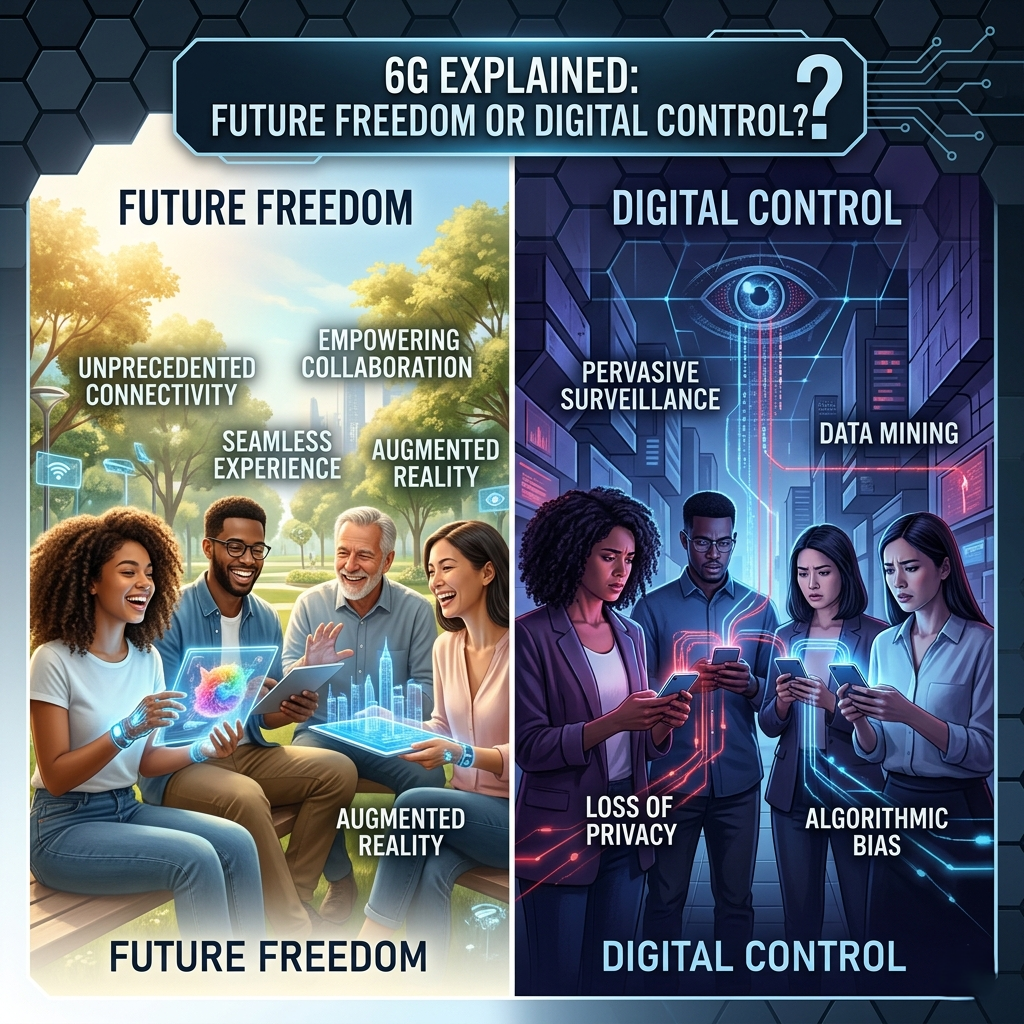
Freedom vs Surveillance: The Big Question
So, here’s the real question:
If 6G becomes the backbone of the future economy, who benefits the most?
On one side, it can:
- Improve efficiency
- Enable innovation
- Connect the world like never before
On the other side, it may:
- Increase surveillance
- Strengthen corporate control
- Lock users deeper into digital ecosystems
The balance between these outcomes will shape the future.
What This Means for You
You don’t need to be a tech expert to care about this.
Because in the end, 6G will affect:
- Your privacy
- Your daily costs
- Your access to digital services
- Your control over personal data
Understanding these changes early gives you an advantage.
FAQs
When will 6G be available?
6G is expected to roll out around 2030, but research and development are already underway.
Is 6G faster than 5G?
Yes, 6G is expected to be significantly faster, with near-instant communication speeds.
Will 6G replace 5G?
Eventually, yes. However, the transition will take several years.
Is 6G safe for privacy?
That depends on regulations and how companies manage data. Privacy concerns are already being discussed.
Conclusion
6G is not just another upgrade. It represents a shift toward a more connected, intelligent, and automated world.
However, progress always comes with trade-offs.
While the technology promises speed and convenience, it also raises serious questions about control, ownership, and privacy.
