


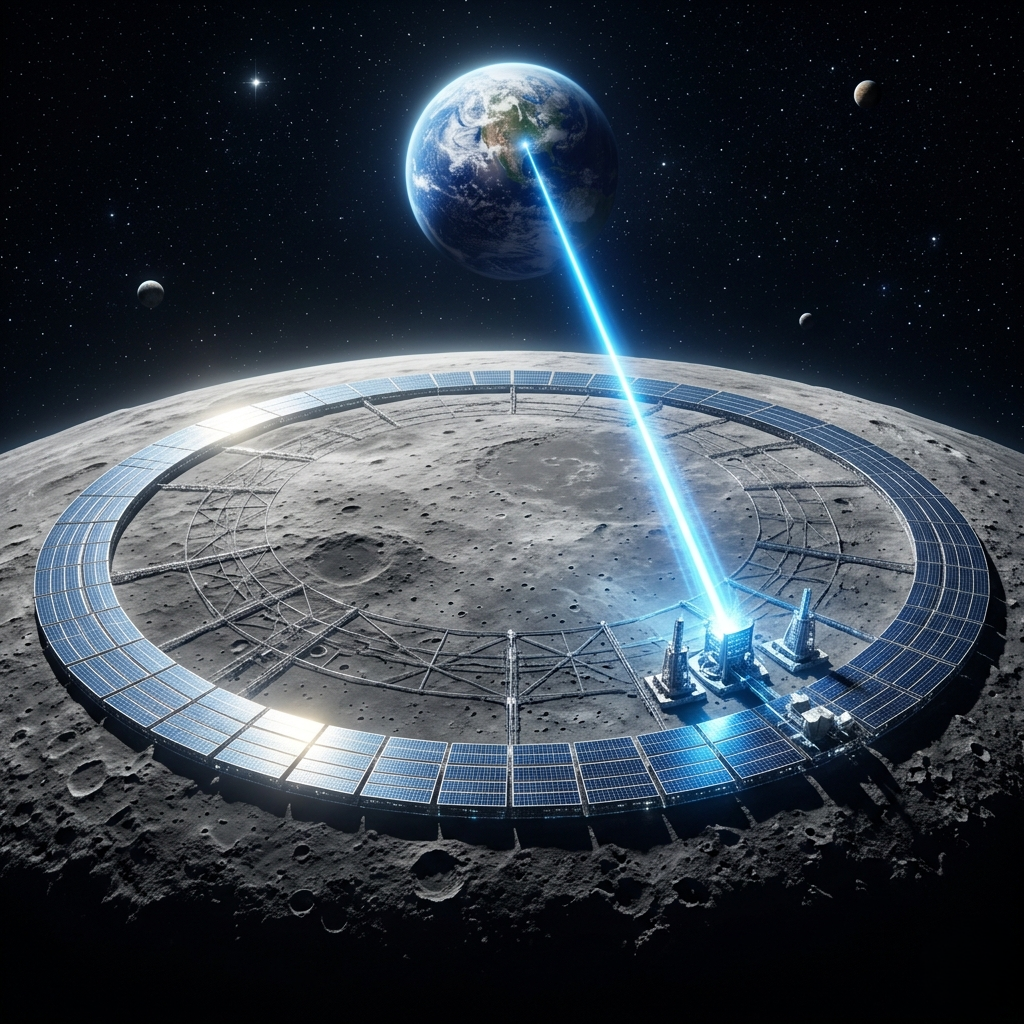
What if Earth could get unlimited clean energy from space?
It sounds like science fiction, but Japan is seriously exploring this idea.
Scientists have proposed building a massive solar power system around the Moon. If successful, it could deliver continuous energy to Earth and transform how we power our world.
What Is the Moon Solar Power Project?
The concept comes from the Japan Aerospace Exploration Agency, often called JAXA.
The idea is simple in theory, yet massive in scale.
Build a 6,800-mile solar panel ring around the Moon to capture sunlight and send that energy back to Earth.
Because the Moon has no atmosphere, solar panels there can collect sunlight more efficiently than on Earth.
Why the Moon Is Ideal for Solar Energy
So, why not just build more solar farms on Earth?
The answer comes down to consistency and efficiency.
Key Advantages
- No atmosphere → No clouds or weather blocking sunlight
- Long daylight periods → Continuous energy collection
- Higher efficiency → More energy captured per panel
As a result, the Moon offers a stable and powerful energy source that Earth simply can’t match.
How the System Would Work
Let’s break it down step by step so it’s easy to understand.
1. Solar Energy Collection
Large solar panels on or around the Moon capture sunlight nonstop.
2. Energy Conversion
The system converts solar energy into a transferable form, like microwaves or lasers.
3. Transmission to Earth
The energy is beamed across space toward Earth.
4. Ground Reception
Special stations on Earth receive the signal and convert it into electricity.
5. Power Distribution
Finally, the electricity is sent to homes, businesses, and entire cities.
So, instead of storing energy, we would receive it almost continuously.
Real-World Impact: What Could Change?
If this project works, the effects could be huge.
1. Clean Energy at Scale
First, it could reduce our reliance on fossil fuels.
That means lower carbon emissions and a cleaner planet.
2. Stable Power Supply
Unlike wind or solar farms on Earth, this system wouldn’t depend on weather.
So, energy would be available almost all the time.
3. Powering Entire Cities
In theory, a system like this could supply electricity to large regions or even countries.
That’s a major step toward global energy security.
Simple Comparison: Earth vs Space Solar
| Feature | Earth Solar | Moon Solar |
|---|---|---|
| Weather impact | High | None |
| Day/night cycle | Yes | Minimal |
| Efficiency | Moderate | High |
| Reliability | Variable | Stable |
Because of these differences, space-based solar could outperform Earth-based systems.
Major Challenges Ahead
Now, let’s be realistic. This project is incredibly ambitious.
1. High Costs
Building infrastructure in space is extremely expensive.
Transporting materials to the Moon alone is a huge challenge.
2. Technology Limitations
Wireless energy transmission over such long distances still needs improvement.
Safety and efficiency must be guaranteed.
3. Engineering Complexity
Constructing a 6,800-mile structure in space is not easy.
It requires advanced robotics, automation, and precision.
4. Safety Concerns
Beaming energy to Earth must be carefully controlled.
Scientists must ensure it poses no risk to people, aircraft, or wildlife.
Why This Idea Still Matters
Even if this exact project takes decades, it represents something bigger.
It shows how serious scientists are about solving the energy crisis.
It also highlights a shift toward space-based solutions for Earth’s biggest problems.
In fact, many countries and companies are already researching similar technologies.
FAQs
Is the Moon solar project real or just an idea?
It is currently a proposal and research concept. However, agencies like JAXA are actively studying its feasibility.
How would energy be sent from the Moon to Earth?
Energy would likely be transmitted using microwaves or lasers and then converted into electricity on Earth.
Is it safe to beam energy from space?
Scientists are working on safe transmission methods. Still, more research is needed before real-world use.
When could this become reality?
It may take several decades due to cost, technology, and engineering challenges.
Final Thoughts
Japan’s Moon solar power project may sound bold, but it’s grounded in real science.
While major hurdles remain, the idea opens the door to a future with nearly unlimited clean energy.
And as technology improves, what feels impossible today could become normal tomorrow.
👉 If you’re interested in the future of energy, keep watching this space—because the next revolution might come from the Moon. 🚀
