

Close Menu
Innovate And ExploreInnovate And Explore

    Subscribe to Updates

    Get the latest creative news from FooBar about art, design and business.

    What's Hot

    Lake Mead Water Crisis: Why Water Levels Are Falling Fast

    April 18, 2026

    New York AI Law 2026: Why Chatbots Could Face Lawsuits

    April 18, 2026

    Is AI Quietly Making Life More Expensive? Here’s What You Should Know

    April 18, 2026
    Facebook Instagram
    Facebook Instagram YouTube TikTok
    Innovate And ExploreInnovate And Explore
    • Artificial Intelligence
    • Medical Research
    • Technology News
    • Science News
    • VR Headset
    • Palantir
    Innovate And ExploreInnovate And Explore
    Home » New York AI Law 2026: Why Chatbots Could Face Lawsuits
    Artificial Intelligence

    New York AI Law 2026: Why Chatbots Could Face Lawsuits

    alfredBy alfredApril 18, 2026No Comments4 Mins Read
    Facebook Twitter Pinterest LinkedIn Tumblr WhatsApp Email
    Share
    Facebook Twitter LinkedIn WhatsApp Pinterest Email

    AI chatbots are everywhere now. People use them for advice, answers, and even emotional support.

    But New York is stepping in and things could change fast.

    A new bill aims to limit what AI can say and hold companies responsible if their systems cause harm.

    So, what’s really going on? Let’s break it down in a simple way.

    What Is the New York AI Bill?

    The proposed law, called New York Senate Bill 7263, focuses on chatbot accountability.

    It targets companies that create or run AI systems not the users.

    In short, the bill says:
    If an AI gives harmful or misleading professional advice, the company behind it can be held responsible.

    What the Law Actually Proposes

    This bill isn’t banning AI. Instead, it sets clear limits.

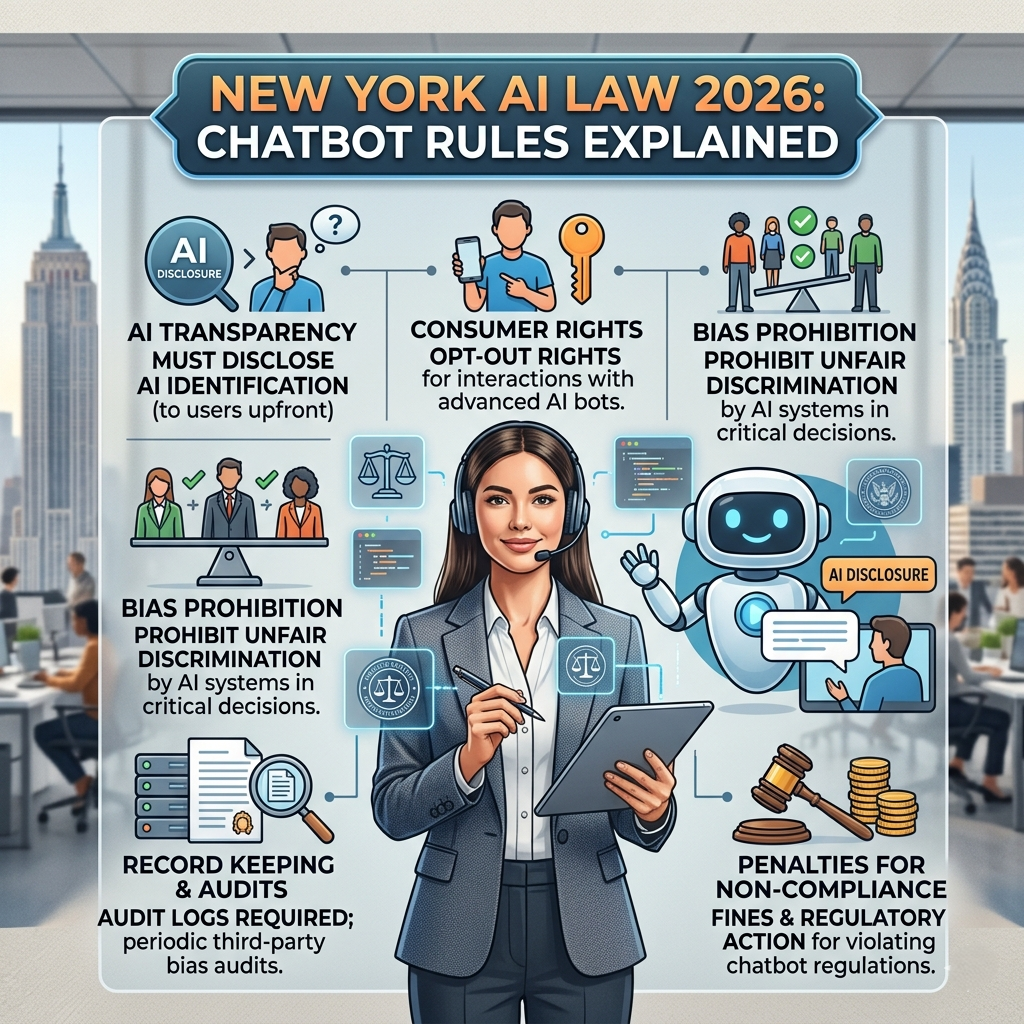
    Key Rules

    • AI cannot act like licensed professionals
    • Companies must clearly say users are talking to AI
    • Disclaimers cannot remove legal responsibility
    • Users can sue companies for harmful advice

    Because of this, the burden shifts from users to AI companies.

    What Counts as “Professional Advice”?

    This is where things get serious.

    The bill focuses on areas that require licenses in real life.

    Examples Include:

    • Legal advice (like from a lawyer)
    • Mental health support (like a therapist)
    • Medical guidance
    • Financial consulting

    So, if a chatbot starts acting like an expert in these areas, it could break the law.

    Why New York Is Taking Action

    This move didn’t come out of nowhere.

    There have been growing concerns about AI systems behaving like real professionals.

    Main Concerns

    • AI giving wrong or dangerous advice
    • Users trusting AI too much
    • Chatbots encouraging harmful behavior
    • Lack of accountability when things go wrong

    Because of these risks, lawmakers want stronger protections.

    How This Law Changes Everything

    This bill introduces a big shift in how AI is regulated.

    1. Companies Become Liable

    Instead of blaming users, companies are now responsible for what their AI says.

    2. Users Get Legal Power

    People can sue for damages if they are harmed.

    That includes legal costs, which makes lawsuits more accessible.

    3. Disclaimers Lose Power

    Previously, companies could hide behind “this is not advice” messages.

    Now, that won’t protect them anymore.

    Real-World Example

    Imagine someone asks a chatbot for legal help with a contract.

    If the AI gives wrong advice and the user loses money, they could sue the company.

    Similarly, if a chatbot gives harmful mental health suggestions, the stakes become even higher.

    So, this law directly impacts how AI interacts with users.

    How This Compares to Other States

    New York isn’t alone in this move.

    States like:

    • Colorado
    • Illinois

    are also working on AI regulations.

    However, New York’s approach is stricter because it allows direct lawsuits, not just government enforcement.

    What This Means for AI Companies

    If this bill passes, companies will need to adapt quickly.

    Likely Changes:

    • Limiting chatbot responses in sensitive areas
    • Adding stronger safety filters
    • Improving accuracy and monitoring
    • Avoiding “expert-like” language

    In short, AI will become more cautious.

    What This Means for Users

    For everyday users, this could be both good and limiting.

    Benefits:

    • Better protection from harmful advice
    • More transparency
    • Legal rights if something goes wrong

    Downsides:

    • Less detailed answers in some topics
    • More restricted chatbot conversations

    So, while safety improves, flexibility may decrease.

    FAQs

    Is New York banning AI chatbots?

    No. The bill regulates how they operate, especially in professional areas.

    Can I still ask AI for general advice?

    Yes. However, AI may avoid giving detailed or expert-level guidance in sensitive topics.

    What happens if AI gives harmful advice?

    Under this bill, you could sue the company responsible for the chatbot.

    When will this law take effect?

    It is still a proposed bill, so it must pass before becoming law.

    Final Thoughts

    New York’s AI bill is a big step toward safer technology.

    Instead of letting AI grow unchecked, lawmakers are setting clear boundaries.

    And more importantly, they are making companies accountable.

    👉 Going forward, expect AI tools to become safer but also more controlled.

    This is just the beginning of a new era where technology and law must evolve together.

    advanced encryption standard ai chatgpt ai science news artificial general intelligence california science center hologram museum medical research palantir quantum physics science center science fair board science museum scientific method tech news virtual reality headset
    Share. Facebook Twitter Pinterest LinkedIn Tumblr WhatsApp Email
    alfred

    Related Posts

    Lake Mead Water Crisis: Why Water Levels Are Falling Fast

    April 18, 2026

    Is AI Quietly Making Life More Expensive? Here’s What You Should Know

    April 18, 2026

    Moon Solar Power Project: Can Japan Power Earth from Space?

    April 17, 2026

    Fly Brain Uploaded to a Computer: A New Era of Digital Intelligence

    April 17, 2026

    Top Online Marketing Platforms for 2026

    April 17, 2026

    One Uranium Pellet vs One Ton of Coal: The Energy Difference Explained

    April 16, 2026
    Add A Comment
    Leave A Reply Cancel Reply

    Don't Miss

    Lake Mead Water Crisis: Why Water Levels Are Falling Fast

    By alfredApril 18, 2026

    Something serious is happening at Lake Mead. And it’s happening fast. In just one month,…

    New York AI Law 2026: Why Chatbots Could Face Lawsuits

    April 18, 2026

    Is AI Quietly Making Life More Expensive? Here’s What You Should Know

    April 18, 2026

    Moon Solar Power Project: Can Japan Power Earth from Space?

    April 17, 2026
    Stay In Touch
    • Facebook
    • Twitter
    • Pinterest
    • Instagram
    • YouTube
    • Vimeo
    Our Picks

    Lake Mead Water Crisis: Why Water Levels Are Falling Fast

    April 18, 2026

    New York AI Law 2026: Why Chatbots Could Face Lawsuits

    April 18, 2026

    Is AI Quietly Making Life More Expensive? Here’s What You Should Know

    April 18, 2026

    Moon Solar Power Project: Can Japan Power Earth from Space?

    April 17, 2026

    Subscribe to Updates

    Get the latest creative news from SmartMag about art & design.

    Techlo Inno
    Innovate And Explore
    Facebook Instagram YouTube TikTok
    • About Us
    • Cookies Policy
    • Editorial Policy
    • Terms & Conditions
    © 2026 Innovate and Explore. Designed by Techlo Inno.

    Type above and press Enter to search. Press Esc to cancel.

    Powered by
    ►
    Necessary cookies enable essential site features like secure log-ins and consent preference adjustments. They do not store personal data.
    None
    ►
    Functional cookies support features like content sharing on social media, collecting feedback, and enabling third-party tools.
    None
    ►
    Analytical cookies track visitor interactions, providing insights on metrics like visitor count, bounce rate, and traffic sources.
    None
    ►
    Advertisement cookies deliver personalized ads based on your previous visits and analyze the effectiveness of ad campaigns.
    None
    ►
    Unclassified cookies are cookies that we are in the process of classifying, together with the providers of individual cookies.
    None
    Powered by