


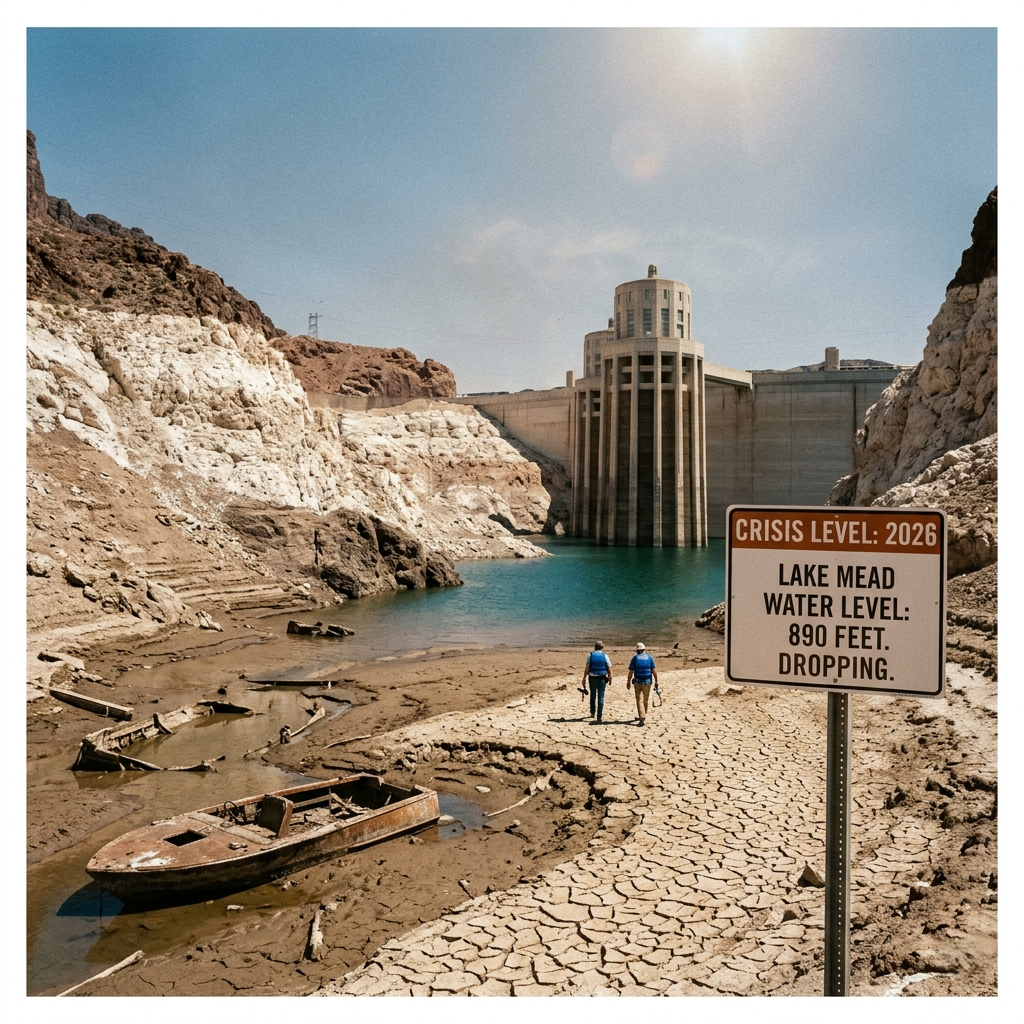
Something serious is happening at Lake Mead. And it’s happening fast.
In just one month, water levels dropped by six feet, a sharp and worrying decline.
As the largest reservoir in the United States, this isn’t just a local issue. It affects millions of people, energy supply, and the future of water in the American West.
What’s Happening at Lake Mead?
Lake Mead is now sitting at around 35% capacity.
That’s far below normal levels. And worse, the situation is getting more serious each month.
Experts warn that if conditions don’t improve, water levels could drop to record lows by 2027.
Why Water Levels Are Dropping So Quickly
This sudden drop didn’t happen by accident. Several factors are working together.
1. Low Snowpack
The biggest reason is a weak winter season.
Less snow in the mountains means less water flowing into the reservoir.
2. Climate Change
Long-term warming trends are making droughts more intense.
As temperatures rise, evaporation increases, which reduces water levels even faster.
3. High Water Demand
Millions of people depend on this water.
Cities, farms, and industries across the region continue to draw from the same limited supply.
Why This Crisis Matters
This isn’t just about a lake shrinking. The impact is much bigger.
1. Drinking Water Supply
Lake Mead supports water systems for major cities like
- Las Vegas
- Los Angeles
- Phoenix
Even though deep-water pumps are still working, the margin of safety is shrinking.
2. Hydropower at Risk
The Hoover Dam depends on Lake Mead for power generation.
Lower water levels mean less pressure to spin turbines.
As a result, electricity production could drop, affecting energy supply across the region.
3. Water Quality Problems
As water levels fall, temperatures rise.
This creates ideal conditions for harmful algal blooms.
These blooms can:
- Produce toxins
- Harm pets and wildlife
- Pose health risks to humans
Real-World Example: A Growing Risk
Imagine a city relying on one main water tank.
Now imagine that tank dropping quickly while demand stays the same.
That’s exactly what’s happening here but on a massive scale.
Because of this, even small changes can have big consequences.
What Experts Are Warning About
The Southern Nevada Water Authority has raised serious concerns.
They predict that water levels could fall to around 1,032 feet by 2027, which would be dangerously close to record lows.
So, while there’s still time to act, the window is narrowing.
What Can Be Done?
Although the situation is serious, solutions do exist.
Possible Actions
- Reduce water usage in cities
- Improve water recycling systems
- Invest in desalination and alternative sources
- Strengthen conservation policies
At the same time, long-term climate action is critical.
FAQs
Is Lake Mead running out of water?
Not yet. However, levels are dangerously low and could worsen if current trends continue.
Can people still get drinking water?
Yes. Deep-water intake systems are still working, but the situation is becoming more fragile.
Why is climate change affecting the lake?
Higher temperatures increase evaporation and reduce snowpack, which lowers water supply.
Could hydropower stop completely?
It’s possible if water levels drop too far, which would impact electricity generation at Hoover Dam.
Final Thoughts
Lake Mead’s rapid decline is a clear warning sign.
It shows how climate change, water demand, and natural limits are colliding.
While the situation is not hopeless, it does require urgent action.
👉 The sooner changes are made, the better the chances of avoiding a deeper crisis.
