


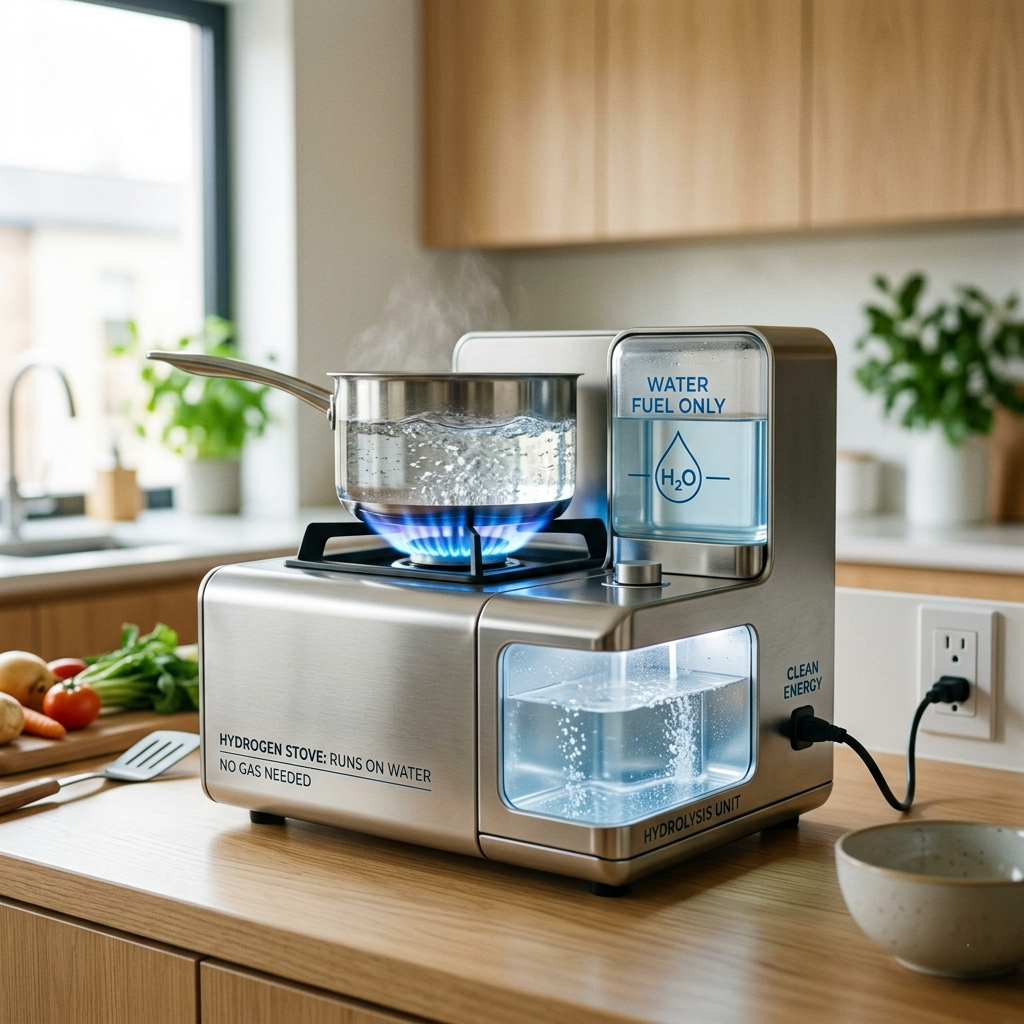
Introduction: Cooking Without Gas Is Now Possible
Imagine cooking your meals without a gas cylinder or pipeline. Sounds futuristic, right?
Well, a startup from India is turning that idea into reality. Instead of gas, this stove runs on water and electricity.
Even more interesting, it produces almost zero emissions. So, let’s explore how this technology works and why it matters.
What Is This Hydrogen Cooking Stove?
A clean tech startup called Greenvize has developed a smart cooking solution. It’s a plug-and-play hydrogen stove designed for modern kitchens.
Unlike traditional stoves, this system generates fuel instantly. Therefore, you don’t need to store gas at all.
At the core of this system is a proton exchange membrane (PEM) electrolyzer. This technology splits water into hydrogen and oxygen.
How the Stove Works (Simple Explanation)
The process is surprisingly simple.
When you turn the knob, the system activates immediately. Then, it starts converting water into hydrogen fuel.
Step-by-step process:
- Water is fed into the system
- Electricity splits it into hydrogen and oxygen
- Hydrogen is burned as cooking fuel
- Oxygen is released, improving indoor air
As a result, the only byproduct is water vapor, not harmful gases.
Why This Technology Is a Big Deal
This isn’t just another kitchen gadget. In fact, it could change how millions of people cook.
Key benefits:
- No gas cylinders or pipelines needed
- Zero harmful emissions during cooking
- Cleaner indoor air quality
- Safer compared to traditional gas systems
Because of these advantages, it’s especially useful in areas with limited gas access.
Efficiency: How Much Does It Use?
The system is designed to be highly efficient.
- Just 100 ml of distilled water powers the stove
- Around 1 kWh of electricity is required
- It can run for up to 6 hours of continuous cooking
Therefore, it uses minimal resources while delivering strong performance.
Can It Work Off-Grid?
Yes, and this is where it gets even more exciting.
The stove can be paired with rooftop solar panels. As a result, users can cook completely off-grid.
This makes it a great option for:
- Rural areas
- Remote locations
- Sustainable homes
Pricing and Target Users
Currently, a single-burner unit costs around $1,128 USD.
While this may seem expensive, the long-term savings and environmental benefits are significant.
Who is it for?
- Hotels and restaurants
- Community kitchens
- Rural households
- Eco-conscious users
Over time, as production scales, prices could become more affordable.
Real-World Impact: Why It Matters
Traditional cooking fuels contribute to pollution and health problems. However, this hydrogen stove offers a cleaner alternative.
For example, in many regions, indoor air pollution from cooking causes serious health risks.
By switching to hydrogen-based cooking, households can reduce these risks significantly.
Challenges to Consider
While the idea is promising, there are still some challenges.
- High upfront cost
- Dependence on electricity
- Limited awareness and availability
However, as technology improves, these issues may gradually decrease.
FAQs
1. Is a hydrogen stove safe to use?
Yes, it is designed with safety systems. Hydrogen is generated on demand, so it is not stored in large amounts.
2. Does it produce any pollution?
No harmful emissions are produced. The only byproduct is water vapor.
3. Can it replace LPG completely?
Potentially yes, especially in areas with reliable electricity or solar power.
4. Is it suitable for everyday cooking?
Yes, it can handle regular cooking tasks just like a traditional stove.
Conclusion: A Glimpse Into the Future of Cooking
This hydrogen stove shows how innovation can solve everyday problems.
By using water and electricity, it removes the need for gas completely. Therefore, it offers a cleaner and safer way to cook.
Although it’s still early, the potential is huge.
👉 If adopted widely, this technology could transform kitchens and make cooking more sustainable for everyone.
