


Introduction
Modern warfare is changing fast. Speed, precision, and advanced technology now define military power.
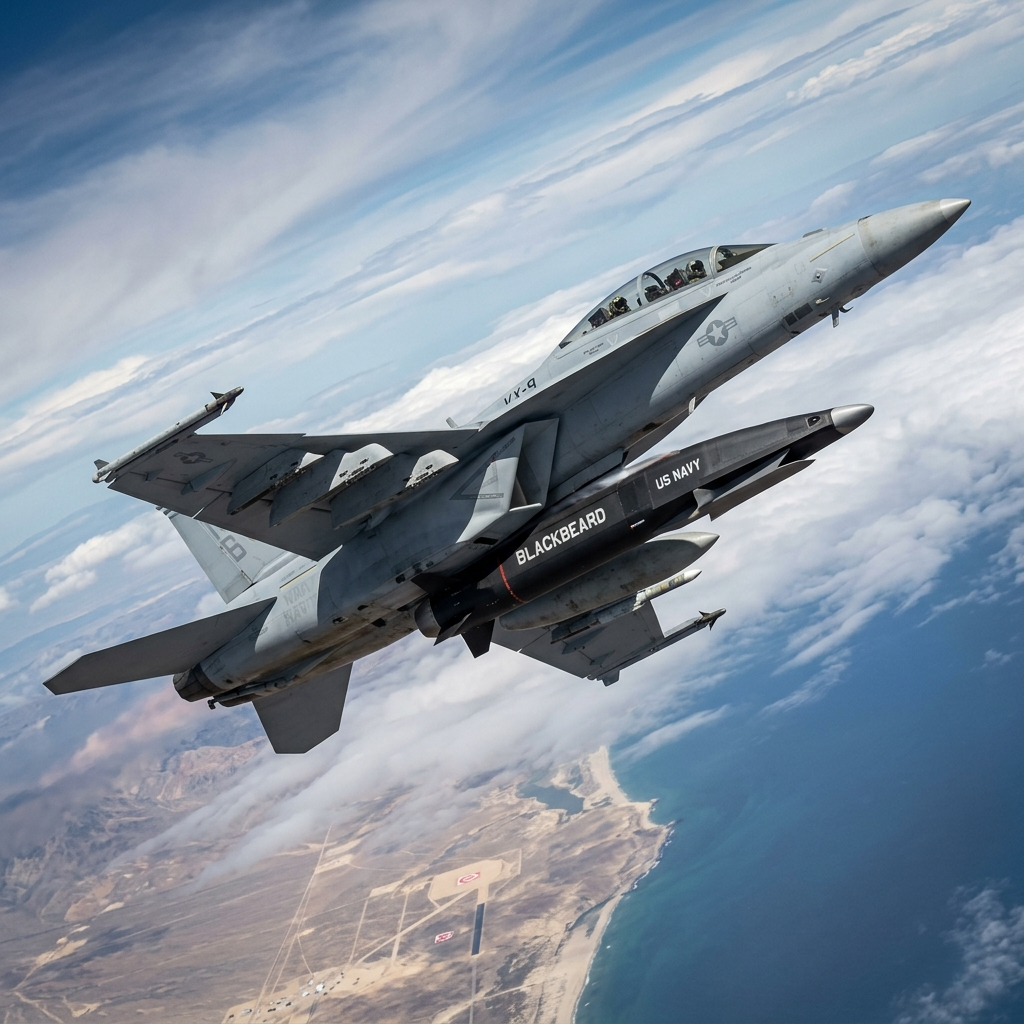
That’s why the United States Navy is working on a new hypersonic weapon called Blackbeard.
The Navy plans to test it on F/A-18 Super Hornet jets by 2027. This move could reshape aerial combat in the coming years.
What Is the Blackbeard Hypersonic Weapon?
Blackbeard is a next-generation hypersonic weapon under development for naval aviation.
Hypersonic weapons travel at speeds greater than Mach 5. That means they move at least five times faster than sound.
Because of this extreme speed, these weapons
- Reach targets in minutes
- Are harder to detect and intercept
- Increase strike precision
- Reduce reaction time for enemies
As a result, Blackbeard could become a key asset in future military operations.
Why the Super Hornet Is Being Chosen
The F/A-18 Super Hornet remains one of the Navy’s most reliable carrier-based aircraft.
Even though newer jets exist, the Super Hornet still plays a major role.
Here’s why it’s being used for testing:
- Proven combat performance
- Strong payload capacity
- Compatibility with aircraft carriers
- Easier integration with new systems
So, instead of building a new platform, the Navy is upgrading what already works.
Timeline: What to Expect by 2027
The Navy has set a clear timeline for development and testing.
Key milestones include the following:
- Early development and design phases (ongoing)
- Integration with Super Hornet systems
- Ground and flight testing
- Full test demonstrations by 2027
If everything goes as planned, operational deployment could follow shortly after.
How Hypersonic Weapons Change Warfare
Hypersonic technology is a game changer. It introduces new challenges and advantages in modern combat.
Major impacts include:
1. Faster Strike Capabilities
Targets can be hit within minutes, even from long distances.
2. Reduced Defense Reaction Time
Traditional missile defense systems struggle to respond quickly enough.
3. Increased Strategic Advantage
Countries with hypersonic weapons gain a strong military edge.
Because of these factors, global powers are racing to develop similar systems.
Global Context: A Growing Arms Race
The United States is not alone in this race. Countries like China and Russia are also developing hypersonic weapons.
For example:
- China has tested hypersonic glide vehicles
- Russia has deployed systems like Avangard
Therefore, the Blackbeard project is part of a broader global competition in military technology.
Challenges the Navy May Face
Although the technology is promising, several challenges remain.
Key issues include:
- Extreme heat at hypersonic speeds
- Guidance and control at high velocity
- Integration with existing aircraft
- High development costs
Still, ongoing research continues to address these problems.
Real-World Impact: What This Means
For everyday people, this may seem distant. However, it has real-world implications.
- Stronger national defense systems
- Increased military spending
- Shifts in global power balance
At the same time, it raises concerns about global stability and arms escalation.
FAQs
What is a hypersonic weapon?
A hypersonic weapon travels faster than Mach 5, making it extremely fast and difficult to intercept.
What is Blackbeard?
Blackbeard is a hypersonic weapon project being developed by the US Navy for use on fighter jets.
Why use the Super Hornet?
The Super Hornet is reliable, widely used, and capable of carrying advanced weapons systems.
When will testing begin?
The US Navy aims to conduct major tests by 2027.
Final Thoughts
The US Navy’s Blackbeard project shows how quickly military technology is evolving. Speed and precision now matter more than ever.
By testing hypersonic weapons on the Super Hornet, the Navy is preparing for future conflicts.
👉 As technology continues to advance, keeping an eye on these developments helps you understand where global defense is heading next.
