


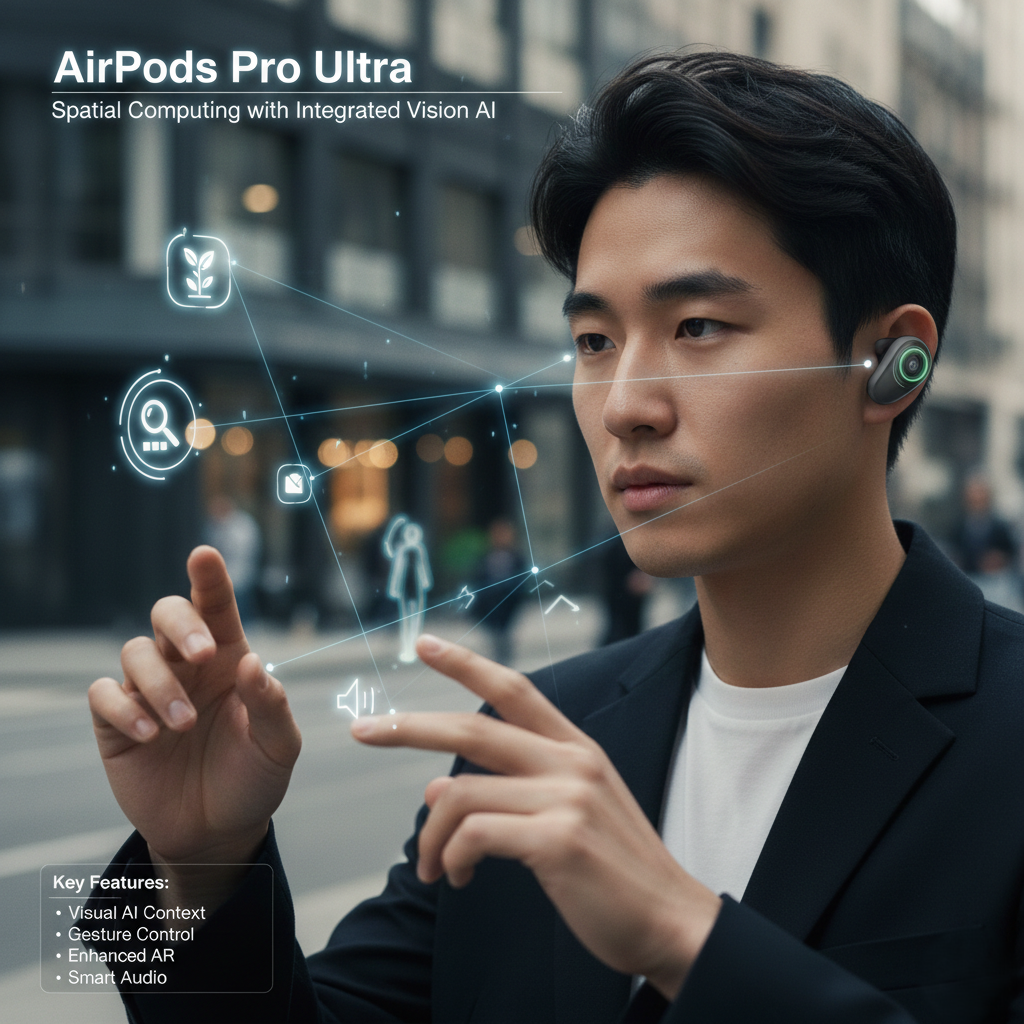
Wearable tech keeps getting smarter. Now, insiders say Apple Inc. could be working on AirPods with tiny built-in cameras.
If true, this could change how we think about earbuds completely.
Instead of just playing music, future AirPods might understand the world around you. That opens the door to AI features, gesture controls, and deeper augmented reality experiences.
Let’s break it down.
Why Would AirPods Need Cameras?
The idea isn’t about taking photos.
Analysts believe small sensors could help power:
- Spatial computing features
- Smarter AI interactions
- Gesture-based controls
- Real-time environmental awareness
These features may connect closely with devices like the Apple Vision Pro.
Together, they could create a more immersive ecosystem.
How This Could Work
Imagine wearing your earbuds while walking through a city.
The built-in sensors might:
- Detect traffic sounds and adjust noise control
- Recognize indoor conversations and enhance speech
- Provide navigation cues based on surroundings
- Support accessibility tools with visual awareness
Instead of reacting only to sound, the device would understand context.
That’s a big shift.
Smarter Noise Control and AI Assistance
Current AirPods already adjust sound using adaptive audio.
With cameras, they could become even more intelligent.
For example:
- Outdoors near traffic → Reduce isolation for safety
- In a meeting → Enhance voices in front of you
- Walking in a store → Offer subtle location-based prompts
This would make hands-free interaction feel more natural.
The Connection to Spatial Computing
Apple has been pushing deeper into spatial computing, especially with the launch of the Apple Vision Pro.
Camera-enabled AirPods could:
- Work as lightweight spatial sensors
- Assist AR experiences without wearing a headset
- Enable gesture-based commands in mid-air
This would blend audio, vision, and AI into one seamless system.
It’s part of a broader wearable strategy.
Privacy Concerns: A Serious Question
Of course, this idea raises eyebrows.
Earbuds that quietly capture visual data could make people uncomfortable.
Key concerns include:
- Silent recording in public spaces
- Data storage and sharing policies
- Third-party app permissions
- Misuse or hacking risks
If such devices launch, clear safeguards would be essential.
Experts say companies would need:
- Visible recording indicators
- Strict privacy controls
- Transparent data processing rules
Without trust, adoption could be slow.
Real-World Comparison
We’ve seen similar concerns before.
When smart glasses entered the market, people questioned privacy instantly.
Camera-equipped earbuds could trigger the same reaction.
But if handled properly, they might become as normal as smartphones once were.
What This Means for the Wearable Tech Market
If Apple moves forward, competitors will likely follow.
It could push wearables toward:
- AI-driven context awareness
- Audio-visual integration
- Lightweight AR tools
- Always-on smart assistance
This would reshape expectations for everyday accessories.
Earbuds would no longer be just audio devices. They would become environmental sensors.
FAQs
Are Apple AirPods with cameras confirmed?
No. These reports come from analysts and insiders. Apple has not officially announced such a product.
Why would earbuds need visual sensors?
Visual data could help AI understand surroundings and improve spatial computing features.
Would these earbuds record everything?
There’s no confirmation. If released, privacy safeguards would likely be built in.
Could this replace smart glasses?
Possibly not replace, but complement them. Camera-enabled AirPods could support devices like the Apple Vision Pro.
Final Thoughts
The idea of Apple AirPods with cameras may sound futuristic, but it aligns with Apple’s direction toward smarter, AI-powered wearables.
If done right, it could make digital interaction feel more natural and context-aware.
But privacy will be the deciding factor.
As technology blends audio, vision, and AI into one experience, the real question isn’t just what’s possible—it’s what people are willing to accept.
