


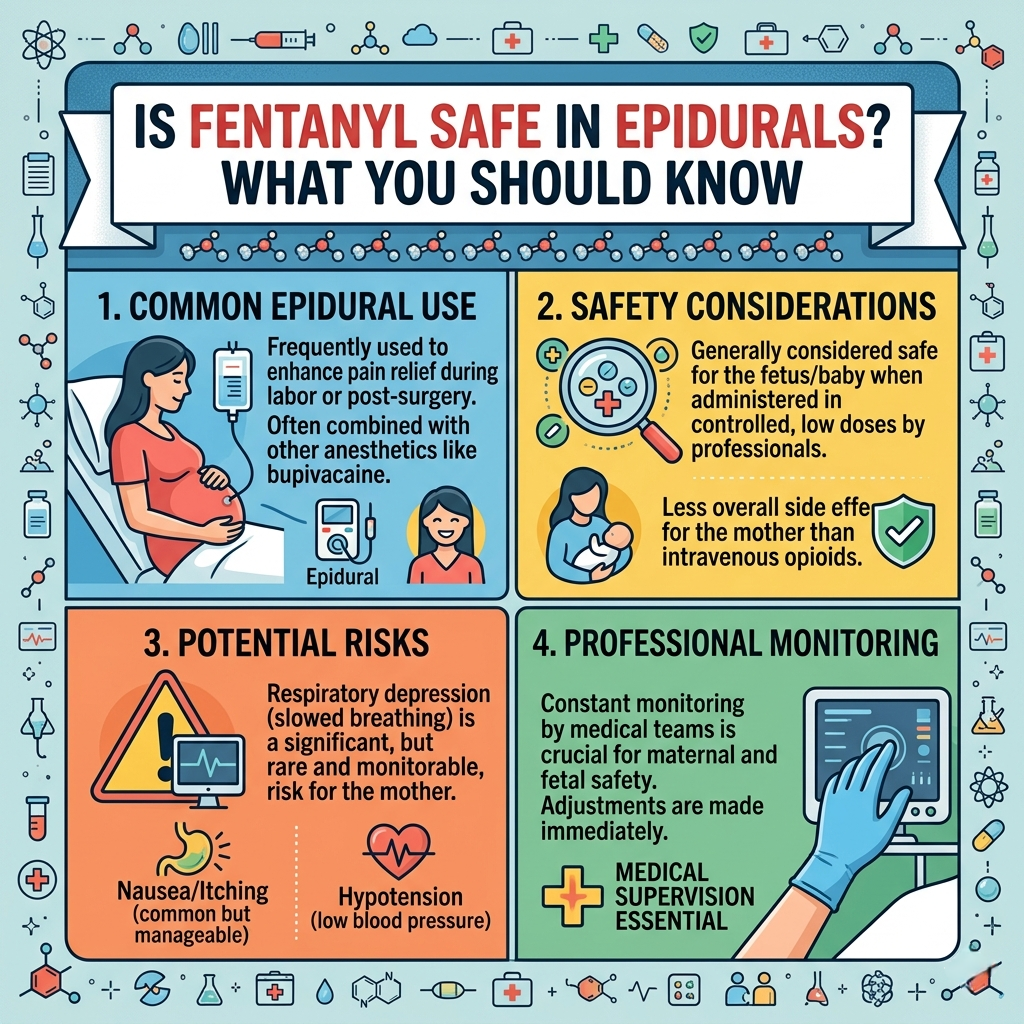
Hearing the word “fentanyl” can feel scary. It’s often linked to overdose news and serious risks.
However, in hospitals, the story is very different. When used properly, fentanyl is a trusted and powerful pain-relief tool.
Let’s break it down in a simple way.
What Is Fentanyl and Why Do Doctors Use It?
Fentanyl is a very strong opioid. In fact, it’s much more powerful than morphine.
Because of that, doctors only need very small doses to control pain effectively.
Why It’s Used in Medicine
- Works quickly
- Provides strong pain relief
- Requires tiny doses
- Helps reduce overall drug use
So, instead of being dangerous by default, it becomes useful when handled correctly.
How Epidurals Work
An epidural is a common procedure used during childbirth and certain surgeries.
Doctors inject medicine into a space near your spine. This area is called the epidural space.
What an Epidural? Does
- Blocks pain signals from reaching the brain
- Reduces discomfort during labor or surgery
- Keeps the patient awake but comfortable
To improve results, doctors often mix local anesthetics with fentanyl.
Why Fentanyl Is Added to Epidurals
This is where fentanyl really shines. Instead of using large amounts of anesthetic, doctors add a tiny dose of fentanyl for better effect.
Benefits of Adding Fentanyl
- Stronger pain relief
- Faster action
- Lower total drug dose
- Smoother patient experience
As a result, patients feel less pain without heavy side effects.
Why It’s Safe in Hospitals
The key difference is control. In hospitals, everything is carefully managed.
According to the Centers for Disease Control and Prevention, fentanyl is safe when used under medical supervision.
What Makes It Safe
- Given by trained professionals
- Precisely measured doses
- Continuous monitoring
- Used in a controlled environment
Also, the drug is delivered directly near the spine. So, it targets pain without strongly affecting the whole body.
Medical Use vs Misuse: The Big Difference
Fentanyl gets a bad reputation mainly because of illegal use. However, that’s very different from medical use.
Key Differences
| Medical Use | Misuse |
|---|---|
| Controlled doses | Unknown amounts |
| Professional supervision | No supervision |
| Safe environment | High-risk conditions |
Because of this, the risks seen in the news don’t apply to hospital care.
Real-Life Example: Childbirth Pain Relief
During labor, pain can be intense. An epidural with fentanyl helps manage that pain effectively.
For example, many mothers can stay calm, alert, and comfortable while still being fully aware of the birth.
This balance is exactly why doctors prefer this method.
FAQs
Is fentanyl dangerous in epidurals?
No, not when used in hospitals. It is carefully controlled and considered safe by medical experts.
Does fentanyl affect the whole body?
In epidurals, it mainly targets the pain area near the spine, so overall body effects are limited.
Why not use other painkillers instead?
Fentanyl works faster and requires smaller doses, making it more efficient in many cases.
Is it commonly used?
Yes, it’s a standard part of many epidural treatments worldwide.
Final Thoughts
Fentanyl may sound intimidating, but in a medical setting, it plays an important and safe role.
When used correctly, it helps patients manage severe pain during some of life’s most intense moments—like childbirth or surgery.
👉 The key takeaway is simple: context matters. Under expert care, fentanyl is not something to fear; it’s something that helps.
