

Introduction
Big ideas don’t wait for adulthood.
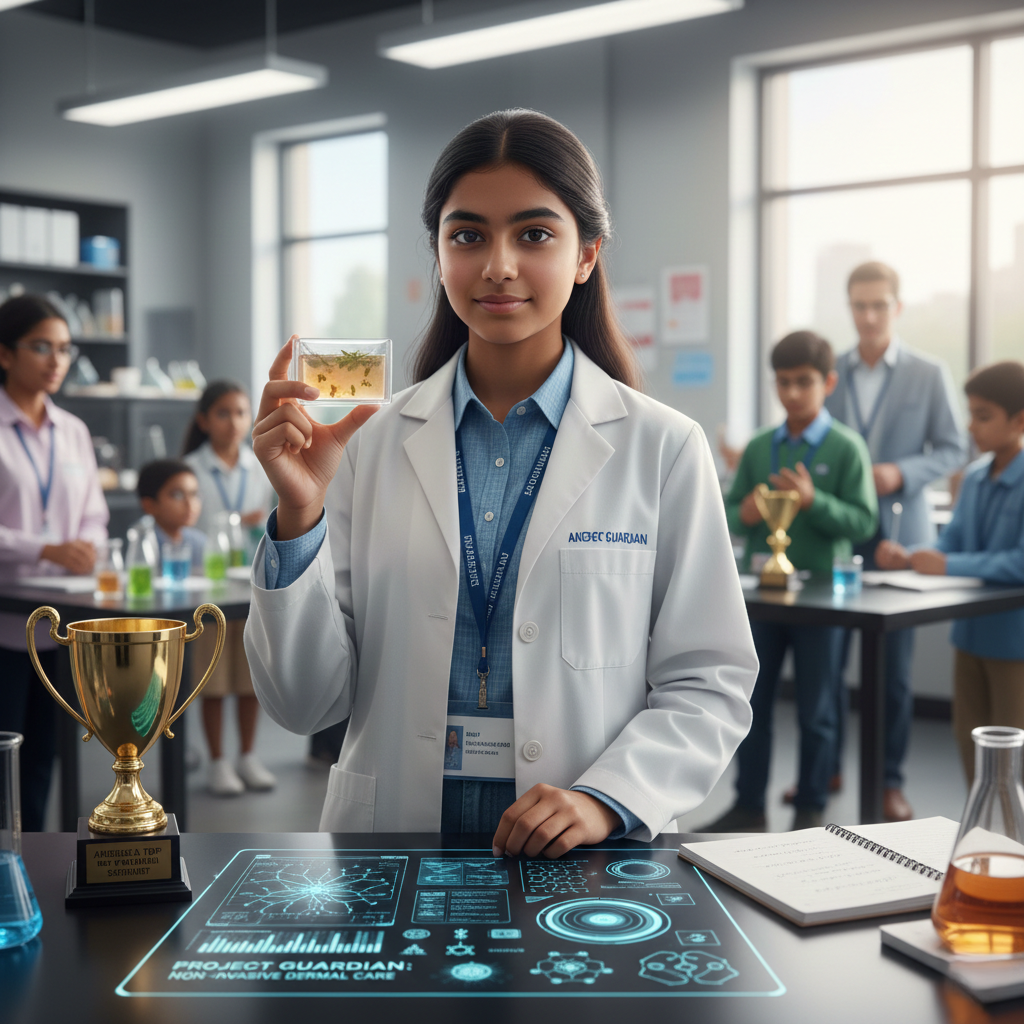
A 14-year-old student has just proven that innovation can start very early.
By creating a soap that shows promise in helping treat skin cancer, this young scientist earned the title of America’s Top Young Scientist.
A Simple Idea With a Powerful Purpose
The project focuses on something everyone uses every day—soap.
Instead of harsh treatments, the student explored a gentler approach using natural ingredients and basic science principles.
Inspired by Real-World Problems
Skin cancer affects millions of people worldwide.
Many treatments can be:
- Painful
- Expensive
- Hard to access
This invention aims to explore safer and more accessible options.
How the Skin Cancer Soap Works
Blending Nature and Science
The soap combines natural compounds with scientific testing.
The goal is to:
- Target cancer-affected skin cells
- Be gentle on healthy skin
- Avoid invasive procedures
This balance impressed the judges.
Tested With Care and Curiosity
The student didn’t rush the process.
The project involved:
- Digital simulations
- Lab-based testing
- Step-by-step formula improvements
Each change was based on data, not guesses.
Why Judges Were So Impressed
Experts praised the project for more than just the idea.
They highlighted:
- Clear understanding of research methods
- Strong problem-solving skills
- Practical real-world thinking
For someone so young, the depth of knowledge stood out.
Education and Technology Played a Key Role
Modern tools helped turn curiosity into results.
Using simulations and digital analysis allowed:
- Faster testing
- Safer experiments
- Better accuracy
This shows how technology empowers young innovators today.
What This Could Mean for the Future
While still in early stages, the soap could one day:
- Support early skin cancer care
- Offer non-invasive treatment options
- Improve access to gentle therapies
More research will be needed before real-world use.
FAQs: Young Scientist Skin Cancer Soap
Does this soap cure skin cancer?
No. It is an early-stage research project and not a proven medical treatment.
Is the soap available for public use?
No. It is still part of scientific research and testing.
Why is this invention important?
It explores safer, noninvasive ideas for early skin cancer care.
Can young students really create medical innovations?
Yes. With guidance, education, and curiosity, young minds can contribute meaningful ideas.
What did the judges value most?
Original thinking, scientific understanding, and real-world impact.
Final Thoughts
This achievement sends a clear message.
Age is not a barrier to innovation.
With curiosity, education, and support, even young students can create ideas that inspire change.
The future of science may already be sitting in today’s classrooms.
