


Introduction: When AI Meets the Real World
Driving isn’t just about roads and traffic lights. Sometimes, the biggest challenges are unexpected—like animals crossing the street.
That’s where self-driving systems are truly tested. Recently, Tesla’s Full Self Driving (FSD) system showed a clear step forward.
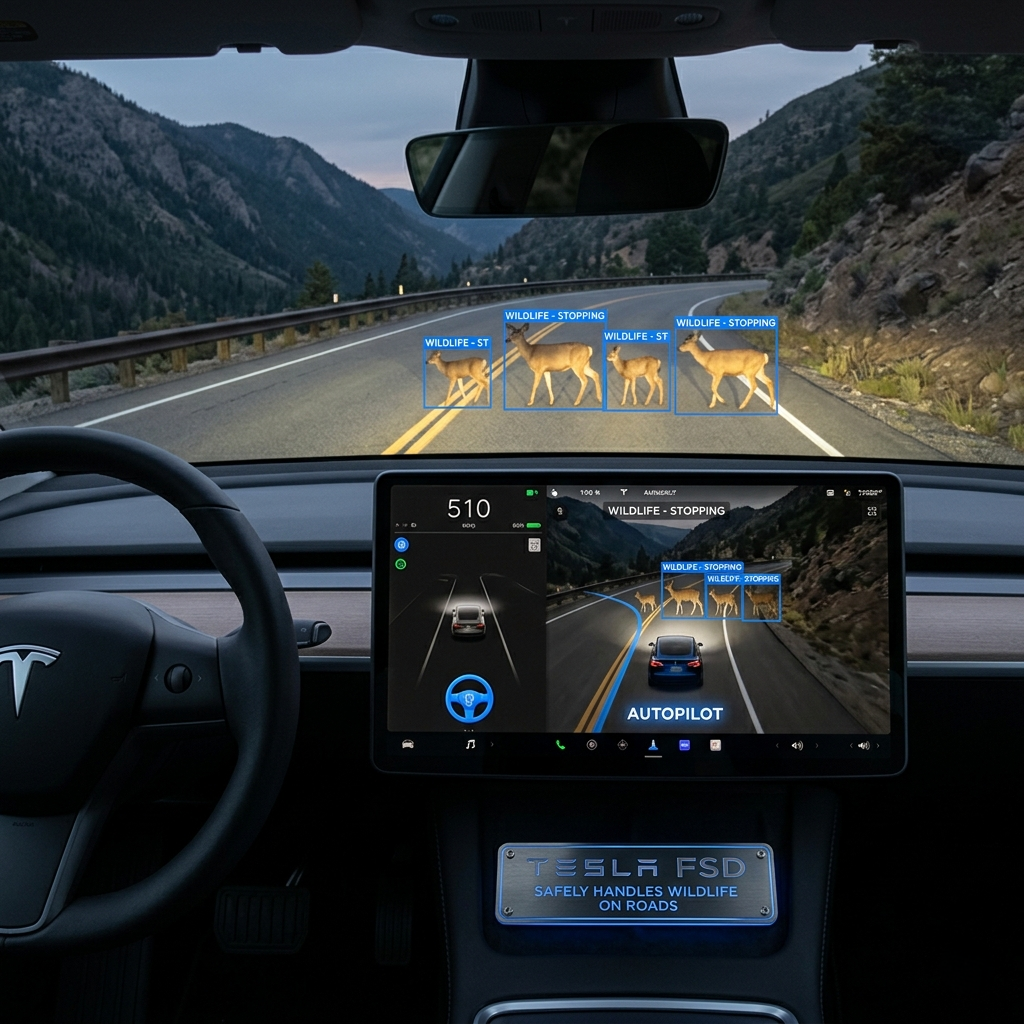
In a real-world situation, the vehicle slowed down and stopped smoothly as a group of geese crossed the road.
Simple moment—but a big signal of progress.
What Happened in This Case?
The situation was unpredictable. A group of geese suddenly entered the road.
Instead of reacting abruptly, the Tesla vehicle handled it calmly.
What the system did:
- Detected the animals early
- Gradually reduced speed
- Came to a complete stop
- Waited until the road was clear
As a result, the response felt natural, similar to a careful human driver.
Why This Matters for Self-Driving Technology
Handling wildlife is not easy. Animals move unpredictably and don’t follow traffic rules.
Because of this, such scenarios are known as “edge cases” in autonomous driving.
Why this is important:
- Tests real-world decision-making
- Shows improvement beyond basic navigation
- Builds trust in AI systems
In short, it proves the system is learning to handle complexity.
How Tesla’s Vision-Based System Works
Unlike some competitors, Tesla mainly relies on cameras instead of radar or lidar.
This approach is based on computer vision.
Key components:
- Cameras capture surroundings in real time
- AI analyzes objects and movement
- The system predicts behavior and reacts
Because of this setup, the car can recognize not just vehicles but also animals, cyclists, and unexpected obstacles.
From Vehicles to Wildlife: Expanding Recognition
Earlier systems focused mainly on:
- Cars
- Traffic signs
- Pedestrians
Now, recognition is expanding.
New capabilities include the following:
- Detecting animals like birds or dogs
- Understanding unusual motion patterns
- Adapting behavior in uncertain situations
As a result, driving becomes safer in more environments.
Real-World Impact: Safety and Confidence
Moments like this may seem small, but they matter a lot.
Benefits include:
- Reduced risk of accidents
- Smoother driving experience
- Increased driver confidence in automation
Over time, consistent performance in these situations builds trust in self-driving technology.
How This Compares to Human Driving
Humans can react emotionally or suddenly. That sometimes leads to overreactions or accidents.
In contrast, AI systems aim for controlled responses.
| Scenario | Human Reaction | AI Reaction |
|---|---|---|
| Animals crossing | Sudden braking or swerving | Gradual slowdown |
| Unexpected movement | Panic response | Calculated decision |
Because of this, AI can offer more stable behavior in certain cases.
Challenges Still Ahead
Even with progress, self-driving systems are not perfect.
Key challenges:
- Handling rare and complex scenarios
- Improving prediction accuracy
- Ensuring safety in all environments
However, each successful case helps refine the system further.
The Bigger Picture: Where This Is Heading
This example shows how AI is moving closer to human-level awareness.
As systems improve, they will:
- Handle more edge cases
- Adapt to different environments
- Make safer decisions consistently
Because of this, the future of driving looks increasingly automated.
FAQs About Tesla FSD and Wildlife Detection
1. Can Tesla FSD detect all animals?
Not perfectly yet, but detection is improving with training and updates.
2. Is Full Self-Driving fully autonomous?
No, it still requires driver supervision.
3. Why are edge cases important?
They test how the system handles rare and unpredictable situations.
4. Is vision-based AI reliable?
It is improving rapidly, especially with large-scale data training.
Conclusion: Small Moments, Big Progress
A car stopping for geese might seem simple. However, it represents something much bigger.
It shows that self-driving systems are learning to deal with the real world, not just perfect conditions.
